


Recently I’ve been thinking about a couple of different tech-related things that sort of overlap. One is the (emerging) shape of the new social web; the other is a pull I’m feeling to try and lessen reliance on American companies. I’ve been interested in / concerned by what became of social media for some time.1 Since the sundering of Twitter in 2022, I’ve kept an eye on the various alternatives, with particular interest in Mastodon and Bluesky. Actually, to be more accurate, my interest has been in the protocols behind those platforms: ActivityPub and AT Protocol respectively. Both have their...
Social media algorithms can be redesigned to bridge divides — here’s how
"It falls to both the tech companies that built these systems and an engaged public to create technologies designed for social cohesion."

After the Feed: Trust, connection, and the next era of social technology | New_ Public | May 2026
After the Feed: Trust, connection, and the next era of social technology By Eli Pariser, Co-Director, Angelica Quicksey, Managing Director, Arnobio Morelix, AI Fellow May 2026 Newpublic.org

🇪🇺🌐 The future of social media may be decided in Europe
A survey of European AT Protocol projects, including 4 mini case-studies

Beyond Bluesky: These are the apps building social experiences on the AT Protocol | TechCrunch
A list of AT Protocol-based, consumer-facing apps that are either built on top of Bluesky or its underlying protocol, allowing users to take back control over their social networking experiences and personal data.

Why I'm betting on ATProto (and why you should, too)
Social media was supposed to connect us, but most of it has turned into ads, division, and loneliness. I'm betting on ATProto as a way to fix that, and not just for developers. Whether you're a scientist, journalist, or just someone who wants the internet to feel human again, I think ATProto matters for you too.
The AT Protocol's interesting design - LittleBit
Bluesky's backend was made to be more than a social network
🔭🖤🚀 Social media’s next evolution: decentralized, open-source, and scalable
How Blacksky grew to millions of users without spending a dollar

The promise of ATproto is social media without corporate overlords
Nobody knows how the whole system works
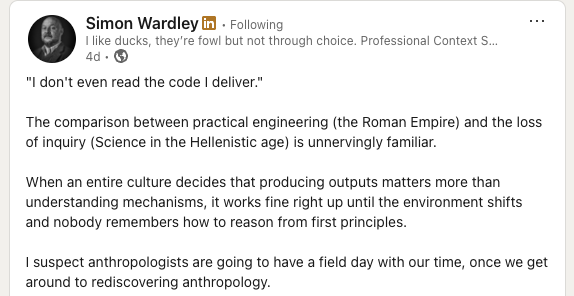
One of the surprising (at least to me) consequences of the fall of Twitter is the rise of LinkedIn as a social media site. I saw some interesting posts I wanted to call attention to: First, Simon W…
W-Social: What does sovereignty mean for social media? – Open Future
The European Commission’s move to W-Social frames it as a European alternative to X, but its closed-source code and reliance on Bluesky’s infrastructure show that sovereign social media requires open infrastructure—not European ownership alone.
AT Protocol
The AT Protocol is a protocol and open standard for distributed social networking services. It is under development by Bluesky Social PBC, a public benefit corporation originally created as an independent research group within Twitter, Inc. to investigate the possibility of decentralizing the service.

AT Explore
Explore and discover AT Protocol data with our fast, user-friendly browser. Search posts, profiles, and feeds across the decentralized social web — including apps like Bluesky.
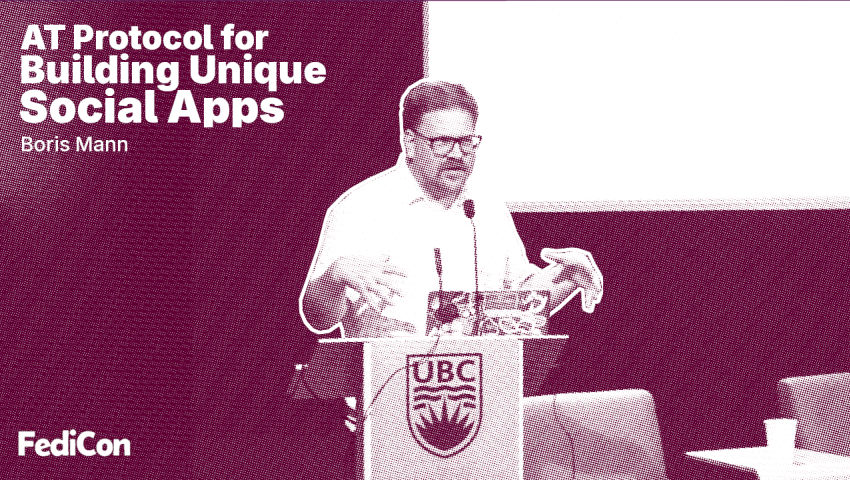
AT Protocol for Building Unique Social Apps — Boris Mann — FediCon 2025
Boris Mann gave a talk at FediCon 2025: "Beyond Microblogging: AT Protocol for Building Unique Social Apps". Boris Mann posted some notes about his talk here: https://bmannconsulting.com/notes/beyo...
Starting from scale in the design of the AT Protocol - Paul's Leaflets
Bluesky was founded in 2022 to produce a protocol which Twitter could adopt. The product goals changed, but the requirements didn't.
W Social's Beta Is Live. The Problems Didn't Wait. - Ewan’s Blog
I am definitely not touching W.
In 2026, @bsky.app is focused on what’s next for open social: bringing together users for conversations around live events, creator and platform monetization, and private state, giving users truly private data while preserving ownership and portability at the protocol level.
