

This website hosts anonymized ChatGPT-user conversations where users requested some form of fiction generation—including stories, novels, scripts, roleplay, hypothetical scenarios, erotic imaginings, and more. The data is drawn from WildChat and was collected voluntarily and with users’ consent between 2023 and 2024. The models were powered by GPT-3.5 and GPT-4.
AI Fiction in the Wild
This website hosts anonymized ChatGPT-user conversations where users requested some form of fiction generation—including stories, novels, scripts, roleplay, hypothetical scenarios, erotic imaginings, and more. The data is drawn from WildChat and was collected voluntarily and with users’ consent between 2023 and 2024. The models were powered by GPT-3.5 and GPT-4.
AI Fiction in the Wild
What kind of fiction will people read in the future—a future that includes generative AI models that can read and write themselves? Will people read fiction that is authored, or co-authored, by AI? Will they read and write their own AI-generated fiction, in a closed loop, cutting out other human beings entirely?
Wikipedia:Signs of AI writing
This is a list of writing and formatting conventions typical of AI chatbots such as ChatGPT, with real examples taken from Wikipedia articles and drafts. It is a field guide to help detect undisclosed AI-generated content on Wikipedia: while some of the signs may be broadly applicable, some may not apply in a non-Wikipedia context.[a] Not all text featuring these indicators is AI-generated, as the large language models that power AI chatbots are trained on human writing, including Wikipedia. Many elements of AI writing can be found in editorials, blogs, or fan fiction.
The Dark Forest and Generative AI
Proving you're a human on a web flooded with generative AI content
More Than a Tool
What We Learned from a Year of Conversations About AI

Tropes - AI Writing Pattern Directory
The definitive reference for identifying AI writing patterns. Learn to spot the tropes that give away AI-generated text.
New_ Public | After the Feed
What happens after the social media feed? A presentation on the future of conversation, community, and social connection, and how AI will affect the everyday lives of billions.
AI Detector — Verified AI Content Checker | Pangram
Detect AI-generated text in essays, articles & documents. Identifies ChatGPT, Claude, Gemini & more with 99.98% accuracy. Third-party verified results.

How Claude marks AI-generated content | Claude Help Center
Anthropic has signed the EU AI Act's Article 50(2) Code of Practice on Transparency of AI-Generated Content, as a provider of both generative AI models and generative AI systems. This article describes how we’re planning to put those commitments into practice, how marking works, and what its limitations are. We’ll update this article and publish more detailed technical guidance as it becomes available.

Michael R. Crusoe (@biocrusoe@fairpoints.social)
Oh, I like this part > No AI-generated text in human-to-human communication > When our maintainers volunteer their time to review your issue, PR, or proposal, they do not want to talk to a machine. This is a basic principle of respect. https://mastodon.gamedev.place/@godotengine/116839550229253906
WinGPT
Do you use Windows 3.1? Do your friends send you jokes and haikus written by ChatGPT, and make you feel left out? Do you wish you had the sum of all human knowledge at your fingertips? Or wish you had your very own AI chatbot on your trusty 386?
Beautiful UI — Crafted primitives for AI-native interfaces
A small library of extremely crafted, copy-paste components for chat agents, thinking states, human-in-the-loop approvals, and everything agents need to talk to humans beautifully.
Millions of Volunteers Are Keeping the Internet Human. For Now.
We’re never going back to the human internet we had. But we can hope for a better internet than the AI-dominated one that is emerging, writes Sarah Gilbert.
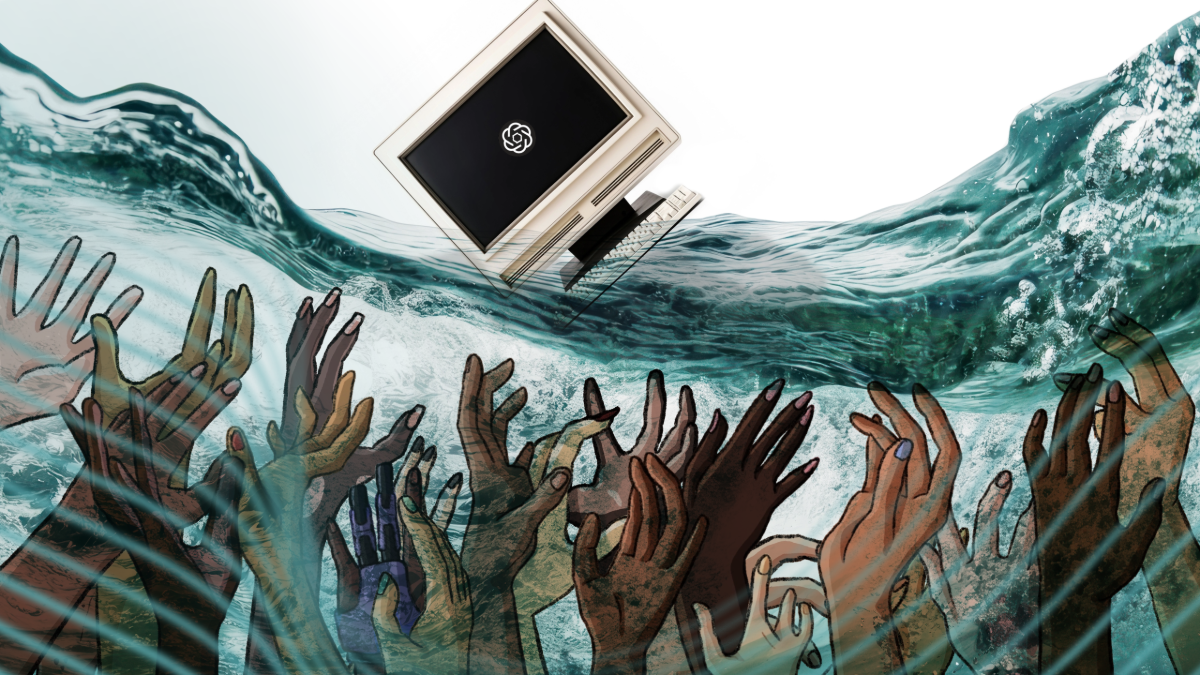
Unlawful by design: Exposing the human rights costs of generative AI - Amnesty International
This briefing examines how standalone generative AI systems, based on unlawful web scraping, are in conflict with international human rights law (IHRL) and standards through their design, development and deployment. While these technologies promise sophisticated automation and efficiency, they rely on data collection and model training practices that abuse privacy rights, enable discrimination, and threaten […]

LLM-Augmented Agent-Based Simulation of Cyber Social Agents
Social media bots are often portrayed as malicious automations to be detected and removed, but automation on social media platforms encompasses a wide spectrum of roles, behaviors, and rhetorical strategies that can shape online discourse in both constructive and destructive ways. This work conceptualizes these automated actors as \textbf{Cyber Social Agents} through a taxonomy of archetypes characterized by their operational tactics and rhetorical style. We integrate this taxonomy into an LLM-driven social simulation, where agents communicate and coordinate in a network environment. Using empirically grounded CSA personas, we simulate heterogeneous online societies to study how agent diversity shapes information diffusion and social influence. Our approach bridges the gap between rule-based agent models and LLM-powered simulations with generated agents that are parameterized from empirical data.