

The Discipline That Looks Like Recklessness
Opinion | The Age of Interdisciplinary Slop
The corporate jargon of change masks the decimation of intellectual life.

Evaluations Are the Real Codebase - The Phoenix Architecture
Why behavior outlives implementations
Two Types of Assemblages
Recovering from an exhausting yet highly productive and exciting trip to Georgia Tech, I was excited to see that Alex Reid has a VERY INTERESTING post up on object-oriented rhetoric. In his discuss…

Design for a Living Planet: Settlement, Science, & the Human Future
In this brief, accessible volume, the authors — an urban philosopher and a mathematician-physicist — explain the surprising new findings from the sciences that are beginning to transform environmental design in the modern era. Authors Michael Mehaffy and Nikos Salingaros explore fractals, networks, self-organization, dynamical systems and other revolutionary ideas, describing them to non-science readers in a direct and engaging way. The book also examines fascinating new topics of design, including Agile, Wiki, Design Patterns and other “open-source” approaches from the software world. The authors conclude that a profound transformation is under way in modern design — and today’s students and practitioners will need to be aware of its implications for our future.“Lucidly describes what’s coming in the world of design — and what needs to come.” — Ward Cunningham, Inventor of wiki, and pioneer of Pattern Languages of Programming, Agile, and Scrum“Essential reading for all urban designers.” — Jeff Speck, Author of Walkable City“Brilliant.” — Charles Montgomery, Author of Happy City“Inspired, compelling and fascinating… Recognizes that a true architecture can be dug from the facts, insights, and theories, that occur with a broadening of science to include the human being.” — Christopher Alexander, Author of A Pattern Language and Notes on the Synthesis of FormSome comments on the individual chapters:“Packed with detail and beautiful in presentation.” — Gil Friend“Human society must find a path of retreat. Salingaros and Mehaffy point the way.” — David Brussat, Providence Journal“Michael Mehaffy and Nikos Salingaros have written some brilliant articles on how we can co-create cities which are truly resilient, rather than being ‘engineered resilient’.” — Smallworld Urbanism“For me, this essay was like a flash of insight, and I suddenly saw the world in a new light.” — Oeyvind Holmstad, Permaliv“We’ve just come across a very thoughtful article by Michael Mehaffy and Nikos Salingaros… [who] draw a number of lessons from biological systems and use them to draw conclusions about how resilient human systems must be designed.” — Resilient Design Institute“Salingaros and Mehaffy take us from the configuration of city spaces to the order of cells in living beings.” — Jaap Dawson, Delft Institute of Technology“If you wanted to know where the cutting edge was in urban design, it is here.” — Patrick J. Kennedy, CarFreeInBigD“This is the single most intelligent and illuminating article I’ve seen on Archdaily in 3 years.” — Nìming Pínglùn Zhě, ChinaMichael Mehaffy is an urbanist and design theorist, and a periodic visiting professor or adjunct in five graduate universities in four countries and three disciplines (architecture, urban planning and philosophy) including the University of Oregon (US) and the University of Strathclyde (UK). He has been a close associate of the architect and software pioneer Christopher Alexander, and a Research Associate with the Center for Environmental Structure, Alexander’s research center founded in 1967. He is currently executive director of Portland, Oregon based Sustasis Foundation, and editor of Sustasis Press.Nikos A. Salingaros is a mathematician and polymath known for his work on urban theory, architectural theory, complexity theory, and design philosophy. He has been a close collaborator of the architect and computer software pioneer Christopher Alexander. Salingaros published substantive research on Algebras, Mathematical Physics, Electromagnetic Fields, and Thermonuclear Fusion before turning his attention to Architecture and Urbanism. He is Professor of Mathematics at the University of Texas at San Antonio and has been on the Architecture faculties of universities in Italy, Mexico, and The Netherlands.
Composable Trust, Part 3: 1 Community, 3 Sovereigns, No Landlords - Eclectic Corvine Muses
An architectural model to yield members, Rosters, and Venues sovereignty over their own domains, and none over each other’s.
“The Problem Factory”- Preemptive risk aversion in infrastructure planning and the role of professional services - Niskanen Center
In a small site of special scientific interest about 20 miles northwest of Oxford, a “shed” is being built.

Rethinking Bluesky's "Decentralization": An Assessment as of January 2026 - Nightflight
January 19, 2026
Roomy joins Modal incubator - Roomy
Rigorous institutional structures make for credible purpose-orientation.
Gas Town’s Agent Patterns, Design Bottlenecks, and Vibecoding at Scale
On agent orchestration patterns, why design and critical thinking are the new bottlenecks, and whether we should let go of looking at code
Governable Spaces: Democratic Design for Online Life – Writings and rehearsals by Nathan Schneider
Read the free, open access editionBuy: Amazon, Bookshop, Narrow Gauge Book Co-op, UC Press
Weird Studies
Professor Phil Ford and writer J. F. Martel host a series of conversations on art and philosophy, dwelling on ideas that are hard to think and art that opens up rifts in what we are pleased to call "reality."

Developer Experience Goals for Atproto Spaces - AT Protocol
A new series nailing down the moving parts of building on Spaces

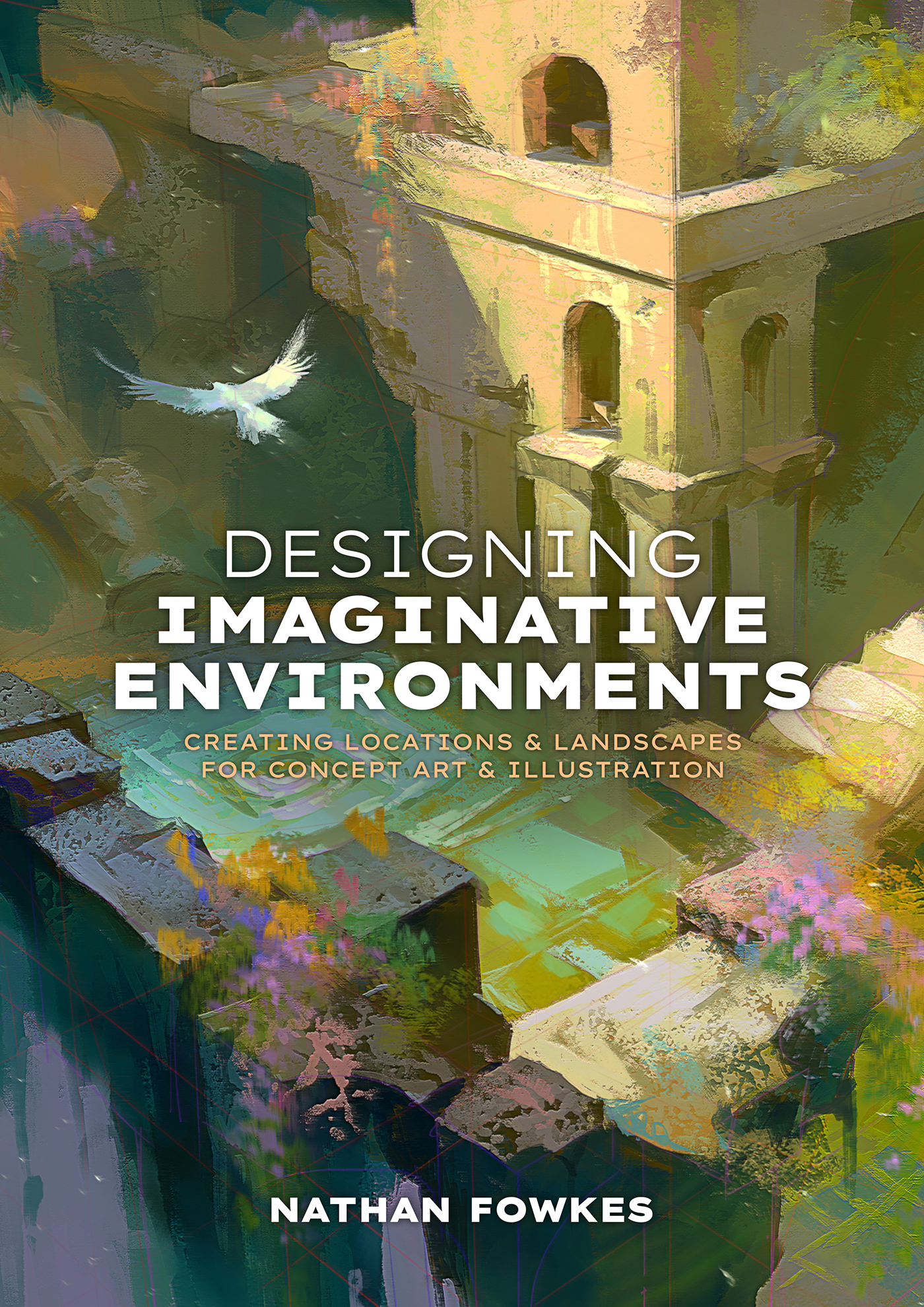
Designing Imaginative Environments by Nathan Fowkes
Join industry veteran Nathan Fowkes on a deep dive into the hows and whys of designing environments for entertainment. From creating mood with color and light, to exploring different biomes and weather, to crafting architecture and props, he will teach you how to design amazing environments that make your work stand out from the crowd.
AI Mania Is Eviscerating Global Decisionmaking
The reality of how much damage AI mania is doing to our ability to run institutions effectively.

“Policy Without Tools Is Just Poetry” - AT Protocol
Juliet Shen from ROOST joins the show to talk through the Coop 1.0 release, what open-source trust and safety unlocks for new builders, and where AI actually belongs in moderation

How creatives and devs can all finally escape the control of the silicon valley of evil and make a trillion dollars · Multi-hyphenate
ft. ATprotocol (the remix)