


1 online resource; Here is a guide to the ecology of social insects. It is intended for general ecologists and entomologists as well as for undergraduates and those about to start research on social insects; even the experienced investigator may find the comparison between different groups of social insects illuminating. Most technical terms are translated into common language as far as can be done without loss of accuracy but scientific names are unavoidable. Readers will become familiar with the name even though they cannot visualize the animal and could reflect that only a very few of the total species have been studied so far! References too are essential and with these it should be possible to travel more deeply into the vast research literature, still increasing monthly. When I have cited an author in another author's paper, this implies that I have not read the original and the second author must take responsi bility for accuracy! Many hands and heads have helped to make this book. I thank all my colleagues past and present for their enduring though critical support, and I thank with special pleasure: E.]. M. Evesham who fashioned the diagrams;]. Free, D.J. Stradling and]. P.E.C. Darlington who supplied photographs; D.Y. Brian and R.A. Weller who were meticulous on the linguistic side; and G. Frith and R.M. Jones who collated the references. List of plates 1. Fungus combs of Acromyrmex octospinosus and Macrotermes michaelseni. 13 2. Mouthparts of larval Myrmica; 1 Introduction -- 2 Food -- 2.1 Termites as decomposers -- 2.2 Wasps and ants as predators -- 2.3 Sugars as fuel save prey -- 2.4 Seed eaters -- 2.5 Leaf eaters -- 2.6 Pollen eaters -- 3 Foraging by individuals -- 3.1 Foraging strategy -- 3.2 Worker variability -- 4 Foraging in groups -- 4.1 Communication about food -- 4.2 Group slave-raiding -- 4.3 Tunnels and tracks -- 4.4 Nomadic foraging -- 5 Cavity nests and soil mounds -- 5.1 Cavities and burrows -- 5.2 Soil mounds -- 6 Nests of fibre, silk and wax -- 6.1 Mounds of vegetation and tree nests -- 6.2 Combs of cells -- 7 Microclimate -- 7.1 Environmental regulation -- 7.2 Metabolic regulation -- 8 Defence -- 8.1 Painful and paralysing injections -- 8.2 Toxic smears and repellants -- 9 Food processing -- 9.1 Mastication, extraction and regurgitation -- 9.2 Yolk food supplements -- 9.3 Head food glands -- 10 Early population growth -- 10.1 Food distribution -- 10.2 Colony foundation -- 10.3 The growth spurt -- 11 Maturation -- 11.1 Simple models of reproduction -- 11.2 Social control over caste -- 11.3 Males in social Hymenoptera -- 11.4 Maturation in general -- 12 Reproduction -- 12.1 Caste morphogenesis -- 12.2 Copulation and dispersal -- 12.3 Production -- 12.4 Summary -- 13 Evolution of insect societies -- 13.1 Theories of individual selection -- 13.2 Models of these theories -- 13.3 Group selection -- 13.4 Conclusions -- 14 Colonies -- 14.1 The colony barrier -- 14.2 Queen number and species ecology -- 14.3 Queen interaction and queen relatedness -- 15 Comparative ecology of congeneric species -- 15.1 Ant and termite races -- 15.2 Desert ants and termites -- 15.3 Ants and termites in grassland -- 15.4 Forest ants and termites -- 15.5 Wasps and bumblebees -- 15.6 Advanced bees -- 16 Communities -- 16.1 Temperate zone communities in grass and woodland -- 16.2 Desert communities -- 16.3 Tropical rain forest -- 16.4 Conclusions -- 17 Two themes -- 17.1 Plant mutualism -- 17.2 Social organization -- References -- Author index
worm-blossom
The website of worm-blossom, the creative partnership of Aljoscha Meyer and Sammy Gwilym. (We are sorry.)

Connecting with your readers on Semble [Patterns of Sensemaking #2] - Cosmik Labs
On how the references you make help your writing find its natural audience
Les données au service de la connaissance des usages en ligne : l’exemple de l’analyse des logs de Gallica
1Face au rythme accéléré des innovations sociotechniques et à l'éclatement des pratiques numériques, construire une vision globale des usages d’une bibliothèque numérique comme Gallica (gallica.bnf.fr) constitue un véritable défi qui nécessite de mobiliser de nouvelles méthodes, en particulier celles permettant d’analyser des données de masse. Ces méthodes requièrent des compétences nouvelles par rapport à celles mobilisées traditionnellement dans l’univers de la connaissance des pratiques culturelles en général et des bibliothèques en particulier. C’est là une mutation importante. Le domaine des « études de publics », qui s’est développé dans des établissements tels les bibliothèques et musées depuis les années 1980, au confluent de plusieurs disciplines (sociologie, ethnologie, marketing, etc.), était traditionnellement le lieu d’un dialogue relativement équilibré entre les professionnels de ces établissements et les experts en charge de mener l’enquête, qu’ils soient chercheurs académiques ou consultants. Si des difficultés se présentaient, elles relevaient rarement de la compétence scientifique des interlocuteurs, les méthodes mobilisées, telles que l’enquête par questionnaire, l’observation ou l’entretien, étant facilement appropriables par tous. Cela ne signifiait bien entendu pas que tous pouvaient mener l’enquête, mais que tous pouvaient participer à la rédaction d’un questionnaire, comprendre l’enjeu des questions posées aux publics et se représenter le type de traitements réalisés sur les données collectées. Une telle participation au processus d’enquête est rendue plus difficile dans le cadre de la fouille de données (data mining), indispensable désormais pour la connaissance des usages en ligne. Un projet de recherche inédit sur les logs de connexion à Gallica, conduit dans le cadre d’un partenariat entre la Bibliothèque nationale de France (BnF) et Télécom ParisTech, témoigne pourtant de la possibilité d’inscrire la fouille de données dans un dialogue où chercheurs et professionnels s’efforcent de s’éclairer mutuellement sur les décisions à prendre pour conduire une analyse pertinente. Nous poserons dans un premier temps le cadre institutionnel et méthodologique dans lequel s’inscrit la connaissance des usages de Gallica, avant de présenter les apports de l’apprentissage automatique à cette connaissance et la manière dont ils peuvent être intégrés à la réflexion qu’une bibliothèque comme la BnF porte sur son offre en ligne.
ATProto explained for a slightly "technical" audience - Foxes
Stigmergy
Stigmergy is a mechanism of indirect coordination, through the environment, between agents or actions. The principle is that the trace left in the environment by an individual action stimulates the performance of a succeeding action by the same or different agent. Agents that respond to traces in the environment receive positive fitness benefits, reinforcing the likelihood of these behaviors becoming fixed within a population over time.

Termite Ecology in the First Two Decades of the 21st Century: A Review of Reviews
Termite ecology came of age in 1978 with the seminal review of Wood and Sands which by considering the quantitative contributions made by termites to the carbon cycle at the landscape level concluded that they were major players in tropical ecosystems. Subsequent field work in the succeeding two decades was summarised in 2000 by Bignell and Eggleton, the most recent review which attempted to cover the entire topic in detail, which included 188 listed references and has been extensively cited for almost 20 years. Subsequent summaries more narrowly defined or in some cases more superficial are listed in the bibliography. In this overview, the main and subsidiary headings in Bignell and Eggleton are revisited and reclassified in the light of 186 selected articles added to the relevant literature since 2000, and some earlier work. While the literature on termite ecology remains buoyant, it has declined relative to publications on other aspects of termite biology. Overall, the thesis that termites have a major impact on, and are major indicators of soil health and landscape integrity in the tropics and sub-tropics is maintained, but the drivers of local diversity, abundance and biomass remain complex, with many biographical, edaphic and optimum sampling issues not completely resolved. The large increase in diversity and abundance data from Neotropical biomes can also be noted.
Columbia-NLP-Lab/PAPILLON
Code for our paper PAPILLON: PrivAcy Preservation from Internet-based and Local Language MOdel ENsembles
Humanists Have Done Nothing Wrong | Defector
For many years, I’ve held a pet theory that cultural consumers can be grouped into two broad categories: Primary Source People and Secondary Source People. The former are the book lovers, cinephiles, archive perusers, and history buffs who grew to love their areas of study because of the specific objects that constitute the field: the…
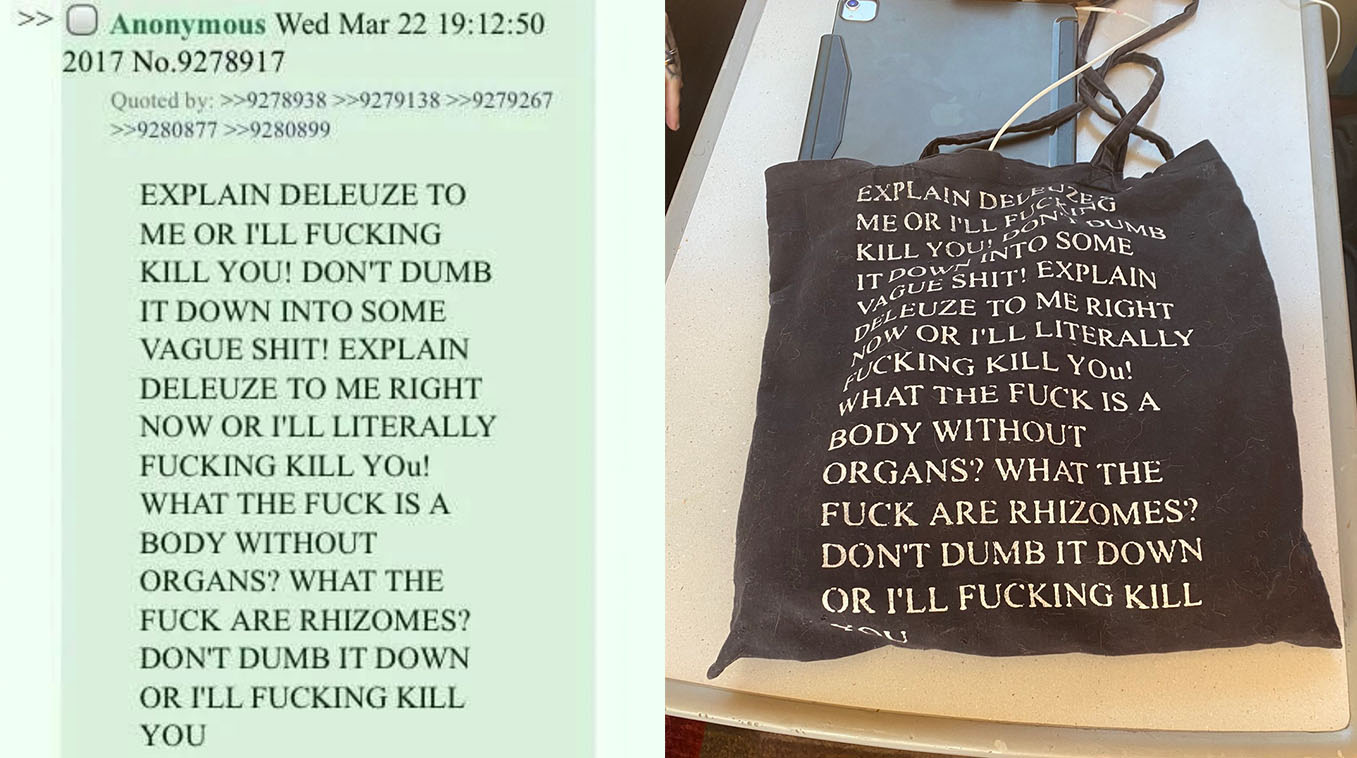
Ratioed — dame.is
I began this social art experiment in June 2025 and have “performed” it periodically since. My intent was to explore what it would look like to use a social media post as a medium for art (not for sharing art). Because I used Bluesky, the social data underlying this art projec…
Gradients of intimacy and creating shelter: An interview with Erin Kissane
How might we use nature as an inspiration for creating online communities?

semble/src/modules/atproto/infrastructure/lexicons at main · cosmik-network/semble
A social knowledge tool for research, built on ATProto - cosmik-network/semble
Tend the System. Know the System.
They didn't wander. That's the first thing to understand. The popular image of the hunter-gatherer is someone moving through an indifferent landscape, taking what they find. It's not wrong about the movement. It's wrong about the indifference — theirs and the land's. What the archaeological and ecological record increasingly shows is
code

physics
vibe
✨🙌 AI that helps communities thrive on their own terms
ATmosphereConf 2026

Aliens (film)

Physics
Methodology

Magnetization
ATmosphereConf 2026
ATmosphereConf 2026

Background Coding Agents: Context Engineering (Part 2) | Spotify Engineering
Harness engineering: leveraging Codex in an agent-first world
Introducing Claude Opus 4.6
Test (edited) (by Pouria) — Semble
code (by sembot.bsky.social) — Semble
vibe (by sembot.bsky.social) — Semble
ATmosphereConf 2026
Background Coding Agents: Context Engineering (Part 2) | Spotify Engineering
Gas Town’s Agent Patterns, Design Bottlenecks, and Vibecoding at Scale

Colony (biology)