
worrying away at an old subject
Risk, Uncertainty and Profit
A timeless classic of economic theory that remains fasc…
Does modernisation erase cultural difference – or amplify it? | Psyche Ideas
We understandably fear the flattening effect of modernity. But global data from China to Peru tells a hopeful story

Opinion | The Age of Interdisciplinary Slop
The corporate jargon of change masks the decimation of intellectual life.

A Real Political Economy of Technology - The Ideas Letter
Two technological futures are competing for political and material priority: generative AI and the green transition. Benanav argues that while AI is marketed as a world-reordering breakthrough, its productivity gains…

If you think your profession is dying, it could soon be gone
Younger workers once foresaw the demise of horse-drawn carriages — but anticipating obsolescence can be self-fulfilling

“The Problem Factory”- Preemptive risk aversion in infrastructure planning and the role of professional services - Niskanen Center
In a small site of special scientific interest about 20 miles northwest of Oxford, a “shed” is being built.

The continued search for Spime Script
The rants and raves of Simon Wardley on Evolution, Technology, Economics and Business

Field Theory: AI as Social Science Question, Object & Tool
Uses of advanced artificial intelligence are changing how societies organize labor, govern, produce knowledge, and make meaning. In light of these developments, this essay argues that AI models, tools, and systems pose three interrelated imperatives for social science: they demand renewed attention to social theories of how technology, human experience, and social order are entangled; they require study as objects of inquiry in their own right; and they offer capabilities that may transform—or upend—the practice of social investigation itself. From Weber’s analysis of rationalization to Du Bois’s study of technology and inequality to contemporary scholarship on algorithmic governance, the essay examines what social science distinctively offers: the capacity to historicize the apparently unprecedented, to trace connections across scales, and to center those most affected by technological change. It identifies how algorithmic systems are remaking the distribution of opportunity and risk as a central task of social inquiry and asks what futures social science might help bring into being.
Read The Work of Art in the Age of Mechanical Reproduction
1935 essay by Walter Benjamin; proposes that mechanical reproduction devalues the aura of an artwork, that—in the age of mechanical reproduction and traditional ritualistic value’s absence—art production would be inherently based on political praxis
Resetting on engineering expectations in the age of AI
I’m accepting new sponsorships for The Modern Leader for 2026. If you’re interested (or you think your company may be interested), you can learn more here.
The Anxious Generation | Jonathan Haidt
Erik Brynjolfsson on Twitter / X
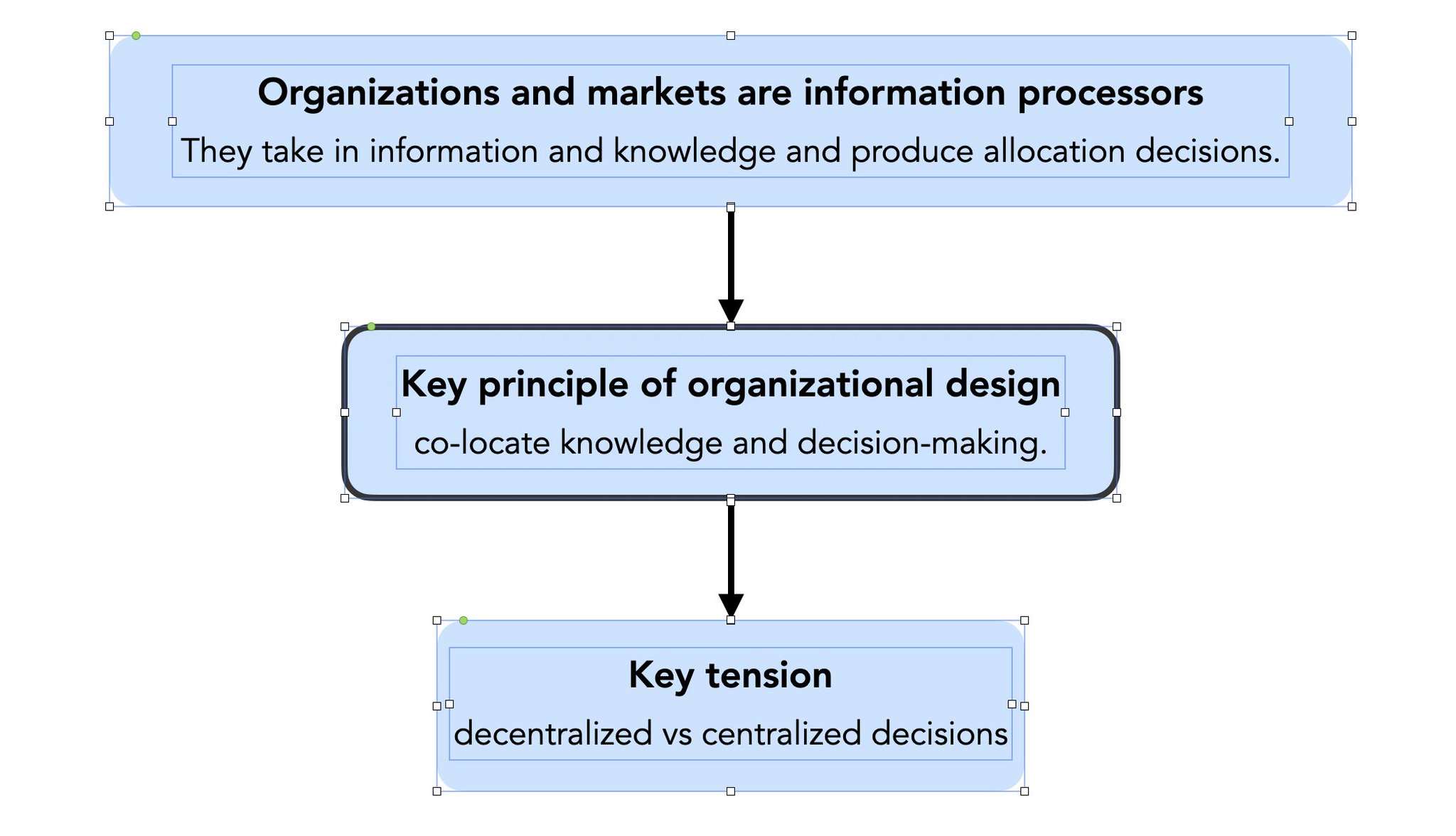
The @nytimes piece today by @ByrneEdsal13590 highlights a concern I share: “If we stay on the current path, the risk of extreme concentration — both economic and political — is very real.”In work with @zhitzig, we ask why AI may shift the balance between dispersed knowledge… pic.twitter.com/10vOTRj4Dq— Erik Brynjolfsson (@erikbryn) March 17, 2026
People & Technology
To understand AI’s effect on moral character, ethicist Kwame Anthony Appiah goes back to John Stuart Mill, and the idea that people are shaped by their choices.
CMV: The labor theory of value is flawed
72 votes, 407 comments. This might be an obscure topic, however, in some—largely Marxist circles— the approach seems to motivate much of the dialogue…
#760: Gambling the future into existence
Plus: Cosmo for conservatives, AI;DR and being "agentic"