Browsers are hugely load-bearing in the Web's architecture, and yet they haven't changed very much in quite a while. If the Web is indeed for user agency, we should take a hard look at our user agents to see if they might not need improvement.
How building an HTML-first site doubled our users overnight
My client was a utility company, and they had a big problem...

How building an HTML-first site doubled our users overnight
My client was a utility company, and they had a big problem...
Introducing Kitesurf: The agent-first browser that runs in V8 isolates on Cloudflare Workers
We should be giving all agents tools that excel at what’s important for an AI model. Kitesurf is Cloudflare’s new stateless, highly scalable, and cost-effective web browser that runs entirely on top of Workers and was designed specifically for the Agentic Cloud.


Mac vs Windows - It's not close in 2026!

The 49MB Web Page
A look at modern news websites. How programmatic ad-tech, huge payloads and hostile architecture destroyed the reading experience.

R. S. Doiel, Software Engineer/Analyst — Robert's ramblings
Today the Web and Internet is owned and controlled by large for profit corporations and a few governments1. Corporate ownership combined with government policies has left us as tenant and product. It has given us a surveillance economy and enshittification2.
Web Browsers, AI, and the Politics of Media Power
The left keeps building media strategies on top of platforms built to undermine them. As browsers are rebuilt for mass surveillance and manipulation, the systems that decide what people see and who gets heard are being rewritten without us. Control over the browser is control over political reality.

Are We Decentralized Yet?
Statistics on how concentrated user accounts and data are across the Fediverse, the Atmosphere, web hosting, email, and other Internet infrastructure.
The small web is beautiful
A vision for the "small web", small software, and small architectures.

The Web Needs a Context Layer Built on a Shared Protocol
Making context a shared protocol, rather than a platform feature, would let readers see competing perspectives anywhere on the web, argue Mallory Knodel, Evan Friedman, and Brad Friedman.

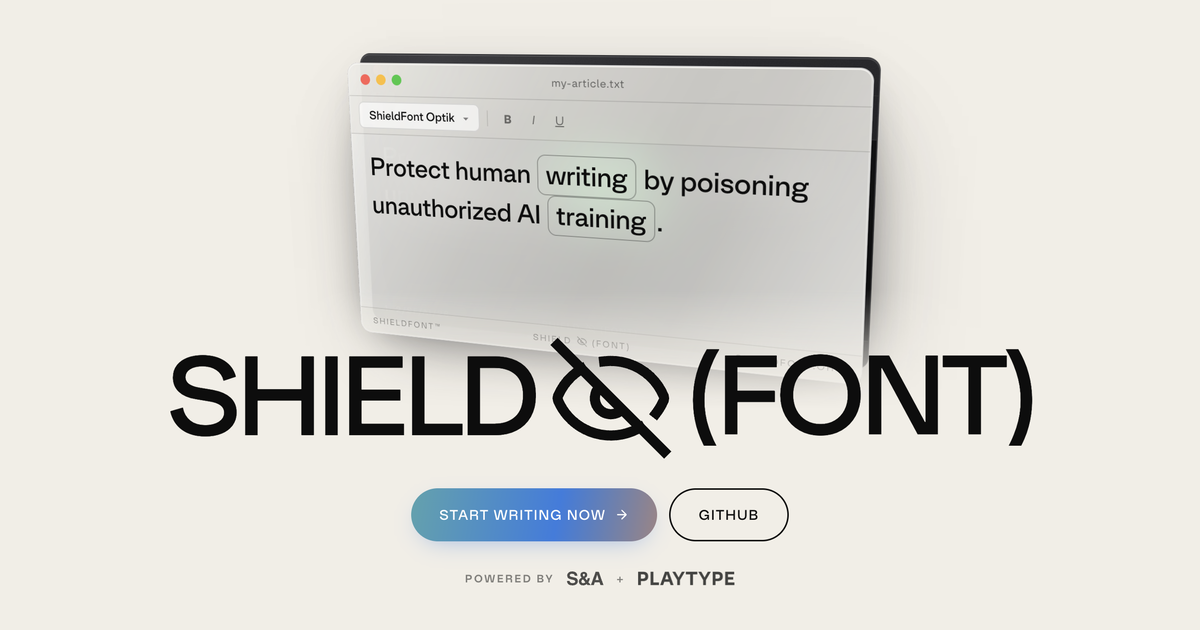
ShieldFont
Publish for humans, not for crawlers. A web font that swaps the words in your HTML, so readers see your writing and AI training gets a stale copy.
How Baseline Can Help You Ship Less JavaScript — Smashing Magazine
The gap between “you need a library for this” and “the browser does this” keeps closing. A practical guide to auditing your dependencies and finding what the web platform can now handle for you.