

Collected tips from building the Austral compiler.
Modular: The Claude C Compiler: What It Reveals About the Future of Software
Compilers occupy a special place in computer science. They're a canonical course in computer science education. Building one is a rite of passage. It forces you to confront how software actually works, by examining languages, abstractions, hardware, and the boundary between human intent and machine execution.

Claude Is Not a Compiler - exe.dev blog
In early 2025, I wrote Is Claude a Compiler? At the time, my answer was: I don’t know.

Coding After Coders: The End of Computer Programming as We Know It - …
archived 16 Mar 2026 15:14:04 UTC

Self-Instruct: Aligning Language Models with Self-Generated Instructions
Large "instruction-tuned" language models (i.e., finetuned to respond to instructions) have demonstrated a remarkable ability to generalize zero-shot to new tasks. Nevertheless, they depend...

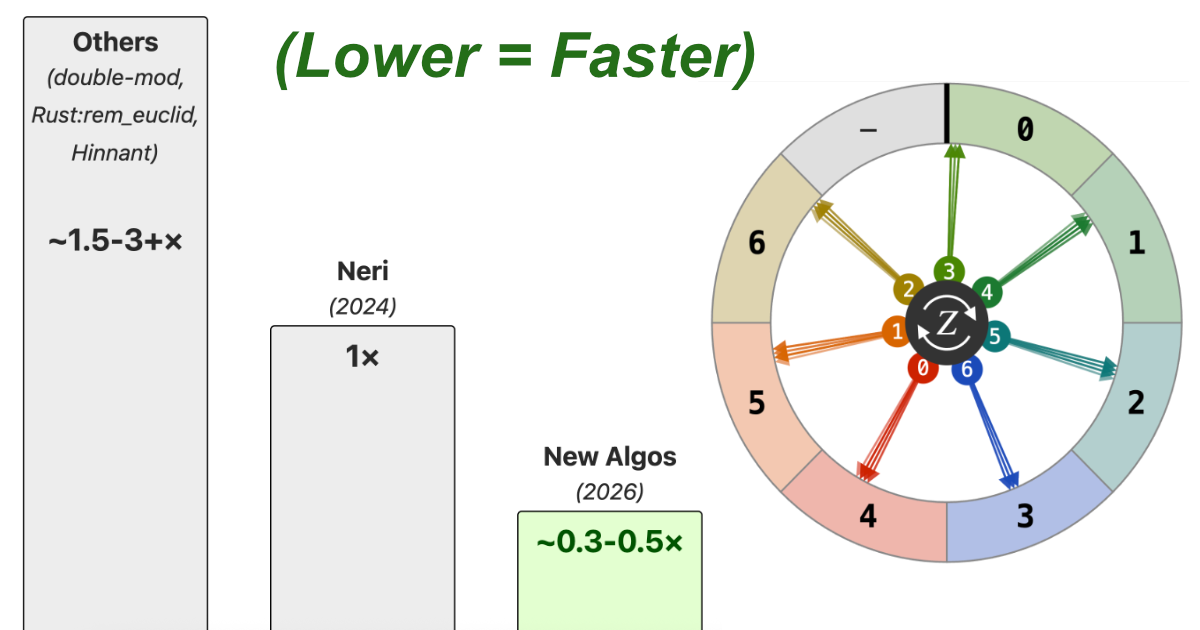
A faster way to calculate the day-of-the-week
A range of fast modulus techniques that beat compiler output
Magicoder: Empowering Code Generation with OSS-Instruct
We introduce Magicoder, a series of fully open-source (code, weights, and data) Large Language Models (LLMs) for code that significantly closes the gap with top code models while having no more...
What the AI Wizard taught us about LLM code generation at scale - PostHog
You know what’s boring? Writing integrations. It’s a task you’ll do once, but you always need to do it right, which means carefully reading docs…
"Concatenative programming and stack-based languages" by Douglas Creager
A break from programming languages
This is a blog post I have been considering writing for a long time.
affaan-m/everything-claude-code
Complete Claude Code configuration collection - agents, skills, hooks, commands, rules, MCPs. Battle-tested configs from an Anthropic hackathon winner.

Anatomy of a Lean Proof for Software Engineers
Intro I recently worked through a problem from a theory of computation textbook that asked me to prove a property of a language using finite automata. The informal proof is a simple constructive proof where you build an automaton and show that it recognizes the language. This is kind of similar to program verification, so I thought it’d be interesting to see what it takes to formalize the proof. Lean is a good choice for this, because its Mathlib has all the theorems for the problem.
The peril of laziness lost | The Observation Deck
In his classic Programming Perl — affectionately known to a generation of technologists as "the Camel Book" — Larry Wall famously wrote of the three virtues of a programmer as laziness, impatience, and hubris: If we’re going to talk about good software design, we have to talk about Laziness, Impatience, and Hubris, the basis of good software design. We’ve all fallen into the trap of using cut-and-paste when we should have defined a higher-level abstraction, if only just a loop or subroutine. To be sure, some folks have gone to the opposite extreme of defining ever-growing mounds of higher level abstractions when they should have used cut-and-paste. Generally, though, most of us need to think about using more abstraction rather than less.
Andrej Karpathy on Twitter / X
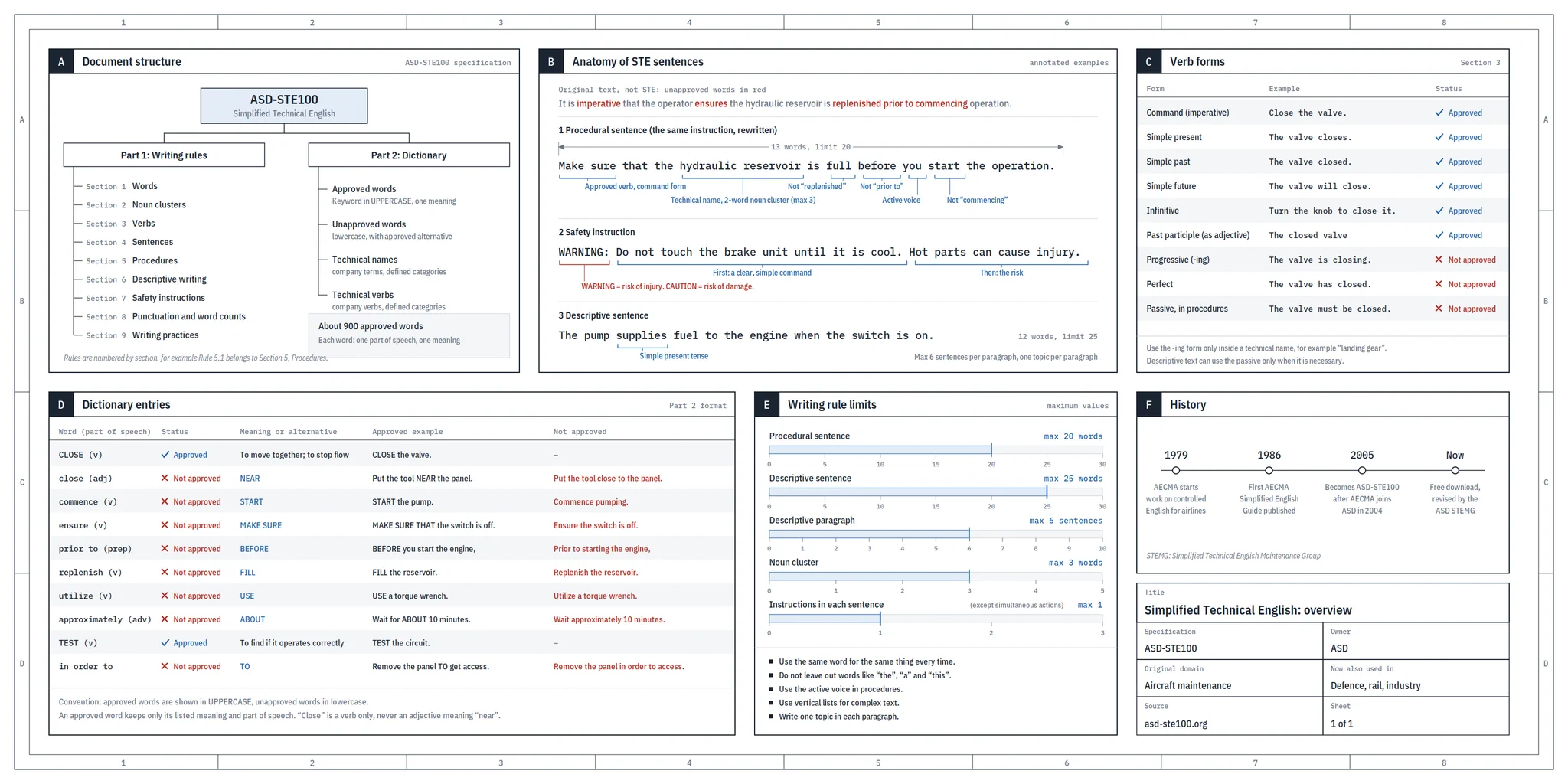
We'll be spending a lot more time trying to understand the outputs of language models. A few thoughts, tips & tricks:Writing. Something I've had success with: Ask your LLM to explain something in ASD-STE100, it's a controlled language specification originally developed for… pic.twitter.com/uMFWTcBCsl— Andrej Karpathy (@karpathy) October 2, 2026
sublime's language

tracking how sublime frames their product and features