

Reading the structured abstract alone should set off a half dozen statistical alarms in any scientists head. The fact that this found its way into Science makes me wonder how we drive home those stats 101 lessons and make them intuitive. science.org/doi/10.1126/science.adt7790

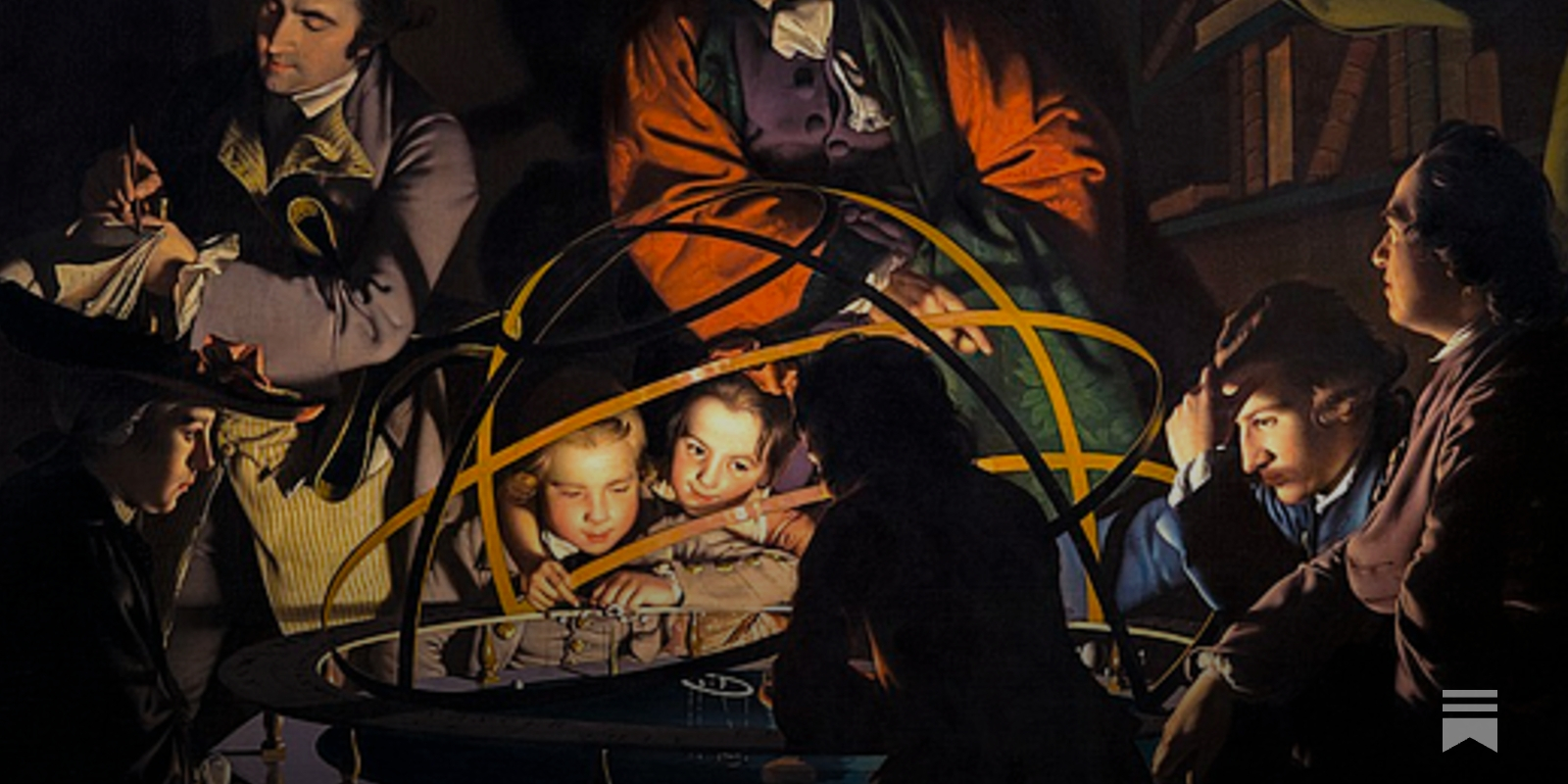
Recent discoveries on the acquisition of the highest levels of human performance
www.science.orgDec 21, 2025 at 3:23 PM
LLM Audit 22 July Conspiracy Theories
Factiverse and Revontulet tested 9 leading AI models with 5,616 requests to see how they handle conspiracy narratives about the 22 July attacks. Read the findings.
.png)
The Bazaar of Scientific Knowledge | shishyko!
What if we didn't collapse all the knowledge from the scientific process into one paper?
I'm becoming AI-blind - Rafal Cymerys
Recently I've been catching myself having these little moments at work, when I'm trying to read a document someone has sent me and my brain somehow refuses to analyze it. It feels like I'm reading it, but I'm unable to focus on its content. I sat down to analyze these situations and realized they all have a common denominator: the documents all show a strong trace to AI. My brain learned to quickly spot signs of AI-generated content, at least the low effort one, and it now ignores it and moves on without thinking much about it.
Sensors, not just bookmarks [Patterns of Sensemaking #1] - Cosmik Labs
First of a new series on sensemaking patterns we're observing on Semble
A quote from Daniel Stenberg
The challenge with AI in open source security has transitioned from an AI slop tsunami into more of a ... plain security report tsunami. Less slop but lots of reports. …
Hyperproblems: New Ways of Doing and Communicating Science - Hyperproblems
Hyperproblems: Hyperproblems are scientific challenges whose scale, complexity, novelty and interdependence overwhelm traditional research models, requiring…
Why Most Published Research Findings Are False
Summary There is increasing concern that most current published research findings are false. The probability that a research claim is true may depend on study power and bias, the number of other studies on the same question, and, importantly, the ratio of true to no relationships among the relationships probed in each scientific field. In this framework, a research finding is less likely to be true when the studies conducted in a field are smaller; when effect sizes are smaller; when there is a greater number and lesser preselection of tested relationships; where there is greater flexibility in designs, definitions, outcomes, and analytical modes; when there is greater financial and other interest and prejudice; and when more teams are involved in a scientific field in chase of statistical significance. Simulations show that for most study designs and settings, it is more likely for a research claim to be false than true. Moreover, for many current scientific fields, claimed research findings may often be simply accurate measures of the prevailing bias. In this essay, I discuss the implications of these problems for the conduct and interpretation of research.
Hypothesis
A hypothesis is a proposed explanation for a phenomenon. A scientific hypothesis must be based on observations and make a testable and reproducible prediction about reality, in a process beginning with an educated guess or thought. If a hypothesis is repeatedly independently demonstrated by experiment to be true, it becomes a scientific theory. In colloquial usage, the words "hypothesis" and "theory" are often used interchangeably, but this is incorrect in the context of science.

</> htmx ~ Working With AI: A Concrete Example
In this essay, Carson Gross walks through a concrete bug fix in hyperscript to show where AI helped, where it fell short, and why keeping a knowledgeable human in the loop is what kept complexity in check.
How to be more creative in seconds!
Philosophy Experiments — Interactive Thought Experiments
Explore 27 interactive philosophy experiments that challenge your moral intuitions, test your logical reasoning, and probe the boundaries of belief.
Pluralistic: Model collapse (12 Aug 2026) – Pluralistic: Daily links from Cory Doctorow
One of my favorite rhetorical and analytical moves is joining things together (showing that two different, seemingly unrelated ideas are aspects of the same phenomenon) and taking them apart (resolving a paradox by demonstrating that what appears to be one, contradictory thing is actually two different things that have been lumped together).
