I’m going to tell you about how I took a job building software to kill people. But don’t get distracted by that; I didn’t know at the time.
How to reclaim your attention from the distraction economy | Psyche Videos
Could you watch this video on full screen, 1x speed, with no distractions? Here are five steps to rebuild your attention span

Freefall 4399 July 13, 2026
TRANSCRIPT Sam: Telling the computer what I want to have done. It makes my job easy. I don't know how it works. I don't know what I'm actually doing. Sam: I've always assumed the other guys know what they're doing. If they're using A.I. as well... this could be a problem. Sam: It makes it too obvious that almost nobody knows what they're actually doing. That destroys one of the illusions societies are built on.
Do not give up your brain
It's tempting to just let tools think for you, but you still need to be able to think for yourself and stay sharp.

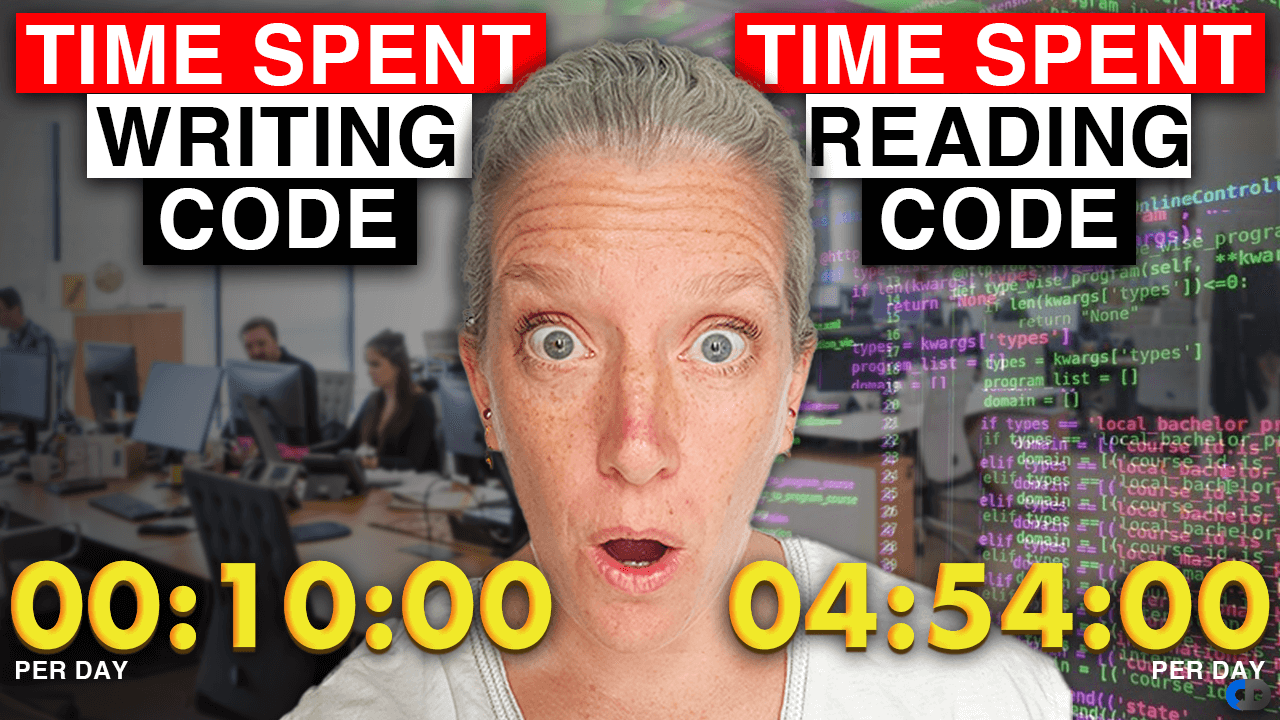
Reading Code Is Hard, and tips to improve - Trisha Gee
This week's video for Dave Farley's Continuous Delivery YouTube channel is me ranting about why reading code sucks, and offering some advice on how to improve. "Every programmer occasionally, when nobody’s home, turns off the lights, pours a glass of scotch, puts on some light German electronica, and opens up a file on their computer. ... Read more
Harnessing Frustration: Using LLMs to Overcome Activation Energy
One of my biggest weaknesses as a software engineer is procrastination when facing a new project. When the scope is unclear, I have a tendency to wait until I feel I’ve “felt out” the problem to start doing anything. I know I’ll feel better and work much faster when I get “stuck in” but I still struggle with that first step, overcoming the “activation energy” required to engage with the details. LLMs have been a game-changer for me in this respect: I can just throw a couple of sentences at them with the shape of the problem. This leads to one of two outcomes: The LLM comes up with a good solution, usually in a slightly different way than what I was thinking. I realize “oh wow the solution is much simpler than I thought”. Straight away I start thinking about the consequences of implementing and improving what the LLM suggested. The LLM comes up with a solution that I intuitively recognize as “wrong”. My immediate reaction is frustration (“How could it get it so wrong”) which leads me to go back and forth with the model, explaining to it why its solution could not possibly work. But in the process of arguing with the model, my brain is churning away and generating variations or different approaches that could work. After a while, even if the AI is still on the wrong track, the debate will trigger a moment of inspiration where suddenly the solution will come to me. I’ll excitedly start up a new conversation and start working through it with the model. The key is the emotional reaction I have immediately to the LLM’s response, either excitement or frustration. By harnessing this immediate feedback loop, I get my brain out of its passive, procrastination mode. It’s almost like a jolt: either I’m thrilled because it’s simpler than I thought, or I’m spurred to action by the urge to correct a perceived ‘wrong’ answer. This forces me to engage with the problem in a meaningful way.

Dangerous Writing App
Dangerous Writing App. If you stop typing, all progress will be lost. Now with over 500+ writing prompts to choose from.
‘Shut up and focus on the mission’: Tech workers are frustrated by their companies’ silence about ICE
“I’ve hit my limit of what I’m willing to tolerate”

Software Acceleration and Desynchronization
A look at the ever-present drive to make software delivery faster and how it might break down various activity loops in organizations.

Backseat Software
What if your car worked like so many apps? You’re driving somewhere important…maybe running a little bit late. A few minutes into the drive, your car pulls over to the side of the road and asks:
The peril of laziness lost | The Observation Deck
In his classic Programming Perl — affectionately known to a generation of technologists as "the Camel Book" — Larry Wall famously wrote of the three virtues of a programmer as laziness, impatience, and hubris: If we’re going to talk about good software design, we have to talk about Laziness, Impatience, and Hubris, the basis of good software design. We’ve all fallen into the trap of using cut-and-paste when we should have defined a higher-level abstraction, if only just a loop or subroutine. To be sure, some folks have gone to the opposite extreme of defining ever-growing mounds of higher level abstractions when they should have used cut-and-paste. Generally, though, most of us need to think about using more abstraction rather than less.
Note on 24th September 2026
The more time I spend working with coding agents, the more convinced I am that they make software engineering even harder. We can do amazing things with them, but unlocking …
Opinion | The A.I. Disruption Has Arrived, and It Sure Is Fun
We’re entering a new renaissance of software development. We should all be excited, despite the uncertainties that lie ahead.

Breaking My Own Rule (Again): AI and the Job Hunt - Jacky Alciné
I said I wasn't going to lean on generative AI but I also said I was going to leave the tech industry. Here's what I actually used to keep applying and what it did (and didn't) do for me.

I work, I think? - Annotated
How AI may quietly dismantle the feedback loop that turns inexperienced people into competent ones, and why my work matters to me.
The Human-in-the-Loop is Tired
On reward functions, dopamine, and what it actually feels like when the code starts writing itself