We’re excited to join in Cursor, Cloudflare, Vercel, git-ai, OpenCode and others in support of [Agent Trace](https://agent-trace.dev/). As described in the spec, Agent Trace is an open, vendor-neutral spec for recording AI contributions alongside human authorship in version-controlled codebases.
Cursor: AI coding agent
Built to make you extraordinarily productive, Cursor is the best AI coding agent.

Agentic Engineering Patterns - Simon Willison's Weblog
Patterns for getting the best results out of coding agents like Claude Code and OpenAI Codex. See my introduction for more on this project.
Background Coding Agents: Context Engineering (Honk, Part 2) | Spotify Engineering
This is part 2 in our series about Spotify's journey with background coding agents (internal codename: “Honk”) and the future of large-scale software maintenance. See also and .

The Coding Agent Data Deal
On user data control, coding agents as retrievers, and the value of your coding transcripts

Agent skill · Libraries.dev
Teach your coding agent Border beam, Thinking orbs, Gooey, Voice, Bot avatars, Liquid metal and Image.

Mistral Vibe | AI coding agent for terminal, IDE by Mistral.
Agentic coding that understands your entire codebase. Build, test, and modernize autonomously.
Managing Agent Skills with Your Package Manager | pavel.pink
AI coding agents use skills — markdown files that teach them domain-specific tasks. We publish ours as conda packages and manage them with pixi, getting versioning, lockfiles, and supply chain security for free.
Does Code Cleanliness Affect Coding Agents? A Controlled Minimal-Pair Study
As autonomous coding agents see rapid adoption, their evaluation has primarily focused on task completion rates holding the target codebase fixed. This leaves a critical question unanswered: does the structural and stylistic quality, or ``cleanliness'' of the underlying code affect an agent's ability to navigate and modify it? To isolate the effect of code cleanliness from agent capability, we introduce an evaluation protocol built around minimal pairs: repositories that match on architecture, dependencies, and external behaviour, but differ on static-analysis rule violations and cognitive complexity. The pairs are constructed in both directions, by agent pipelines that either degrade a clean repository or clean a messy one. We author 33 tasks across six such pairs, evaluated through hidden tests at the application's public surface. Across 660 trials with Claude Code, code cleanliness does not change the agent's pass rate. However, it substantially alters the agent's operational footprint: agents working on cleaner code use 7 to 8% fewer tokens and reduce file revisitations by 34%. Our findings suggest that traditional maintainability principles remain highly relevant in the era of AI-driven development, shaping the computational cost and navigational efficiency of coding agents. Code cleanliness joins model choice, harness, and prompting as a factor that materially affects agent behaviours.

Track, control, and optimize for AI agents and bots | Known Agents (formerly Dark Visitors)
Use Known Agents to turn the rising wave of AI agents, LLM assistants, and other bots crawling your website into a new growth channel for your business


AI should help us produce better code - Agentic Engineering Patterns
AI should help us produce better code - Agentic Engineering Patterns
What spec-driven development gets wrong
The most powerful AI software development platform with the industry-leading context engine.

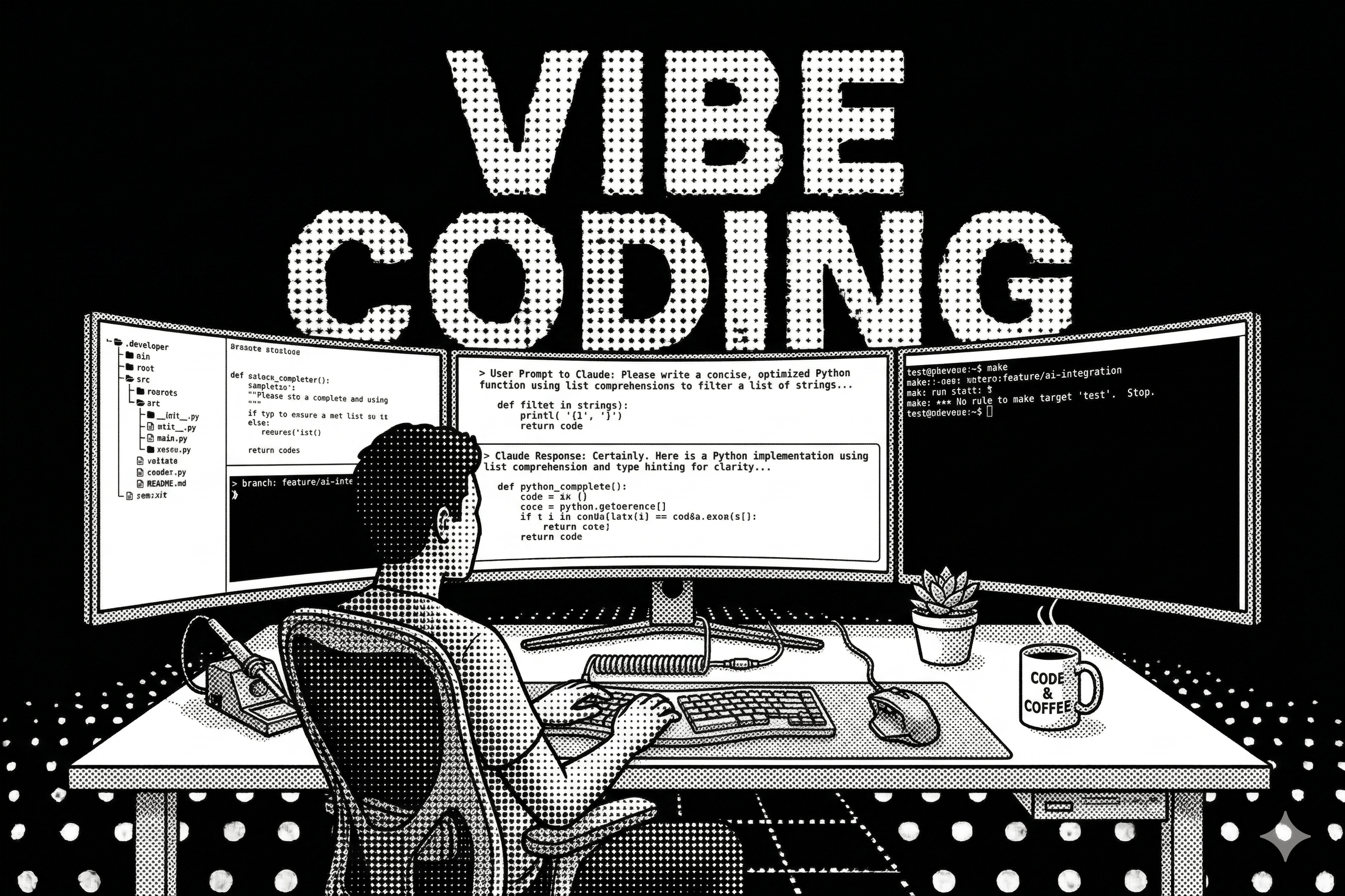
Vibe Coding Failures: Documented AI Code Incidents
A curated directory of real-world incidents where AI-generated code failed in production.
On AI and building your own GIS software
Of the thousands of essays over the past two years surrounding AI and its implications are some very thought provoking ones with enormous implications for GIS. Some of the essays are around the the…

Tropes - AI Writing Pattern Directory
The definitive reference for identifying AI writing patterns. Learn to spot the tropes that give away AI-generated text.
Harness engineering: leveraging Codex in an agent-first world
By Ryan Lopopolo, Member of the Technical Staff