


The use of "aporia" in the context of Cynefin is influenced by Derrida's “possible-impossible aporias” – aporia is a Greek word meaning impasse, so indirectly puzzle or unanswerable uncertainty, but it has come to refer to a paradox. Derrida described paradoxes that affect issues like giving, hospitality, forgiving and mourning. He argues that according to their internal logic, notions like these are only made possible through their impossibility. - Jacques Derrida (1930—2004)
Linguistic aporia - The Cynefin Co
My post of the day before yesterday expressed concern about the general dumbing down of discourse and I explicitly linked the desire for simple recipes and undemanding explanations in the sphere of management to the growth of unthinking populism in the political sphere. I ended it with three simple things to do if you don’t […]
« Face aux canicules toujours plus précoces, intenses et prolongées, l’isolation thermique est impuissante, voire contre-productive »
TRIBUNE. Ce que l’isolation sait le mieux faire, c’est retenir la chaleur à l’intérieur, explique l’expert en énergies Cédric Philibert, dans une tribune au « Monde », qui recommande l’usage de pompes à chaleur, plus versatiles.

MAiD, ableism, cognitive accessibility, and more
This one took a bit to write. The first piece is long (1,600+ words), and intense. But it needed to be said. I'll be interested to hear what you think. You...

Aporetic Turn
The aporetic turn refers to an authentic and legitimate domain of transition where we know what we don’t know. We will typically also not know what to do and need to understand that suspension of action is valid. Here we need to map the context and start to build evidence to support moving out of this state. It very much brings Cynefin dynamics front and centre as there are a number of ways (see diagram) that this state can be exited.
Liminality
The word liminal comes from the Latin root limen, which means “threshold.” In anthropology, liminality is the quality of ambiguity or disorientation that occurs in the middle stage of a rite of passage, when participants no longer hold their pre-ritual status but have not yet begun the transition to the status they will hold when the rite is complete. (Wikipedia). What Turner described as betwixt and between.
The Paradox of Perfection: When ‘Good Enough’ is Actually Better
Exploring the tension between engineering perfectionism and pragmatic delivery. Discover why striving for the perfect solution often prevents us from shipping valuable improvements and how to find the balance.
Territoires en redirection - imaginarium-s
Une enquête sur le renoncement comme compétence collective. Projet de recherche Imaginarium-s soutenu et financé par l'Institut pour la Recherche de la Caisse des Dépôts, la MAIF et la Ville de Grenoble 2025-2026. Réalisé par Alexandre Monnin, Claire Deligant, Emile Hooge, Romain Barrallon et Oscar Hooge. Une piscine qui ferme sans être reconstruite. Un projet routier abandonné après trente ans…
- 1000-Word Philosophy: An Introductory Anthology
Welcome to 1000-Word Philosophy: An Introductory Anthology, an ever-growing set of essays on philosophical questions, theories, figures, and arguments.
« La transition alimentaire est indispensable à la survie de l’espèce humaine »
TRIBUNE. Les pouvoirs publics seuls sont en mesure de favoriser un changement profond et généralisé dans les habitudes des citoyens par la promotion de solutions de remplacement à l’alimentation carnée, relèvent, dans une tribune au « Monde », les philosophes Florence Burgat et Jean-Claude Monod.

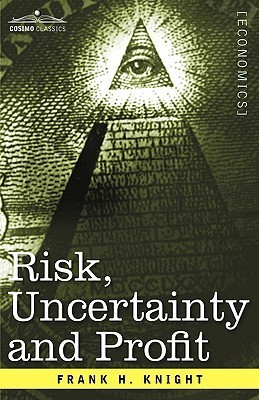
Risk, Uncertainty and Profit
A timeless classic of economic theory that remains fasc…
Pluralistic: Model collapse (12 Aug 2026) – Pluralistic: Daily links from Cory Doctorow
One of my favorite rhetorical and analytical moves is joining things together (showing that two different, seemingly unrelated ideas are aspects of the same phenomenon) and taking them apart (resolving a paradox by demonstrating that what appears to be one, contradictory thing is actually two different things that have been lumped together).
Leo Strauss
Leo Strauss was a twentieth-century German Jewish émigréto the United States whose intellectual corpus spans ancient, medievaland modern political philosophy and includes, among others, studies ofPlato, Maimonides, Machiavelli, Hobbes, Spinoza, and Nietzsche.Strauss wrote mainly as a historian of philosophy and most of hiswritings take the form of commentaries on important thinkers and theirwritings. Yet as he put it: “There is no inquiry into thehistory of philosophy that is not at the same time aphilosophical inquiry” (PL, p. 41). While much of hisphilosophical project involved an attempt to rethink pre-modernphilosophy, the impetus for this reconsideration and the philosophicalproblems that vexed Strauss most were decidedly modern. Straussespecially worried about the modern philosophical grounds forpolitical and moral normativity as well as about the philosophical,theological, and political consequences of what he took to be modernphilosophy’s overinflated claims for the self-sufficiency ofreason.
Novus Ordo Seclorum: The Intellectual Origins of the Co…
This is the first major interpretation of the framing o…

The Death of DeviantArt and the art-site shaped hole haunting the Internet - Multi-hyphenate
Why every new "Art Community" fails. Equal parts eulogy, condemnation, and mourning.
Plato’s Warning Has Been Vindicated
We now believe that our newest tools, once perfected, will relieve us of the need to be informed at all.
S’augmenter sans se déposséder: la convivialité d’Illich face aux assistants d’IA - Nina Pétard