


Most people treat a wandering mind like a defect. They see it as a leak in their productivity bucket. We’ve been conditioned to believe that if we aren’t staring at a screen or checking off a to-do list, we are failing. But Daniel Goleman, the […]
why "things to do instead of doomscrolling" never works
How to reclaim your attention from the distraction economy | Psyche Videos
Could you watch this video on full screen, 1x speed, with no distractions? Here are five steps to rebuild your attention span
How to be more creative in seconds!
The revolt of the reader | The Observation Deck
Reading is important to me. While I’m not a quick reader nor an especially voracious one, I have found that long-form reading has had a profound influence on me over my life. And because reading is important to me, writing is too: writing not only allows us to convey our ideas, but the very act forces us to test and distill them — at once making our ideas more robust while providing the vehicle by which to share them.
Trevor Paglen and Holly Herndon on Making Art with AI and What the Discourse Is Missing
The artists talk process, slop, and why optimism and pessimism don’t quite cover it.

The Human-in-the-Loop is Tired
On reward functions, dopamine, and what it actually feels like when the code starts writing itself
I'm becoming AI-blind - Rafal Cymerys
Recently I've been catching myself having these little moments at work, when I'm trying to read a document someone has sent me and my brain somehow refuses to analyze it. It feels like I'm reading it, but I'm unable to focus on its content. I sat down to analyze these situations and realized they all have a common denominator: the documents all show a strong trace to AI. My brain learned to quickly spot signs of AI-generated content, at least the low effort one, and it now ignores it and moves on without thinking much about it.
The peril of laziness lost | The Observation Deck
In his classic Programming Perl — affectionately known to a generation of technologists as "the Camel Book" — Larry Wall famously wrote of the three virtues of a programmer as laziness, impatience, and hubris: If we’re going to talk about good software design, we have to talk about Laziness, Impatience, and Hubris, the basis of good software design. We’ve all fallen into the trap of using cut-and-paste when we should have defined a higher-level abstraction, if only just a loop or subroutine. To be sure, some folks have gone to the opposite extreme of defining ever-growing mounds of higher level abstractions when they should have used cut-and-paste. Generally, though, most of us need to think about using more abstraction rather than less.
Mystified magicians of the mind
My conversation with neuroscientist Paul Cisek
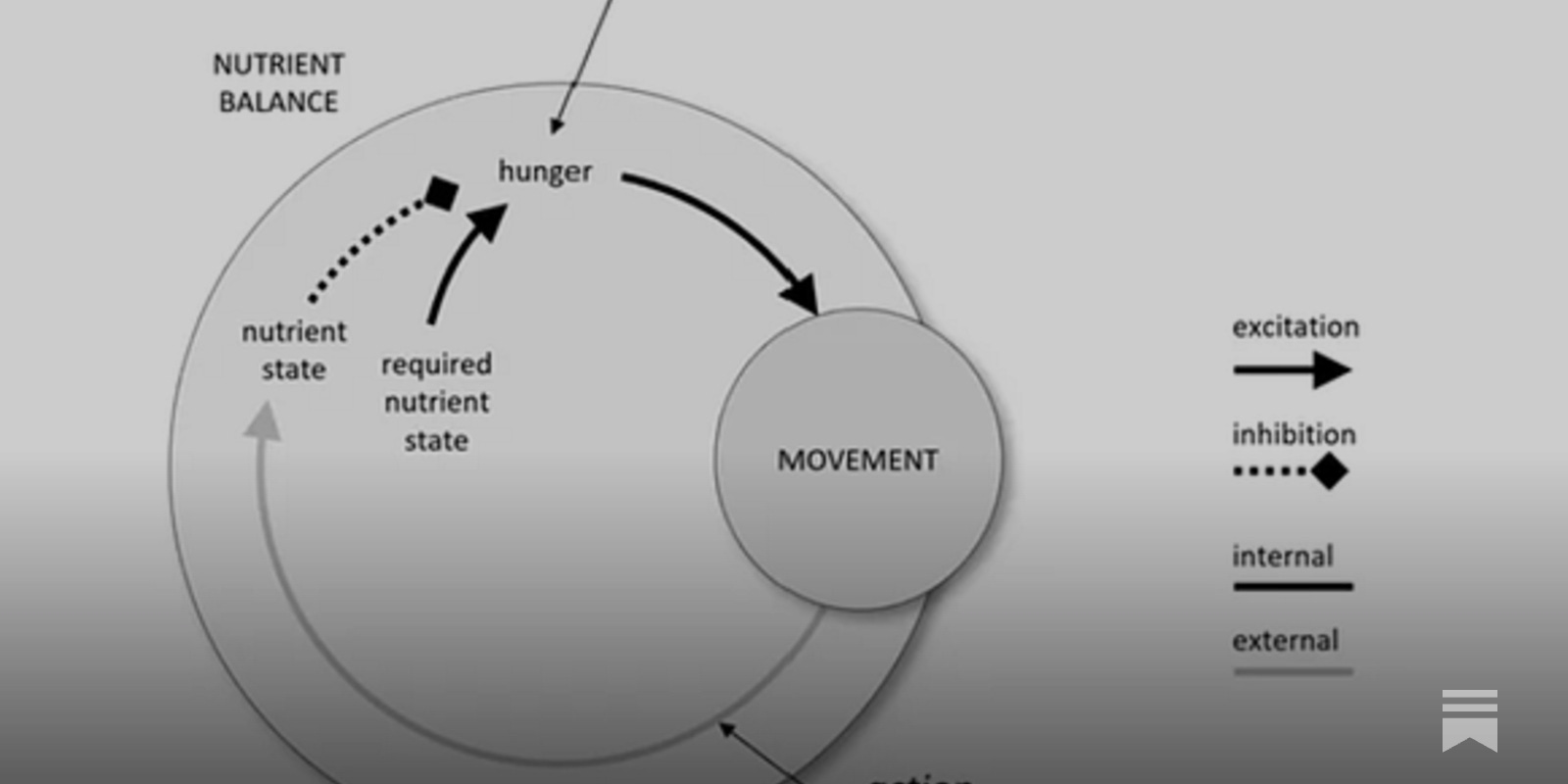
People Who Can't Visualize Anything Are Challenging a 300-Year-Old Theory of Thought
Mental imagery might not be as central to complex human thought as we believed, philosophers say.

Prompting Claude Opus 5.5
Behavioral differences from Claude Opus 5 and the prompting and harness patterns that address them: effort calibration, thinking behavior in API integrations and chat, progress updates, unattended and multiagent tasks, safeguard refusals, frontend design, complex visual inputs, multi-app workflows, and pasted text in user messages.
Do not give up your brain
It's tempting to just let tools think for you, but you still need to be able to think for yourself and stay sharp.

I work, I think? - Annotated
How AI may quietly dismantle the feedback loop that turns inexperienced people into competent ones, and why my work matters to me.
What does it really mean to have a moment of insight? | Psyche Notes to Self
From art to science to love, the moment of insight happens when we see a likeness between different things

People are not friction
The Gell-Mann Amnesia Effect of AI is a pretty well documented phenomenon: The Gell-Mann amnesia effect is a cognitive bias describing the tendency of individuals to critically assess media reports in a domain they are knowledgeable about, yet continue to trust reporting in other areas despite recognizing similar potential inaccuracies.