
A small set of simple, standard primitives to work on content-addressed data.
DASL — Data-Addressed Structures & Links
A small set of simple, standard primitives to work on content-addressed data.
DASL: DRISL — Deterministic Representation for Interoperable Structures & Links
DRISL is a serialization format that is deterministic (so that the same data will have the same CID) and that features native support for using CIDs as links. It is based on CBOR, using a narrow profile of CBOR's "Core" featureset called "[[cborc-42]]", specified formally in this IETF document.

DASL: Web Tiles
Tiles are composable web docs and apps that can safely be used in arbitrary contexts and assembled from multiple sources to carry out complex user interface tasks. Their composability, security, and privacy properties make them ideal for use in social media, chat, agents, and malleable software.

About CRDTs • Conflict-free Replicated Data Types
Resources and community around CRDT technology — papers, blog posts, code and more.
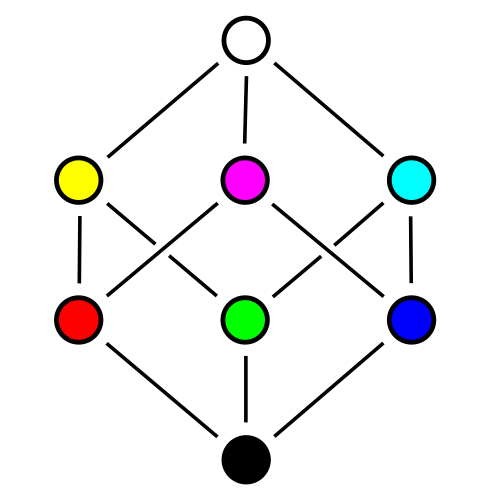
Machine-readable attitudes - Computational Semantics++
User intent declarations can be viewed as propositional attitudes (permission, prohibition, desire, intention, belief, etc.) over structured descriptions of data use. Treating them that way gives you composable building blocks from existing theory and lens-based translations between community vocabularies that make explicit what each translation cannot carry through.
CIDs: What You Need to Know and Why, Part 2 - Nick's Blog
How ATProtocol uses Content Identifiers to create a versioned, verifiable, and portable data model.
Common Crawl - Open Repository of Web Crawl Data
We build and maintain an open repository of web crawl data that can be accessed and analyzed by anyone.

Permissioned Data Diary 2: Buckets - Daniel's Leaflets
The second in a series of posts building up a solution to permissioned data on atproto. We introduce buckets: a new protocol primitive for creating a shared social context.
Standard.site - One schema. Every platform.
Standard.site provides shared lexicons for long-form publishing on AT Protocol. Making content easier to discover, index, and move across the ATmosphere.
Related work | Data Counterfactuals
Adjacent research areas and starting papers, curated in Semble and synced into the site.
The Magic of Small Databases
Notes on personal libraries, collections and small indexes on the web
AutoSchemaKG: Autonomous Knowledge Graph Construction through Dynamic Schema Induction from Web-Scale Corpora
In the current era of information abundance, transforming vast amounts of unstructured data into structured, machine-readable knowledge remains one of the most significant challenges in artificial intelligence. Knowledge Graphs (KGs) have emerged as the cornerstone technology for this transformation Zhao et al. (2024), providing the semantic backbone for applications ranging from search engines and question answering Wu et al. (2024); Chen et al. (2024c); Zong et al. (2024); Sun et al. (2024b) to recommendation systems Lyu et al. (2024) and complex reasoning tasks Li et al. (2024b). Yet despite their critical importance, current KG construction approaches remain hampered by an inherent paradox: they require predefined schemas created by domain experts, which fundamentally limits their scalability, adaptability, and domain coverage.
Dictionary Compression is finally here, and it's ridiculously good
Dictionary compression could completely change how applications send data over the web. It's recently gained broad support, and offers absurd real-world...

Datacurve | The data engine for frontier AI
Custom data for long-horizon reasoning, software engineering, and data science.