


Back to the basics of data leverage.
Datacurve | The data engine for frontier AI
Custom data for long-horizon reasoning, software engineering, and data science.
The AI "Evaluation Crisis" Is an Opportunity to Get Data Flow Right
Why the AI evaluation crisis could force a reckoning on dataset provenance, attribution, and consent.
Nicholas Vincent | Data Leverage & Public AI
Prof. Nick Vincent is an Assistant Professor in Computing Science at Simon Fraser University. He studies the content ecosystems and data supply chains that fuel

More Than a Tool
What We Learned from a Year of Conversations About AI

AI Index | Stanford HAI
The mission of the AI Index is to provide unbiased, rigorously vetted, and globally sourced data for policymakers, researchers, journalists, executives, and the general public to develop a deeper understanding of the complex field of AI. To achieve this, we track, collate, distill, and visualize dat


A quote from Daniel Stenberg
The challenge with AI in open source security has transitioned from an AI slop tsunami into more of a ... plain security report tsunami. Less slop but lots of reports. …
Labor market impacts of AI: A new measure and early evidence
Anthropic is an AI safety and research company that's working to build reliable, interpretable, and steerable AI systems.
Collective Bargaining in the Information Economy Can Address AI-Driven Power Concentration
This position paper argues that there is an urgent need to restructure markets for the information that goes into AI systems. Specifically, producers of information goods (such as journalists, researchers, and creative professionals) need to be able to collectively bargain with AI product builders in order to receive reasonable terms and a sustainable return on the informational value they contribute. We argue that without increased market coordination or collective bargaining on the side of these primary information producers, AI will exacerbate a large-scale "information market failure" that will lead not only to undesirable concentration of capital, but also to a potential "ecological collapse" in the informational commons. On the other hand, collective bargaining in the information economy can create market frictions and aligned incentives necessary for a pro-social, sustainable AI future. We provide concrete actions that can be taken to support a coalition-based approach to achieve this goal. For example, researchers and developers can establish technical mechanisms such as federated data management tools and explainable data value estimations, to inform and facilitate collective bargaining in the information economy. Additionally, regulatory and policy interventions may be introduced to support trusted data intermediary organizations representing guilds or syndicates of information producers.
Something Big Is Happening
A personal note for non-tech friends and family on what AI is starting to change.

Anatomy of a Frontier Lab Agent Intrusion: A Technical Timeline of the July 2026 Incident
We’re on a journey to advance and democratize artificial intelligence through open source and open science.

Dark Cloud Gathers as Bill Comes Due for AI Industry
AI companies are finding they can no longer sustain footing the bill of their heavily vibe coding customers.

AI costs how much? GitHub Copilot users react to new usage-based pricing system.
Some report burning through their whole monthly "AI credit" allotment in a single day.
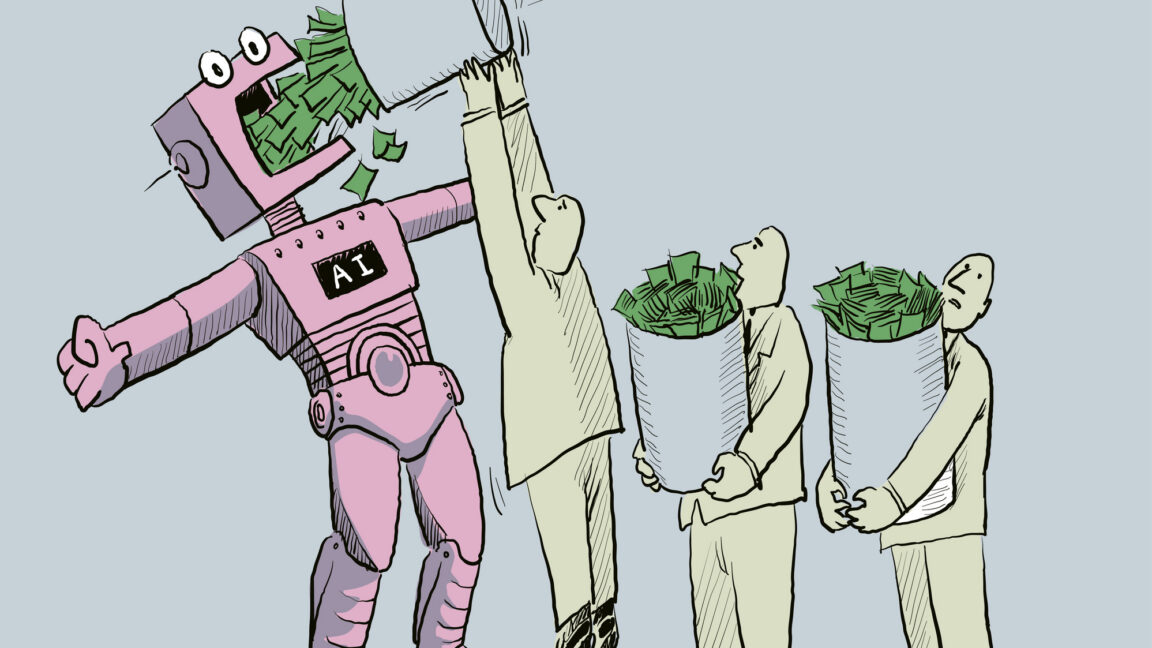
The AI Pledge for Humanity
We all made AI possible. We all deserve a share of what it makes possible.

Andrew Ng: The Biggest Opportunities in AI Aren't Where You Think