


This glossary defines a wide range of machine learning terms, including those specific to TensorFlow and large language models.
Artificial Intelligence Glossary | Stanford HAI
Artificial Intelligence (AI) is rapidly growing, with new terms and concepts being introduced at a breakneck speed. You may have seen terms such as AGI, machine learning, or foundation models in media headlines, emerging legislation, or in your everyday life.
Quantifying the Carbon Emissions of Machine Learning
From an environmental standpoint, there are a few crucial aspects of training a neural network that have a major impact on the quantity of carbon that it emits. These factors include: the location of the server used for training and the energy grid that it uses, the length of the training procedure, and even the make and model of hardware on which the training takes place. In order to approximate these emissions, we present our Machine Learning Emissions Calculator, a tool for our community to better understand the environmental impact of training ML models. We accompany this tool with an explanation of the factors cited above, as well as concrete actions that individual practitioners and organizations can take to mitigate their carbon emissions.

I used AI. It worked. I hated it.
I used Claude Code to build a tool I needed. It worked great, but I was miserable. I need to reckon with what it means.

GLaM: Efficient Scaling of Language Models with Mixture-of-Experts
Scaling language models with more data, compute and parameters has driven significant progress in natural language processing. For example, thanks to scaling, GPT-3 was able to achieve strong results on in-context learning tasks. However, training these large dense models requires significant amounts of computing resources. In this paper, we propose and develop a family of language models named GLaM (Generalist Language Model), which uses a sparsely activated mixture-of-experts architecture to scale the model capacity while also incurring substantially less training cost compared to dense variants. The largest GLaM has 1.2 trillion parameters, which is approximately 7x larger than GPT-3. It consumes only 1/3 of the energy used to train GPT-3 and requires half of the computation flops for inference, while still achieving better overall zero-shot and one-shot performance across 29 NLP tasks.
Wolfram|Alpha: Making the world’s knowledge computable
Wolfram|Alpha brings expert-level knowledge and capabilities to the broadest possible range of people—spanning all professions and education levels.
What spec-driven development gets wrong
The most powerful AI software development platform with the industry-leading context engine.

Scaling Laws Across Model Architectures: A Comparative Analysis of...
The scaling of large language models (LLMs) is a critical research area for the efficiency and effectiveness of model training and deployment. Our work investigates the transferability and...
sigargv/Laguna-M.1-GGUF · Hugging Face
We’re on a journey to advance and democratize artificial intelligence through open source and open science.

Cursor: AI coding agent
Built to make you extraordinarily productive, Cursor is the best AI coding agent.

toolify.blue
A collection of metrics and tools to take your Bluesky experience to the next level.
AI Wrappers: It's Just Trucks All The Way Down
Check out this programming meme on ProgrammerHumor.io

On-device intelligence for every product
We're building a frontier lab for on-device AI. Small, specialized models for audio, vision, and text, faster than the cloud and free.
Cognition | Agent Trace: Capturing the Context Graph of Code
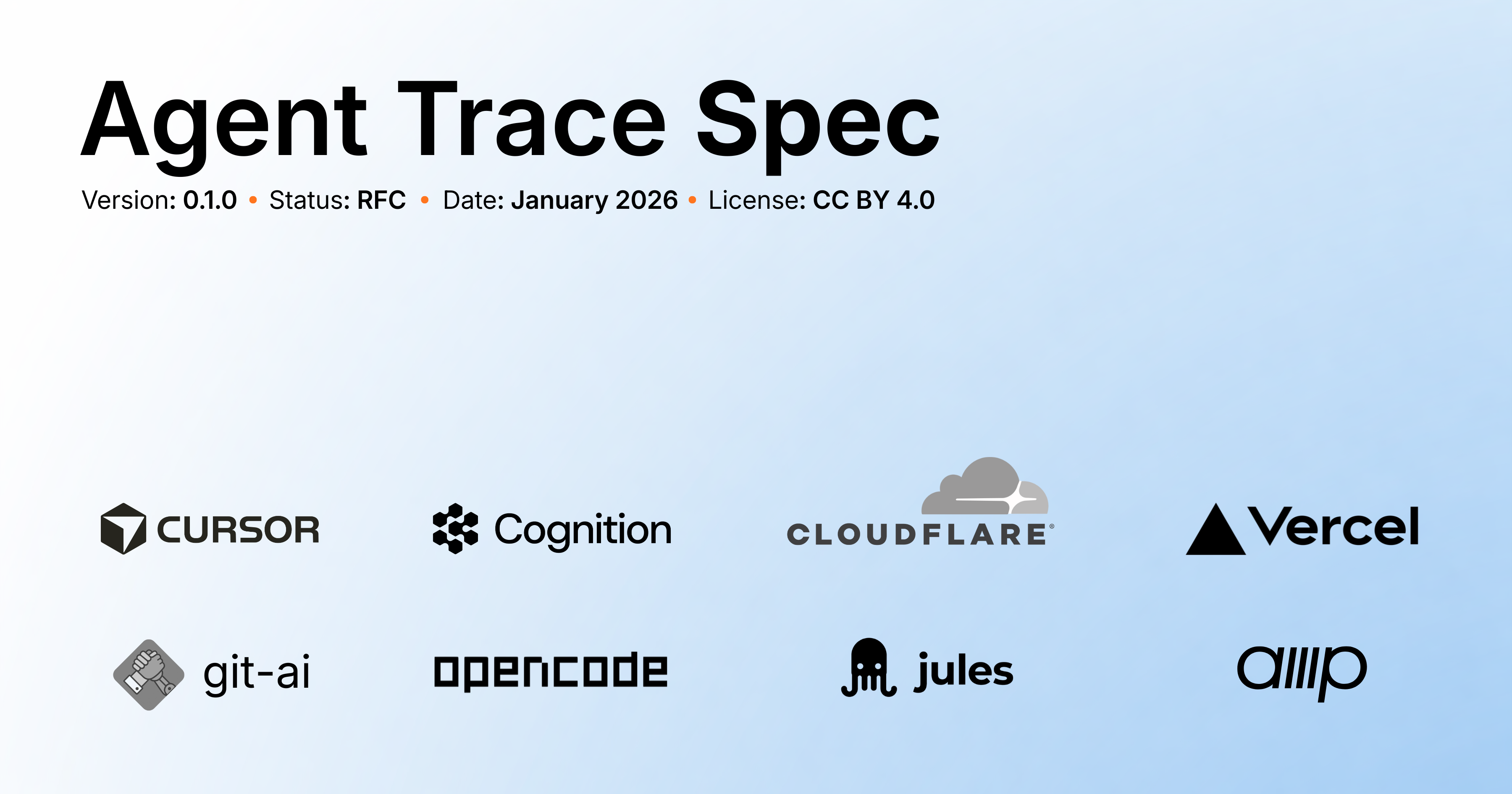
We’re excited to join in Cursor, Cloudflare, Vercel, git-ai, OpenCode and others in support of [Agent Trace](https://agent-trace.dev/). As described in the spec, Agent Trace is an open, vendor-neutral spec for recording AI contributions alongside human authorship in version-controlled codebases.
Datacurve | The data engine for frontier AI
Custom data for long-horizon reasoning, software engineering, and data science.
AI SDK by Vercel | AI SDK
The AI SDK is the TypeScript toolkit for building AI applications and agents with React, Next.js, Vue, Svelte, Node.js, and more.
DeepMind Institute
Bold, well-evidenced thinking on AGI from the lab that pioneered the field. Read the latest essays from the DeepMind Institute.
