

Abstract. This essay presents the idea of governance archaeology, an approach to learning from the past to inform the politics of the future. By reporting on a prototype historical database, we outline a strategy for co-producing a global commons of collective governance practices that can inspire institutional learning and experimentation, particularly in the face of rapid technological change and vexing global crises. Embedded in our approach is an orientation of ancestry whereby practitioners cultivate relationships of accountability and responsibility to the legacies they learn from, recognizing the harm from past patterns of exploitation. By taking seriously a wide range of historical governance practices, particularly those outside the Western canon, governance archaeology seeks to expand the options available for the design of more moral political economies.
Modular Politics: Toward a Governance Layer for Online Communities
Governance in online communities is an increasingly high-stakes challenge, and yet many basic features of offline governance legacies--juries, political parties, term limits, and formal debates, to name a few--are not in the feature-sets of the software most community platforms use. Drawing on the paradigm of Institutional Analysis and Development, this paper proposes a strategy for addressing this lapse by specifying basic features of a generalizable paradigm for online governance called Modular Politics. Whereas classical governance typologies tend to present a choice among wholesale ideologies, such as democracy or oligarchy, Modular Politics would enable platform operators and their users to build bottom-up governance processes from computational components that are modular and composable, highly versatile in their expressiveness, portable from one context to another, and interoperable across platforms. This kind of approach could implement pre-digital governance systems as well as accelerate innovation in uniquely digital techniques. As diverse communities share and connect their components and data, governance could occur through a ubiquitous network layer. To that end, this paper proposes the development of an open standard for networked governance.

Field Theory: AI as Social Science Question, Object & Tool
Uses of advanced artificial intelligence are changing how societies organize labor, govern, produce knowledge, and make meaning. In light of these developments, this essay argues that AI models, tools, and systems pose three interrelated imperatives for social science: they demand renewed attention to social theories of how technology, human experience, and social order are entangled; they require study as objects of inquiry in their own right; and they offer capabilities that may transform—or upend—the practice of social investigation itself. From Weber’s analysis of rationalization to Du Bois’s study of technology and inequality to contemporary scholarship on algorithmic governance, the essay examines what social science distinctively offers: the capacity to historicize the apparently unprecedented, to trace connections across scales, and to center those most affected by technological change. It identifies how algorithmic systems are remaking the distribution of opportunity and risk as a central task of social inquiry and asks what futures social science might help bring into being.
The hidden ‘rules of the game’ that dictate how we navigate the world | Psyche Videos
How free are we really, if human behaviour embodies the complex, intertwined webs of society and history?

Investigating ancient human DNA preservation on cave walls and in rock art
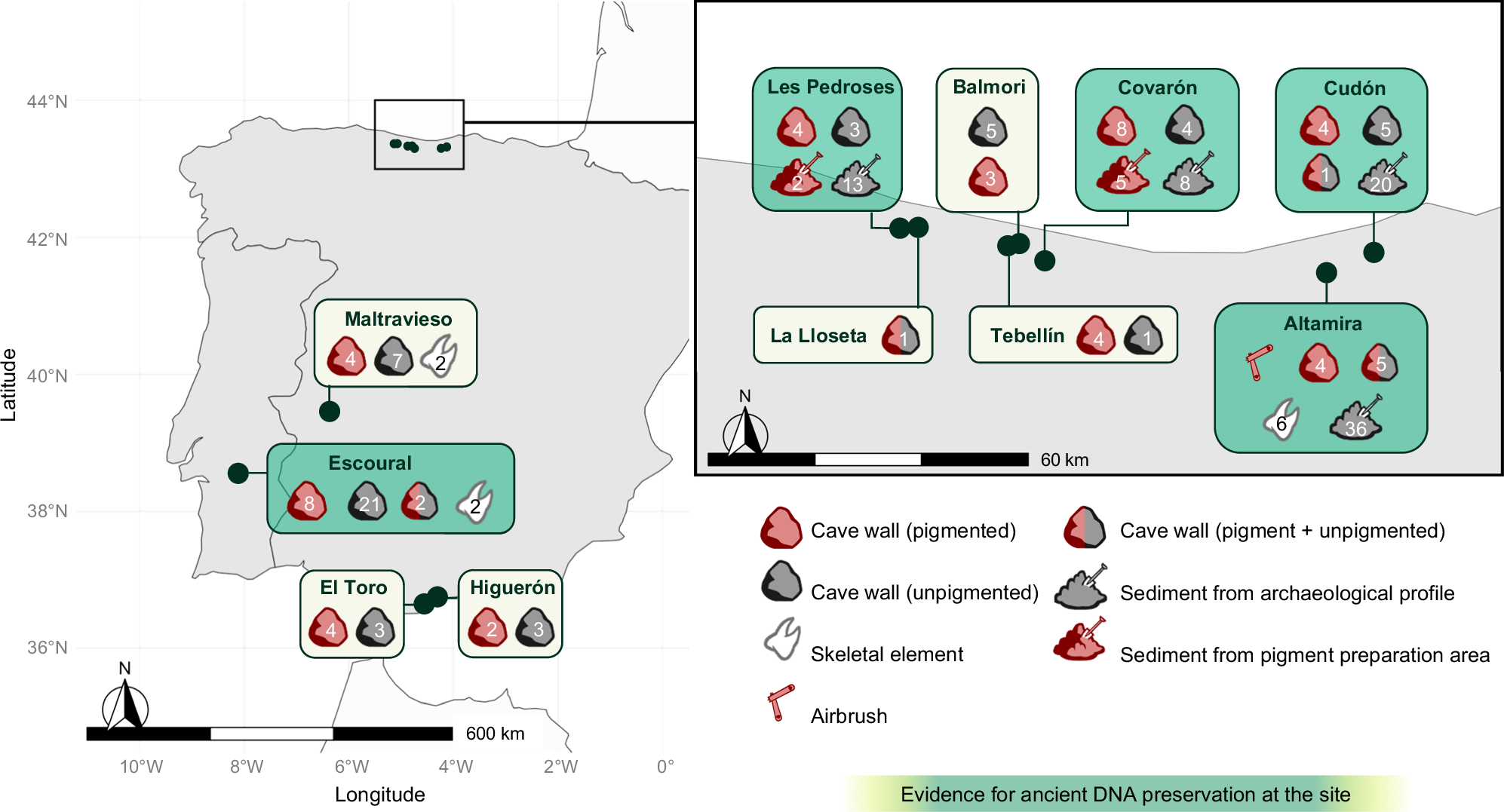
Previous efforts to link Palaeolithic cultural records to specific populations through DNA analysis have focused on materials from archaeological floor deposits such as bones, sediments, and artefacts. In this study, we explore whether rock art, a spatially distinct expression of human activity, can also preserve DNA traces from its creators. We analyse DNA preservation in pigment samples collected in and around 24 rock art panels from 11 caves across Spain and Portugal, including simple marks (from nine sites), hand stencils (Maltravieso Cave, Extremadura, Spain), and figurative paintings (Cave of Altamira, Cantabria, Spain). We recover traces of ancient human mitochondrial and nuclear DNA, unaccompanied by faunal DNA, from a pigmented calcite crust at Escoural Cave (Portugal), as well as from an unpigmented cave wall sample from the same site. The absence of faunal DNA in both samples suggests direct DNA deposition through human contact. In contrast, three additional unpigmented samples, from Escoural and Covarón Cave (Asturias, Spain), yielded mixtures of human and faunal DNA, suggesting indirect deposition. Although our results do not conclusively link ancient human DNA preservation to the generation of cave art, we show that traces of human DNA can persist on cave walls for thousands of years.
1177 BC: The Year Civilization Collapsed (Eric Cline, PhD)

The Purpose of Protocols
Every open social protocol generates shared resources, but none has produced a governance framework adequate to those resources. So who fills that vacuum?

Anthropeum
A daily game that challenges our understanding of human cultures. Ten objects. 5,000 years of human history. Guess where and when each artifact was made. See how you rank.
The Anti-Corruption Tracker: Mapping the Erosion of Oversight and Accountability
This Anti-Corruption Tracker focuses on the erosion or dismantling of oversight and accountability systems within the United States Executive Branch

Does modernisation erase cultural difference – or amplify it? | Psyche Ideas
We understandably fear the flattening effect of modernity. But global data from China to Peru tells a hopeful story

The politics of decentralization and the libertarian allure of Mastodon – Structural Integrity
I am currently reading the fabulous “Hayek’s Bastards” by Quinn Slobodian. It made me think about decentralisation in Mastodon (yes, the federated social network). And it made me think about the lack of a coherent progressive vision for the digital age. I will explain what that book has to do with both. But let’s go back to the political meaning of “decentralisation” in digital discourse first.

Governable Stacks against Digital Colonialism
Critics have been converging around the logic of colonialism to describe the Internet economy. If we are serious about the laden language of the colonial, we should be ready to learn from struggles against pre-digital empires and colonial regimes. Although acts of insurrection may attract more attention, one thing leaders and theorists of anticolonial resistance have stressed persistently is the centrality of self-governance in everyday life as both a means and end of their movements. But the dominant platforms for online communities are not well-suited for durable self-governing. Resistance often relies on the same colonial firms it opposes. What would community-governed technologies look like? This paper introduces the concept of “governable stacks”, a framework for self-governing as resistance to digital colonialism.
Culturalizing sustainability
Policy-makers and scientists dominate high-level sustainability debates but any decision that follows has consequences for ordinary people in their local communities and environments. We asked experts to reflect on the importance of embracing a culturally informed, bottom-up approach to the sustainability discourse and action.
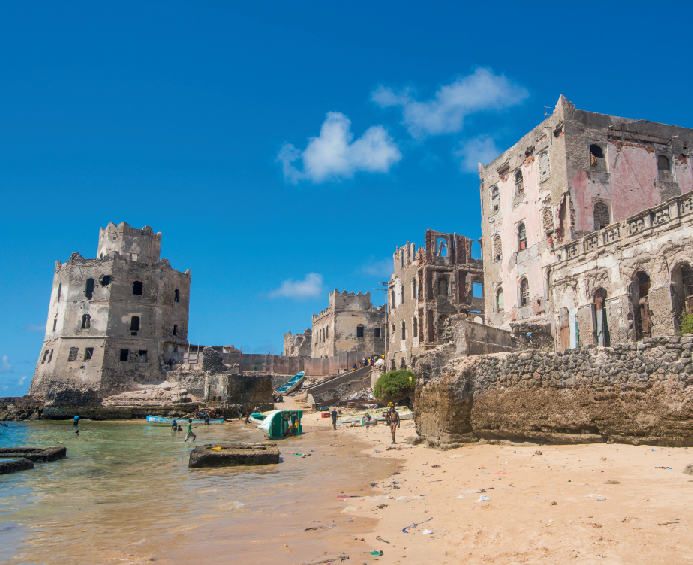
Root Systems: towards a decentralized internet at Dweb Camp
This July, I spent an amazing five days at DWeb Camp, a gathering at a former Stasi holdout in Germany’s Brandenburger forest, that has been repurposed by the Alte Hölle collective striving towards sustainable and equitable futures. The event, organised by the Internet Archive Dweb-community and the

Root Systems: towards a decentralized internet at Dweb Camp
This July, I spent an amazing five days at DWeb Camp, a gathering at a former Stasi holdout in Germany’s Brandenburger forest, that has been repurposed by the Alte Hölle collective striving towards sustainable and equitable futures. The event, organised by the Internet Archive Dweb-community and the