


The domination of scientific publishing in the Global North by major commercial publishers is harmful to science. We need the most powerful members of the research community, funders, governments and Universities, to lead the drive to re-communalise publishing to serve science not the market.
(PDF) The Drain of Scientific Publishing
PDF | The domination of scientific publishing in the Global North by major commercial publishers is harmful to science. We need the most powerful... | Find, read and cite all the research you need on ResearchGate

Center for Open Science
At the Center for Open Science, our mission is to increase openness, integrity, and reproducibility of scholarly research. Promoting these practices within the research funding and publishing communities accelerates scientific progress

The Bazaar of Scientific Knowledge | shishyko!
What if we didn't collapse all the knowledge from the scientific process into one paper?

Identify trusted publishers for your research • Think. Check. Submit.
Tools and practical resources, aiming to educate researchers, promote integrity, and build trust in credible research and publications.

What happened to Science Goodreads and how do we rebuild it? A 65 million dollar question (at least) - CAIROS Blog
The story of the rise and fall of Mendeley
Write. Publish. Keep what's yours. | Offprint
Offprint is where independent writers publish, grow an audience, and keep both for the long haul.

On Betraying Principles
Why Creative Commons must be about more than reducing friction on reuse This week, I had the experience of being told the work we are doing at Creative Commons right now is betraying the founding principles of the organization. This is not the first time and it won’t be the last.

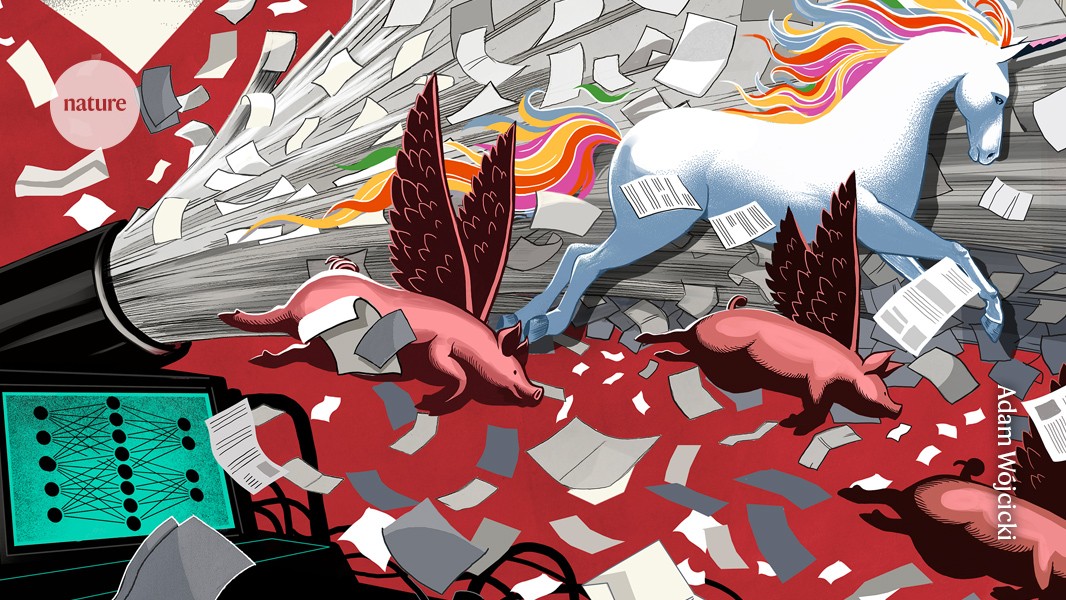
Hallucinated citations are polluting the scientific literature. What can be done?
Tens of thousands of publications from 2025 might include invalid references generated by AI, a Nature analysis suggests.

Continuous Science Foundation | Transform Science Together—Get Involved
Explore how the Continuous Science Foundation promotes open, continuous, and collaborative scientific research through innovative tools, standards, and community support.
Findings Report: Governance on Fediverse Microblogging Servers
Research report on Fediverse microblogging server governance: risks and mitigations, moderation, server leadership, federated diplomacy, and governance tooling.

Why Most Published Research Findings Are False
Summary There is increasing concern that most current published research findings are false. The probability that a research claim is true may depend on study power and bias, the number of other studies on the same question, and, importantly, the ratio of true to no relationships among the relationships probed in each scientific field. In this framework, a research finding is less likely to be true when the studies conducted in a field are smaller; when effect sizes are smaller; when there is a greater number and lesser preselection of tested relationships; where there is greater flexibility in designs, definitions, outcomes, and analytical modes; when there is greater financial and other interest and prejudice; and when more teams are involved in a scientific field in chase of statistical significance. Simulations show that for most study designs and settings, it is more likely for a research claim to be false than true. Moreover, for many current scientific fields, claimed research findings may often be simply accurate measures of the prevailing bias. In this essay, I discuss the implications of these problems for the conduct and interpretation of research.