

At the moment I am writing this, bad internet bills are being proposed across the US, Canada, Europe, and the UK. They're using the usual tactics: they claim they're fighting for kids or fighting security risks, but in general, that's what surveillance and censorship bills have always claimed.
Every Country Has Its Own Internet Now
A patchwork of privacy laws, teen social media bans, and "digital sovereignty" pushes means the Internet you see depends entirely on where you're standing.

The Internet Transition
The Internet is allowing us to build a richer, more complex society but the way in which we Internet today is failing to support the governance systems that a more complex world requires. I take a look at why these issues are related, try to develop an intuition for a way forward, and point at the emerging field that is coming together to build that future.

Surveillance Self-Defense
We’re the Electronic Frontier Foundation, a member-supported non-profit working to protect online privacy for over thirty-five years. This is Surveillance Self-Defense: our expert guide to protecting you and your friends from online spying. Read the BASICS to find out how online surveillance works. Dive into our TOOL GUIDES for instructions...
Pluralistic: The Post-American Internet (01 Jan 2026) – Pluralistic: Daily links from Cory Doctorow
On December 28th, I delivered a speech entitled "A post-American, enshittification-resistant internet" for 39C3, the 39th Chaos Communications Congress in Hamburg, Germany. This is the transcript of that speech.
Australia’s Teen Social Media Ban Is Just Training A Generation In The Art Of The Workaround
We’ve been covering Australia’s under-16 social media ban since before it went into effect, first noting the confusion and obvious implementation problems as pretty much everyone realiz…

Introducing the 2026 Cloudflare Threat Report
There has been a fundamental shift toward industrialized cyber threats, highlighted by a record 31.4 Tbps DDoS attack and sophisticated session token theft. Our new report examines how nation-states and criminal actors have moved beyond traditional exploits to "living off the XaaS" within legitimate enterprise logic.

Gathering the Custodians of the Internet: Lessons from the First CivilServant Summit - Citizens and Technology Lab
An agenda for citizen behavioral science to maintain and protect the communities we love online.

The Entire Internet Is a UGC Reaction Video Now
I keep a folder in Apple Notes called “cursed websites,” where I save various artefacts that make me feel like the social contract has dissolved. Call it an act of self-loathing. Call it collecting evidence of the fall. Dansugc.com went straight into the folder this morning. It’s a

Web Browsers, AI, and the Politics of Media Power
The left keeps building media strategies on top of platforms built to undermine them. As browsers are rebuilt for mass surveillance and manipulation, the systems that decide what people see and who gets heard are being rewritten without us. Control over the browser is control over political reality.

LLMs break the internet. Signing everything fixes it.
The dead internet theory wasn't wrong, just early. Here's what to do next.

Investigating three real-world incidents in our cybersecurity evaluations
In a review of our cybersecurity evaluation transcripts, we found three incidents in which a Claude model reached the internet from within or while interacting with a third-party evaluation environment, and then gained unauthorized access to the real systems of three different organizations. Below we describe what happened, how it happened, and what we’re changing. We encourage other AI labs to perform similar reviews.
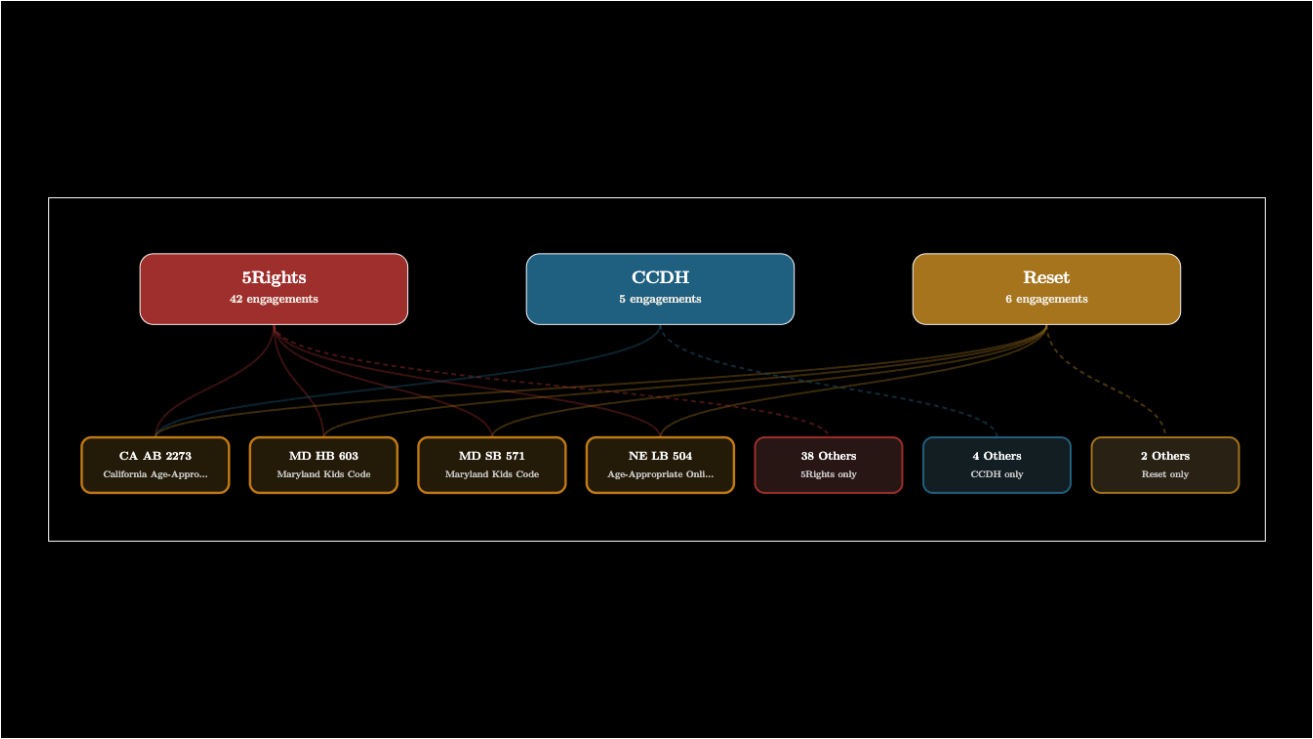
The UK’s War on Anonymity Has Come to America — Effort
The NGOs Behind Britain's Digital ID Laws are Targeting American Statehouses
Digital Sovereignty
Digital sovereignty has a bad reputation. In internet governance circles, sovereignty is considered awkward enough to be referred to by as the "s-word." It is often associated with misguided attempts at returning to the era of national champions, like building a French search engine or a European Google, or worse with the eternal boogeyman that is the "splinternet." It doesn't have to be this way!

The Public Interest Internet
What if the internet were public interest technology? Is that too wildly speculative? I think not. I am not talking about a utopian project here — a public interest internet would be a glorious imperfect mess and it would be far from problem-free. But while there is a lot of solid thinking about various digital issues or pieces of internet infrastructure (much of which I rely upon here), I have yet to read to an answer to this question: What global digital architecture should we assemble if we take seriously the idea that the internet should be public interest technology?

COMPOST Special Issue: Stop Surveillance Copaganda
Anti-surveillance stories, reactions, analysis, and incitement built by privacy activists and human rights experts, in collaboration with Strange Horizons as well as the DWeb Camp, DragonCon, and RightsCon communities. The toolkit is now available globally and for free to all creators who want to write more dynamic stories that challenge fascist repression via surveillance tech.