

Recent work on the fundamental processes of regulation in biology (Ashby, 1956) has shown the importance of a certain quantitative relation called the law of requisite variety. After this relation had been found, we appreciated that it was related to a theorem in a world far removed from the biological—that of Shannon on the quantity of noise or error that could be removed through a correction-channel (Shannon and Weaver, 1949; theorem 10). In this paper I propose to show the relationship between the two theorems, and to indicate something of their implications for regulation, in the cybernetic sense, when the system to be regulated is extremely complex. Since the law of requisite variety uses concepts more primitive than those used by entropy, I will start by giving an account of that law.
Variety (cybernetics)
In cybernetics, the term variety denotes the total number of distinguishable elements of a set, most often the set of states, inputs, or outputs of a finite-state machine or transformation, or the binary logarithm of the same quantity.[1] Variety is used in cybernetics as an information theory that is easily related to deterministic finite automata, and less formally as a conceptual tool for thinking about organization, regulation, and stability. It is an early theory of complexity in automata, complex systems,[1]: 6  and operations research.[2]
Requisite Variety - gordonbrander.com
If a system is to be stable, the number of states of its control mechanism must be greater than or equal to the number of states in the system being controlled.
Stigmergy
Stigmergy is a mechanism of indirect coordination, through the environment, between agents or actions. The principle is that the trace left in the environment by an individual action stimulates the performance of a succeeding action by the same or different agent. Agents that respond to traces in the environment receive positive fitness benefits, reinforcing the likelihood of these behaviors becoming fixed within a population over time.

All you need is links
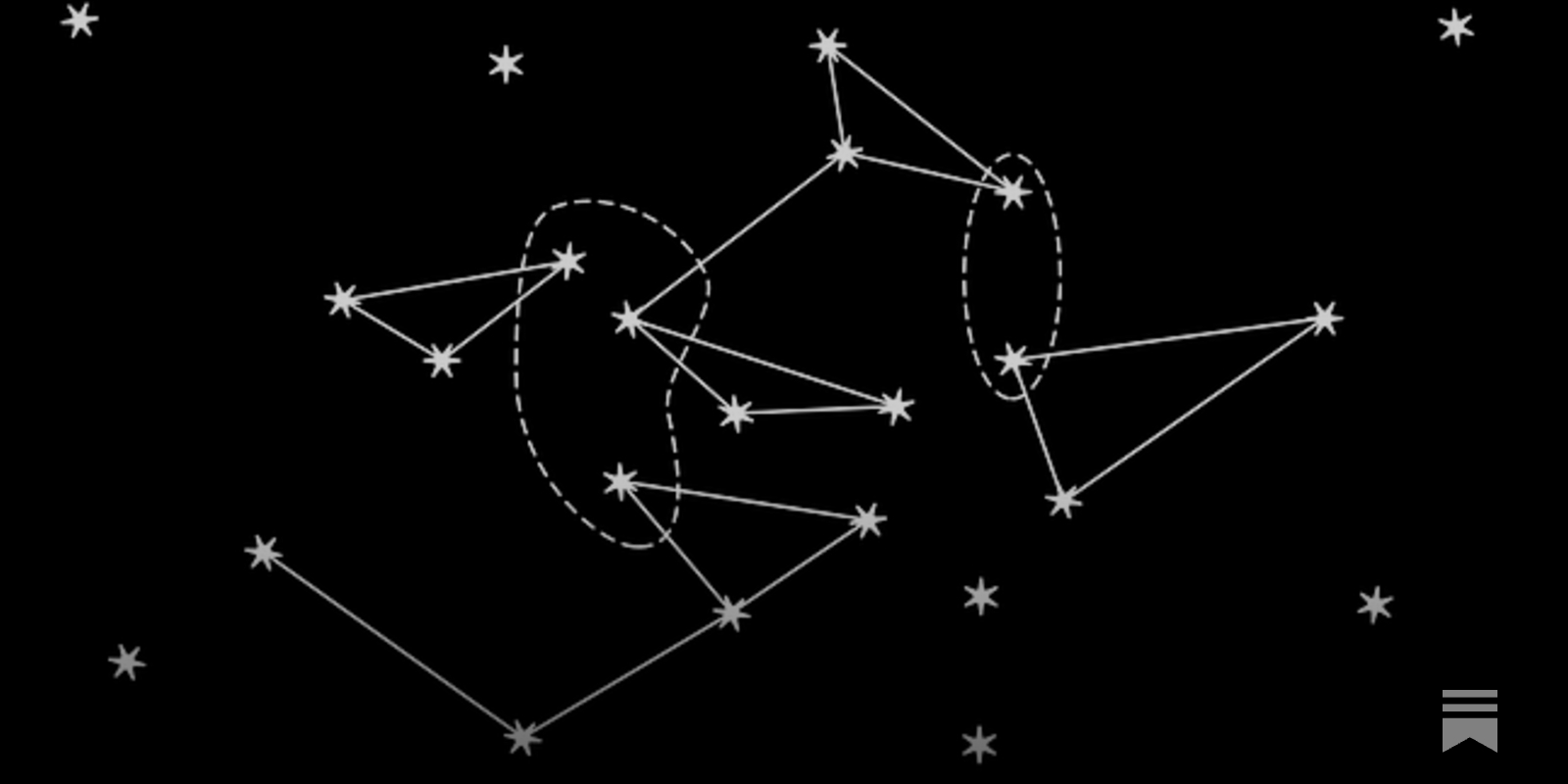
When Tim Berners Lee talks about how he designed the web, he uses an analogy from physics, describing his process as a quest to find “fundamental laws” which can generate a desired system:
Viability theory
Viability theory is an area of mathematics that studies the evolution of dynamical systems under constraints on the system state.[1][2] It was developed to formalize problems arising in the study of various natural and social phenomena, and has close ties to the theories of optimal control and set-valued analysis.
Conway's Law | Laws of Software Engineering
Organizations design systems that mirror their own communication structure.

Functional Information: Towards Synthesis of Biosemiotics and Cybernetics | MDPI
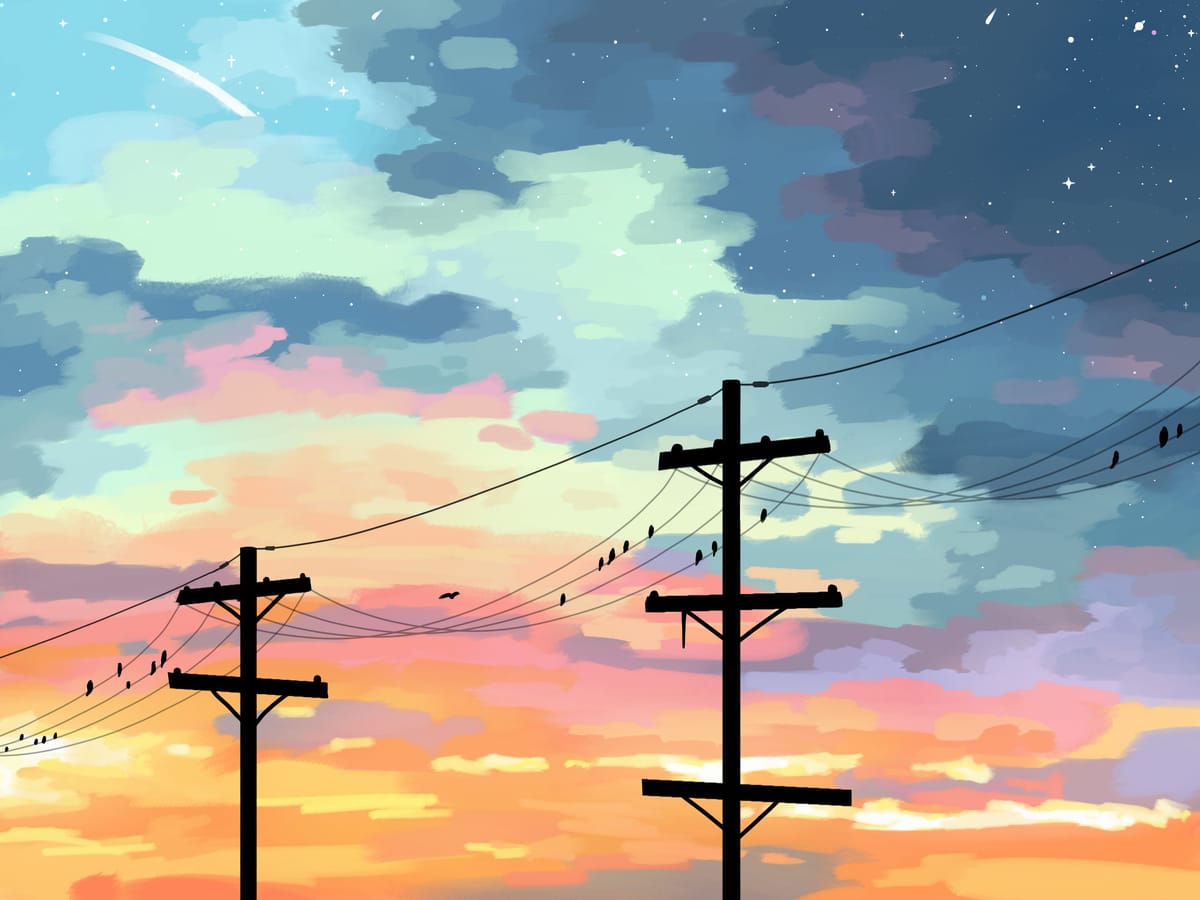
Biosemiotics and cybernetics are closely related, yet they are separated by the boundary between life and non-life: biosemiotics is focused on living organisms, whereas cybernetics is applied mostly to non-living artificial devices.
The Algorithm, Singular
A new European ruling on algorithmic amplification determines if an operator controls how content spreads on a platform. But applying it to open social networks turns out to be a problem.

On the Biology of a Large Language Model
We investigate the internal mechanisms used by Claude 3.5 Haiku — Anthropic's lightweight production model — in a variety of contexts, using our circuit tracing methodology.

Molecular Biology in the Work of Deleuze and Guattari
This article looks at Deleuze and Guattari's understanding of molecular biology, focusing particularly on their reading of two highly influential works by the eminent French molecular biologists François Jacob and Jacques Monod, La logique du vivant (The Logic of Living Systems) and Le hasard et la nécessité (Chance and Necessity). In these two works, Jacob and Monod present the significance of molecular biology in broadly reductionist terms. What is more, the lac operon model of gene regulation that they propose serves to reinforce the so-called Central Dogma of molecular biology, according to which information passes from DNA to RNA to proteins, with no reverse route. However, Deleuze and Guattari discover intensive potentials within the descriptions of molecular biology offered by both writers. It is argued that Jacob's work in particular, as it has developed in the years since the publication of La logique du vivant in 1970, has itself developed these intensive potentials.
Hyperproblems: New Ways of Doing and Communicating Science - Hyperproblems
Hyperproblems: Hyperproblems are scientific challenges whose scale, complexity, novelty and interdependence overwhelm traditional research models, requiring…
What Functional Programmers Get Wrong About Systems - Ian Duncan
Type systems verify properties of programs. Production correctness is a property of systems. The gap between these is where the interesting failures live.
Deleuze and Biosemiotics: Biological Emergence, Agency, and Subjectivity in Logic of Sense and A Thousand Plateaus