

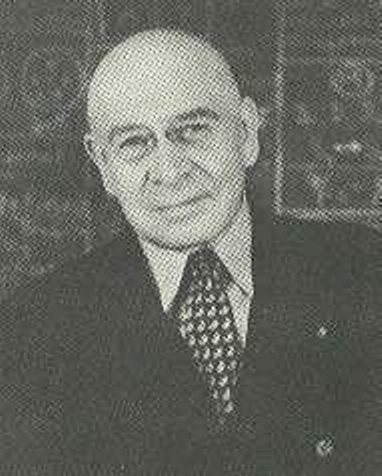
Alfred Habdank Skarbek Korzybski was a Polish-American philosopher and independent scholar who developed a field called general semantics, which he viewed as both distinct from, and more encompassing than, the field of semantics. He argued that human knowledge of the world is limited both by the human nervous system and the languages humans have developed, and thus no one can have direct access to reality, given that the most we can know is that which is filtered through the brain's responses to reality. His best known dictum is "The map is not the territory". Many of his ideas were presented in his book Science and Sanity (1933).
People Who Can't Visualize Anything Are Challenging a 300-Year-Old Theory of Thought
Mental imagery might not be as central to complex human thought as we believed, philosophers say.

Personal Knowledge : Towards a Post-Critical Philosophy
This study, first published in 1958, offers Michael Pol…

Mystified magicians of the mind
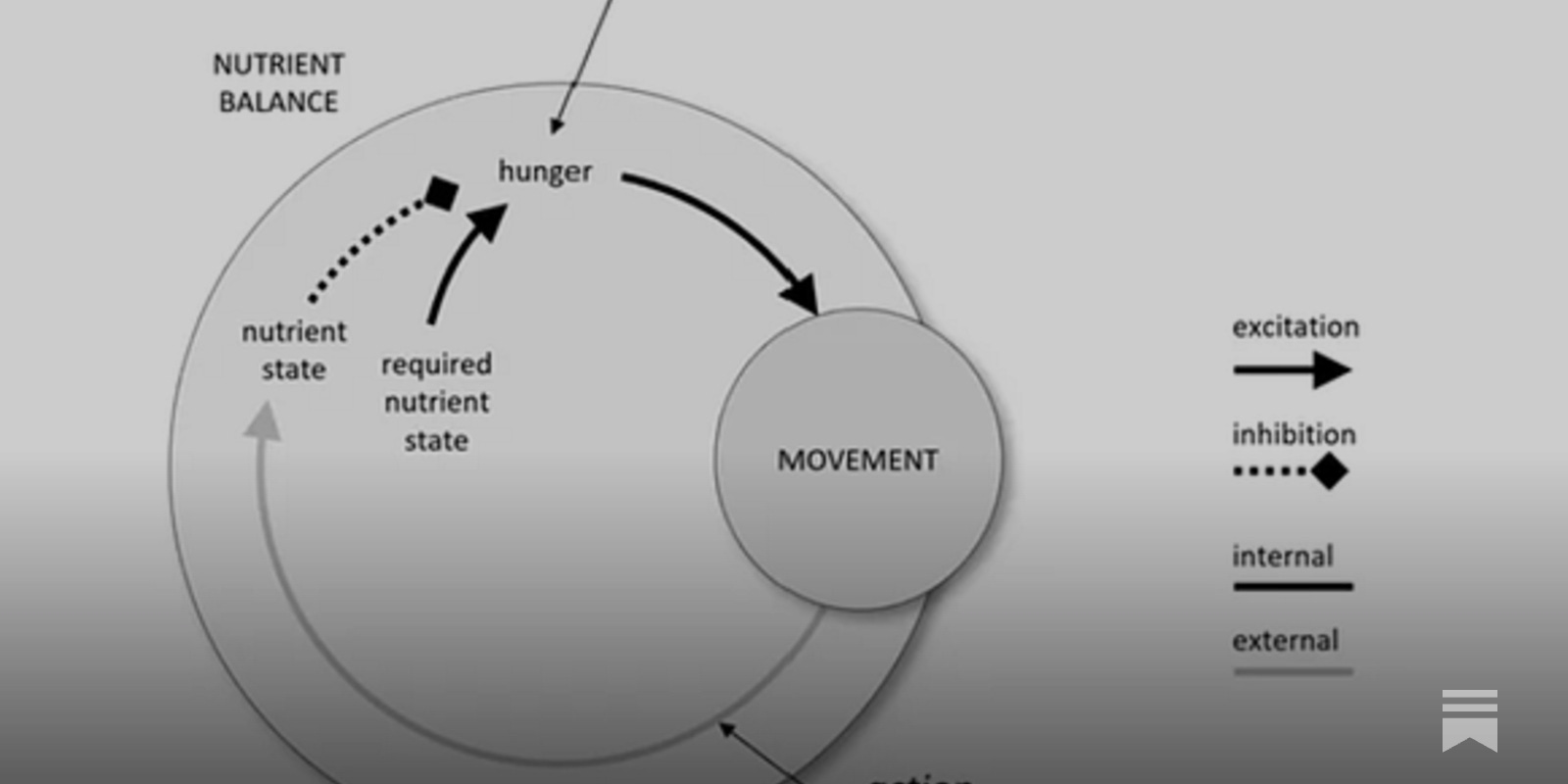
My conversation with neuroscientist Paul Cisek
Reticulum Network
For the better part of a generation, we have been taught to visualize the digital world through the lens of hierarchy. The mental maps we carry are dominated by a single, misleading image: The Cloud.
Robert Nozick’s Political Philosophy
Robert Nozick (1938–2002) was a renowned American philosopher who first came to be widely known through his 1974 book, Anarchy, State, and Utopia (1974),[1] which won the National Book Award for Philosophy and Religion in 1975. Pressing further the anti-consequentialist aspects of John Rawls’ A Theory of Justice, Nozick argued that respect for individual rights is the key standard for assessing state action and, hence, that the only legitimate state is a minimal state that restricts its activities to the protection of the rights of life, liberty, property, and contract. Despite his highly acclaimed work in many other fields of philosophy, Nozick remained best known for the libertarian doctrine advanced in Anarchy, State, and Utopia.
The hidden ‘rules of the game’ that dictate how we navigate the world | Psyche Videos
How free are we really, if human behaviour embodies the complex, intertwined webs of society and history?
The Bazaar of Scientific Knowledge | shishyko!
What if we didn't collapse all the knowledge from the scientific process into one paper?
Rotating the Space: On LLMs as a Medium for Thought
An essay on LLMs as a cognitive medium
Weird Studies
Professor Phil Ford and writer J. F. Martel host a series of conversations on art and philosophy, dwelling on ideas that are hard to think and art that opens up rifts in what we are pleased to call "reality."
You don't have to be smart if you can think clearly
When you’re on fire, problems are transparent: they’re solved simply by the act of looking at them. Even complicated layers of multiple problems can simply be glanced through like stacked panes of glass. But nobody can work that way all the time.

Mark Zuckerberg's AI manifesto is exactly why people don't like AI | TechCrunch
On Monday, Mark Zuckerberg published a 6,500-word manifesto about personal AI, largely about the possibilities for the "personal superintelligence" systems Meta AI is building.

