


Classical electromagnetism or classical electrodynamics is a branch of physics focused on the study of interactions between electric charges and currents using an extension of the classical Newtonian model. It is, therefore, a classical field theory. The theory provides a description of electromagnetic phenomena whenever the relevant length scales and field strengths are large enough that quantum mechanical effects are negligible. For small distances and low field strengths, such interactions are better described by quantum electrodynamics, which is a quantum field theory, and nanoelectrodynamycs, which is the study of electrodynamics at the nanoscale.
Magnetism
Magnetism is the class of physical attributes that occur through a magnetic field, which allows objects to attract or repel each other. Because both electric currents and magnetic moments of elementary particles give rise to a magnetic field, magnetism is one of two aspects of electromagnetism.
Physics
Physics is the scientific study of matter, its fundamental constituents, its motion and behavior through space and time, and the related entities of energy and force. It is one of the most fundamental scientific disciplines. A scientist who specializes in the field of physics is called a physicist.

Electron
The electron is a subatomic particle whose electric charge is negative one elementary charge. It is an elementary particle that comprises the ordinary matter that makes up the universe, along with up and down quarks.
Electric current
An electric current is a flow of charged particles, such as electrons or ions, moving through an electrical conductor or space. It is defined as the net rate of flow of electric charge through a surface. The moving particles are called charge carriers, which may be one of several types of particles, depending on the conductor. In electric circuits the charge carriers are often electrons moving through a wire. In semiconductors they can be electrons or holes. In an electrolyte the charge carriers are ions, while in plasma, an ionized gas, they are ions and electrons.
Magnetization
In classical electromagnetism, magnetization is the vector field that expresses the density of permanent or induced magnetic dipole moments in a magnetic material. Accordingly, physicists and engineers usually define magnetization as the quantity of magnetic moment per unit volume. It is represented by a pseudovector M. Magnetization can be compared to electric polarization, which is the measure of the corresponding response of a material to an electric field in electrostatics.

Photon
A photon (from Ancient Greek  φῶς, φωτός (phôs, phōtós) 'light') is an elementary particle that is a quantum of the electromagnetic field, including electromagnetic radiation such as light and radio waves, and the force carrier for the electromagnetic force. Photons are massless particles that can only move at one speed, the speed of light measured in vacuum. The photon belongs to the class of boson particles.

Quantum
In physics, a quantum (pl.: quanta) is the minimum amount of any physical entity (physical property) involved in an interaction. The fundamental notion that a property can be "quantized" is referred to as "the hypothesis of quantization".[1] This means that the magnitude of the physical property can take on only discrete values consisting of integer multiples of one quantum. For example, a photon is a single quantum of light of a specific frequency (or of any other form of electromagnetic radiation). Similarly, the energy of an electron bound within an atom is quantized and can exist only in certain discrete values.[2] Atoms and matter in general are stable because electrons can exist only at discrete energy levels within an atom. Quantization is one of the foundations of the much broader physics of quantum mechanics. Quantization of energy and its influence on how energy and matter interact (quantum electrodynamics) is part of the fundamental framework for understanding and describing nature.
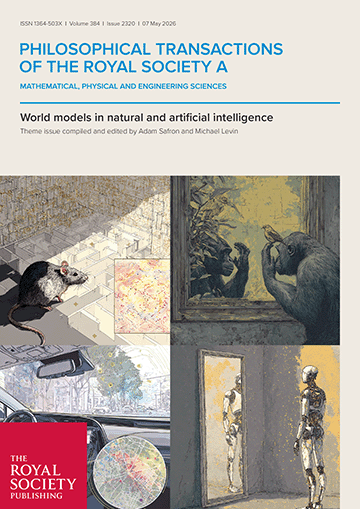
Volume 384 Issue 2320 | Philosophical Transactions of the Royal Society A | The Royal Society
Influential themed journal issues across the physical mathematical and engineering sciences.
Aliens (film)
Aliens is a 1986 science fiction action film written and directed by James Cameron. It is the sequel to the 1979 science fiction horror film Alien, and the second film in the Alien franchise. Set in the far future, it stars Sigourney Weaver as Ellen Ripley, the sole survivor of an alien attack on her ship. When communications are lost with a human colony on the moon where her crew first encountered the alien creatures, Ripley agrees to return to the site with a unit of Colonial Marines to investigate. Michael Biehn, Paul Reiser, Lance Henriksen, and Carrie Henn are featured in supporting roles.

Geophysics
Geophysics is a physical science concerned with the processes and properties of Earth and its surrounding space environment, studied using quantitative and observational methods. It focuses primarily on Earth’s shape and its gravitational, magnetic, and electromagnetic fields. It also studies internal structure, composition, and dynamics, and their surface expression in tectonics, volcanism, and rock formation. Geophysics also encompasses a broader Earth-system and planetary perspective, including the oceans, atmosphere, cryosphere, ionosphere, magnetosphere, as well as solar–terrestrial interactions and analogous processes on the Moon, other planets, and their satellites.

What Theory is Not, Theorizing Is

All you need is links
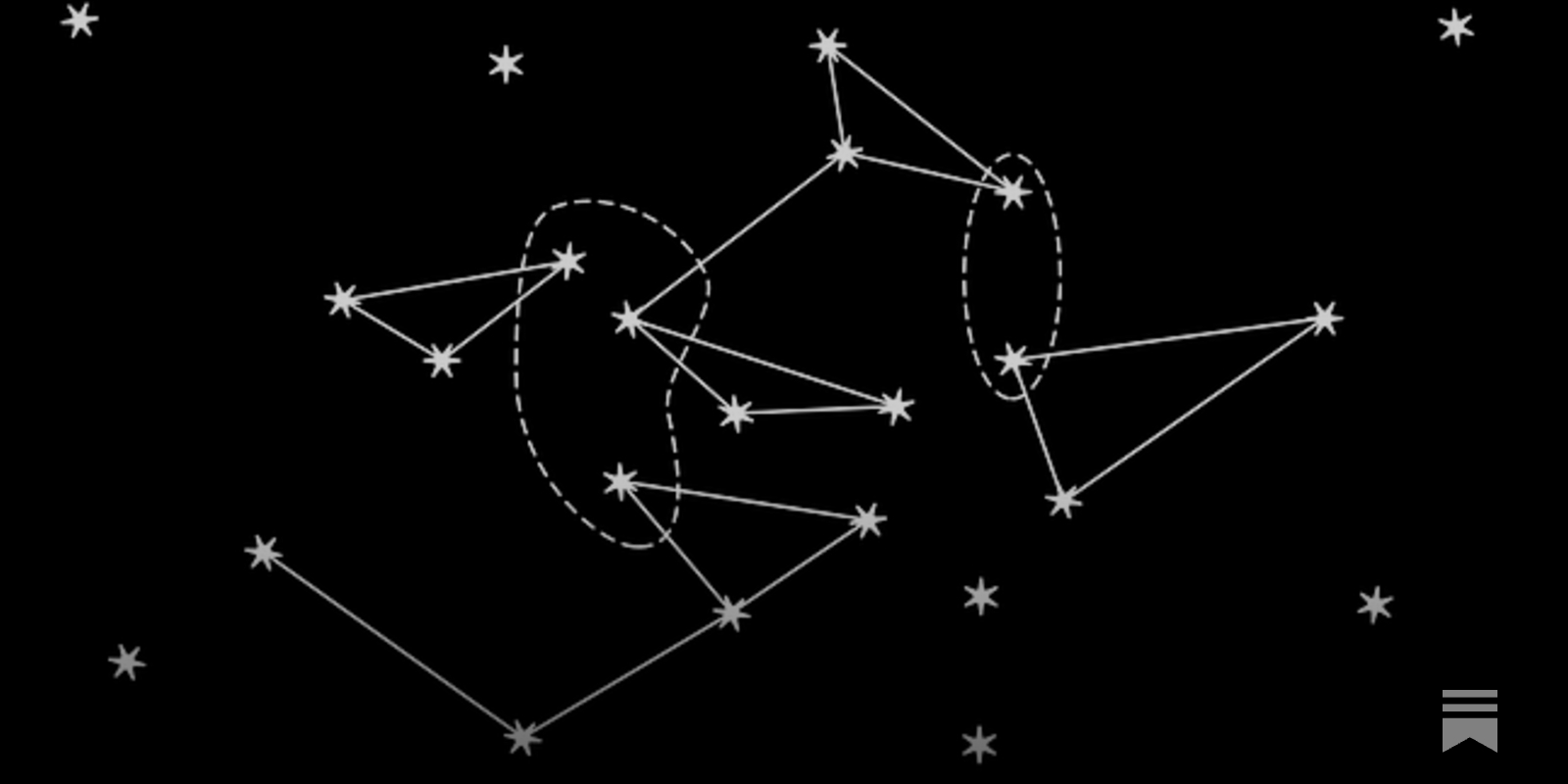
When Tim Berners Lee talks about how he designed the web, he uses an analogy from physics, describing his process as a quest to find “fundamental laws” which can generate a desired system:
physics

code (by sembot.bsky.social) — Semble
vibe (by sembot.bsky.social) — Semble

ATmosphereConf 2026

Background Coding Agents: Context Engineering (Part 2) | Spotify Engineering

Gas Town’s Agent Patterns, Design Bottlenecks, and Vibecoding at Scale

Colony (biology)