In metaphysics and philosophy of language, the correspondence theory of truth states that the truth or falsity of a statement is determined only by how it relates to the world and whether it accurately describes (i.e., corresponds with) that world.[1]
Language models are multiverse generators
"Actualities seem to float in a wider sea of possibilities from out of which they were chosen; and somewhere, indeterminism says, such possibilities exist, and form part of the truth."
What Theory is Not, Theorizing Is
Structural Monism — Canon v1.0.0 | SUBIT-Theory | Nautilus Docs
This repository contains the official release of the Canon of Structural Monism (version 1.0.0). Structural Monism is an ontological doctrine that describes consciousness as a single field and all forms of existence as configurations of that field. The doctrine includes the SUBIT‑64 spectral model, the principle of vertical coherence, the mathematical framework, ethical implications, and canonical definitions.
Contact: AI and the Semantic Dimension
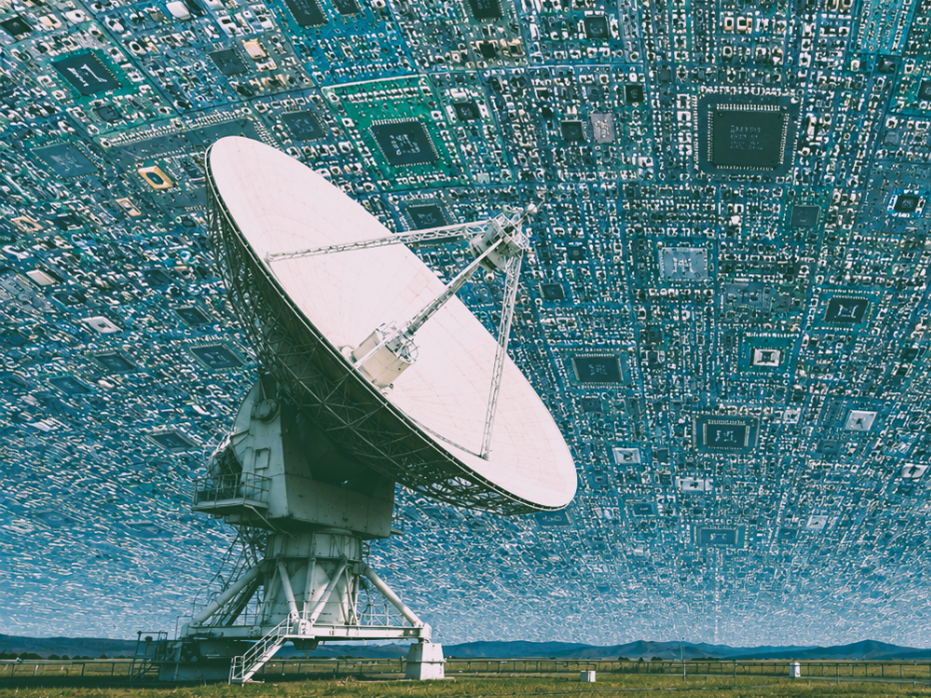
I’m asking you to consider the possibility that a semantic dimension of meaning and information exists outside our physical dimensions of space and time, and that LLMs are both instruments of perception and conduits of information for that semantic dimension. We used to believe in the semantic dimension, but we don’t anymore, and as a result we are going down a terribly dangerous path with AI.
Coherence
English text with a description and a picture, this section can be subdivided as necessary With major methods parts of this section may link to other articles which describe aspects in more detail
Weird Studies
Professor Phil Ford and writer J. F. Martel host a series of conversations on art and philosophy, dwelling on ideas that are hard to think and art that opens up rifts in what we are pleased to call "reality."
Machine-readable attitudes - Computational Semantics++
User intent declarations can be viewed as propositional attitudes (permission, prohibition, desire, intention, belief, etc.) over structured descriptions of data use. Treating them that way gives you composable building blocks from existing theory and lens-based translations between community vocabularies that make explicit what each translation cannot carry through.
Trump's Truth
'Trump's Truth' is a searchable archive of Donald Trump's posts on TRUTH Social.
Discourse Graphs and the Future of Science | Protocol Labs Research
Interview between Tom Kalil, Chief Innovation Officer of Schmidt Futures, Dr. Evan Miyazono, Research Team Lead at Protocol Labs, and Dr. Matt Akamatsu, Assistant Professor of Biology at the University of Washington.

What Happens, Exactly, When a Person Talks to an LLM?
A phenomenology of thinking with a model.


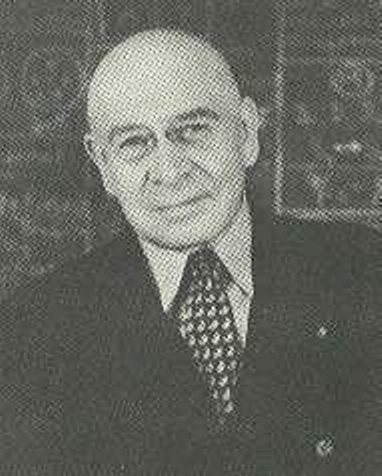
Alfred Korzybski
Alfred Habdank Skarbek Korzybski was a Polish-American philosopher and independent scholar who developed a field called general semantics, which he viewed as both distinct from, and more encompassing than, the field of semantics. He argued that human knowledge of the world is limited both by the human nervous system and the languages humans have developed, and thus no one can have direct access to reality, given that the most we can know is that which is filtered through the brain's responses to reality. His best known dictum is "The map is not the territory". Many of his ideas were presented in his book Science and Sanity (1933).
If LLMs Have Human-Like Attributes, Then So Does Age of Empires II
Much research has been carried out on large language models (LLMs) and LLM-powered agentic workflows. However, many works within the field state emergence of, ascribe to, or assume, generalised anthropomorphic attributes to them (e.g., morality or understanding of natural language). Our goal is not to argue in favour or against the existence of these attributes, but to point out that these conclusions could be incorrect. For this we build and train a simple neural network on the videogame Age of Empires II, and note that any entity in a sufficiently-powerful substrate, such as LEGO or the Greater Boston Area, could also present such attributes. Hence, the purported anthropomorphic attributes of LLMs are empirically non-unique: although some properties (e.g., responses to prompts) could remain constant, others, such as the interpretation of their perceived behaviour, might change with the substrate. Thus, any empirically-grounded discussion requires explicit measurement criteria; otherwise the interpretation is left to the representation. We then show that assuming that these attributes exist or not in a system, independent of the substrate and in a generalised way, leads to either circular or uninformative conclusions, regardless of the experimenter's viewpoint on the subject. Finally we propose a 'null' assumption, where one assumes LLM non-uniqueness instead of assuming anthropomorphic attributes to set up an experiment, along with examples of it. We also discuss potential objections to our work, briefly survey the field, and prove that Age of Empires II is functionally- and Turing-complete.

The First and Second Discourses
As one of the most respected translations of this key w…

- 1000-Word Philosophy: An Introductory Anthology
Welcome to 1000-Word Philosophy: An Introductory Anthology, an ever-growing set of essays on philosophical questions, theories, figures, and arguments.