


The deep biosphere is the part of the biosphere that resides below the first few meters of the land surface and seafloor. It extends 10 km (6.2 mi) below the continental surface and 21 km (13 mi) below the sea surface, at temperatures that may reach beyond 120 °C (248 °F) which is comparable to the maximum temperature where a metabolically active organism has been found. It includes all three domains of life and the genetic diversity rivals that on the surface.
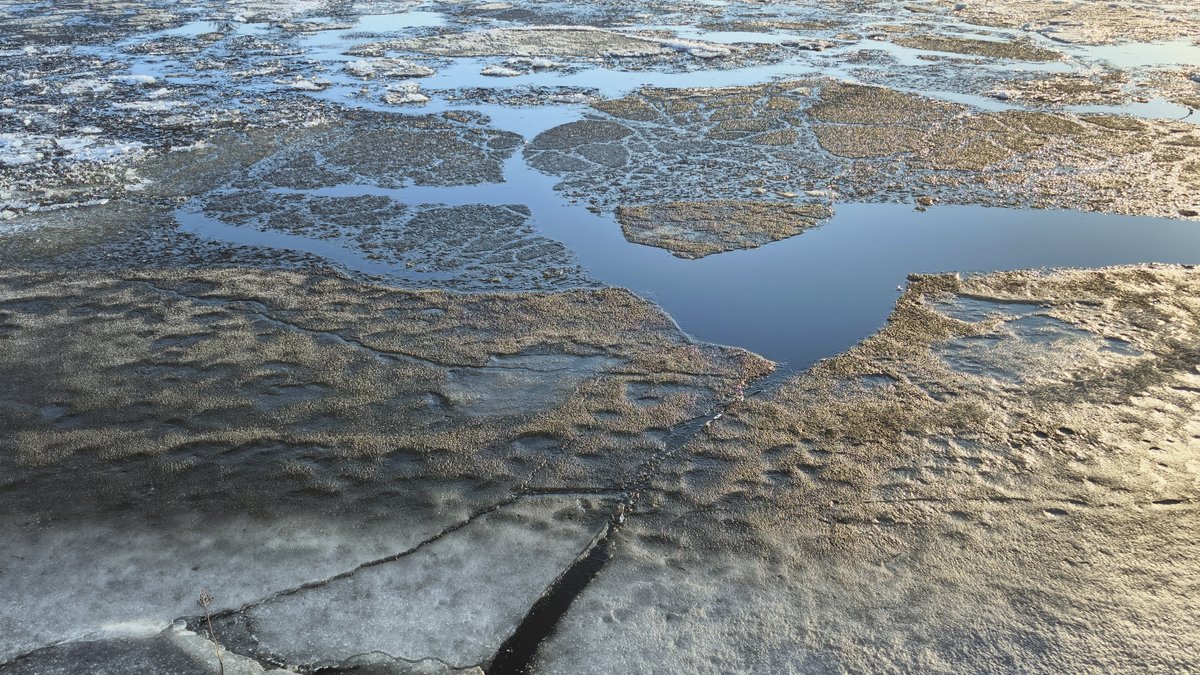
It’s 90 degrees in the Arctic right now
The Arctic is heating faster than the rest of the planet. New data illustrate how dire that is
On Atproto and Atmospheric Groups - The Tropopause
I'm starting A Fresh Blog(tm), this time on Pckt. I wanted a dedicated space to post about development, atproto, and community thoughts, and a new space felt li...

Beyond the Statusphere: Part 1, Resolving the User's PDS - Hitchhiker's Guide to the Atmosphere
Learn why it's important to resolve the user's PDS and use that in your ATProto applications.
Geophysics
Geophysics is a physical science concerned with the processes and properties of Earth and its surrounding space environment, studied using quantitative and observational methods. It focuses primarily on Earth’s shape and its gravitational, magnetic, and electromagnetic fields. It also studies internal structure, composition, and dynamics, and their surface expression in tectonics, volcanism, and rock formation. Geophysics also encompasses a broader Earth-system and planetary perspective, including the oceans, atmosphere, cryosphere, ionosphere, magnetosphere, as well as solar–terrestrial interactions and analogous processes on the Moon, other planets, and their satellites.

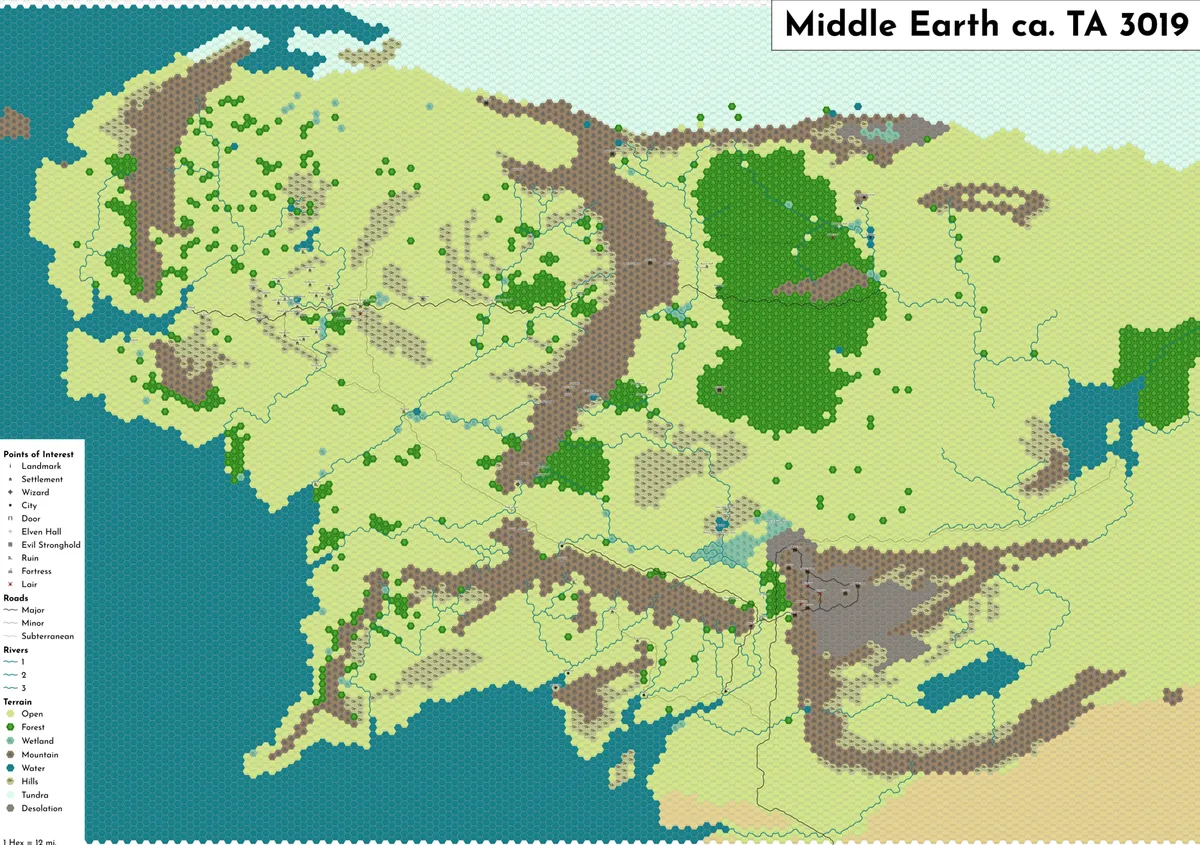
12-mile Middle Earth Hexmap
I've been re-reading the Hobbit & Lord of The Rings this year, so naturally my latest cartographic hyperfixation was to make a map of Tolkien's paracosm. ...
ATmosphereConf 2026
ATmosphereConf is the global atproto community conference. Join us in Vancouver, Canada, March 26th - 29th, 2026.

ATmosphereConf 2026
ATmosphereConf is the global atproto community conference. Join us in Vancouver, Canada, March 26th - 29th, 2026.
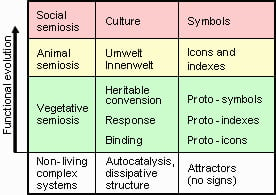
Functional Information: Towards Synthesis of Biosemiotics and Cybernetics | MDPI
Biosemiotics and cybernetics are closely related, yet they are separated by the boundary between life and non-life: biosemiotics is focused on living organisms, whereas cybernetics is applied mostly to non-living artificial devices.
Indian subcontinent
The Indian subcontinent is a physiographic region of Asia below the Himalayas which projects into the Indian Ocean between the Bay of Bengal to the east and the Arabian Sea to the west. It is now divided between Bangladesh, India, and Pakistan. Although the terms "Indian subcontinent" and "South Asia" are often also used interchangeably to denote a wider region which includes, in addition, Bhutan, the Maldives, Nepal and Sri Lanka, the "Indian subcontinent" is more of a geophysical term, whereas "South Asia" is more geopolitical. "South Asia" frequently also includes Afghanistan, which is not considered part of the subcontinent even in extended usage.
Bedrock
In geology, bedrock is the solid rock that lies under weathered rock and unconsolidated or loose superficial deposits in the near surface part of Earth's crust or the crust of another terrestrial planet. The top of the bedrock is known as rockhead.

ATProto Ethos Daniel Holmgren AtmosphereConf Seattle 2025
aturi.to - Universal links for the ATmosphere
Share ATProto content with anyone, let them choose where to view it