


Douglass Cecil North was an American economist known for his work in economic history. Along with Robert Fogel, he received the Nobel Memorial Prize in Economic Sciences in 1993. In the words of the Nobel Committee, North and Fogel "renewed research in economic history by applying economic theory and quantitative methods in order to explain economic and institutional change."
Elinor Ostrom
Elinor Claire "Lin" Ostrom was an American political scientist and political economist whose work was associated with New Institutional Economics and the resurgence of political economy. In 2009, she was awarded the Nobel Memorial Prize in Economic Sciences for her "analysis of economic governance, especially the commons", which she shared with Oliver E. Williamson; she was the first woman to win the prize.

Risk, Uncertainty and Profit
A timeless classic of economic theory that remains fasc…
Erik Brynjolfsson on Twitter / X
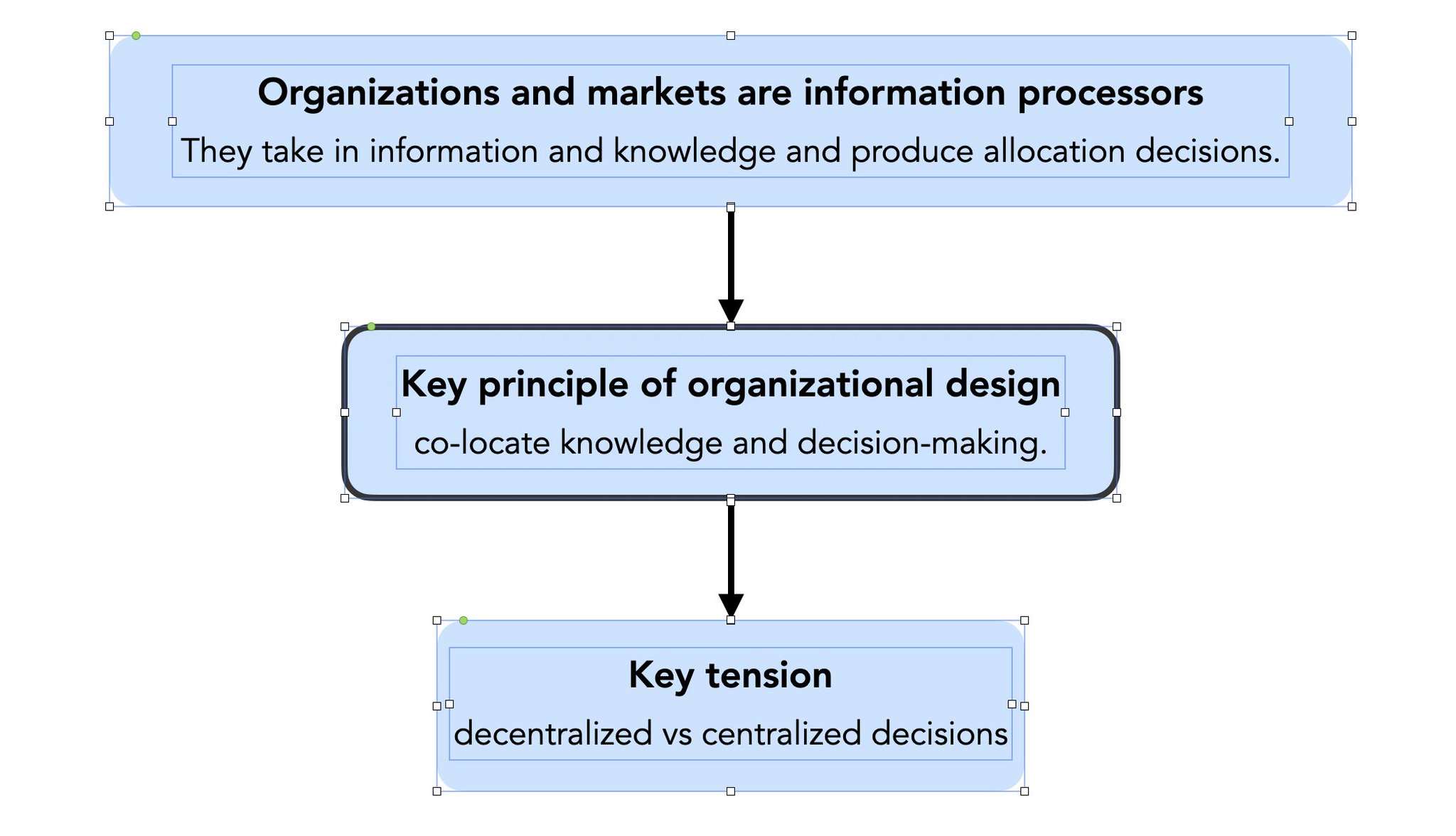
The @nytimes piece today by @ByrneEdsal13590 highlights a concern I share: “If we stay on the current path, the risk of extreme concentration — both economic and political — is very real.”In work with @zhitzig, we ask why AI may shift the balance between dispersed knowledge… pic.twitter.com/10vOTRj4Dq— Erik Brynjolfsson (@erikbryn) March 17, 2026
John Rawls
John Rawls (b. 1921, d. 2002) was an American political philosopher in the liberal tradition. His theory of justice as fairness describes a society of free citizens holding equal basic rights and cooperating within an egalitarian economic system. His theory of political liberalism explores the legitimate use of political power in a democracy, and envisions how civic unity might endure despite the diversity of worldviews that free institutions allow. His writings on the law of peoples set out a liberal foreign policy that aims to create a permanently peaceful and tolerant international order.
Robert Nozick’s Political Philosophy
Robert Nozick (1938–2002) was a renowned American philosopher who first came to be widely known through his 1974 book, Anarchy, State, and Utopia (1974),[1] which won the National Book Award for Philosophy and Religion in 1975. Pressing further the anti-consequentialist aspects of John Rawls’ A Theory of Justice, Nozick argued that respect for individual rights is the key standard for assessing state action and, hence, that the only legitimate state is a minimal state that restricts its activities to the protection of the rights of life, liberty, property, and contract. Despite his highly acclaimed work in many other fields of philosophy, Nozick remained best known for the libertarian doctrine advanced in Anarchy, State, and Utopia.
Passive Income Ideas That Actually Work (No, You Don't Need to Be Rich First)
Explore practical passive income ideas that can generate revenue even while you sleep. Start today with the right approach.

CMV: The labor theory of value is flawed
72 votes, 407 comments. This might be an obscure topic, however, in some—largely Marxist circles— the approach seems to motivate much of the dialogue…
Yoram Barzel and the Economics of Institutions, by Lueck Dean
This article examines the relationship between the work of Yoram Barzel and Institutional Economics. Barzel has developed a property rights/transaction cost approach to economics and has written on to
A Real Political Economy of Technology - The Ideas Letter
Two technological futures are competing for political and material priority: generative AI and the green transition. Benanav argues that while AI is marketed as a world-reordering breakthrough, its productivity gains…

Bernie Sanders’ AI Sovereign Wealth Fund Plan - Schneier on Security
Let no one accuse Bernie Sanders of ducking the big questions. Writing in the New York Times last week, the senator asked: “Will the future of humanity be determined by a handful of billionaires who have promoted and developed AI, with virtually no democratic input, who stand to become even richer and more powerful than they are today?” We agree entirely that this is one of the most potent questions facing global democracy today. Our book, Rewiring Democracy, surveys the emerging uses for and impacts of AI in democracy around the world and reaches the same conclusion: that the most urgent risk posed by AI is the ...
« La transition alimentaire est indispensable à la survie de l’espèce humaine »
TRIBUNE. Les pouvoirs publics seuls sont en mesure de favoriser un changement profond et généralisé dans les habitudes des citoyens par la promotion de solutions de remplacement à l’alimentation carnée, relèvent, dans une tribune au « Monde », les philosophes Florence Burgat et Jean-Claude Monod.

Why Knight Foundation Invested in Bluesky - Knight Foundation
John Sands explains our bet on a social web that protects speech, creates opportunity for publishers and creators, and enables research on the information ecosystem.

</> htmx ~ Yes, and...
In this essay, Carson Gross discusses his advice to young people interested in computer science worried about the future given the advancements in AI.
Henry From Online
The personal site & portfolio of creative web developer Henry from Online

An Inquiry into the Nature and Causes of the Wealth of …
Adam Smith's masterpiece, first published in 1776, is t…
