Elinor Claire "Lin" Ostrom was an American political scientist and political economist whose work was associated with New Institutional Economics and the resurgence of political economy. In 2009, she was awarded the Nobel Memorial Prize in Economic Sciences for her "analysis of economic governance, especially the commons", which she shared with Oliver E. Williamson; she was the first woman to win the prize.
Douglass North
Douglass Cecil North was an American economist known for his work in economic history. Along with Robert Fogel, he received the Nobel Memorial Prize in Economic Sciences in 1993. In the words of the Nobel Committee, North and Fogel "renewed research in economic history by applying economic theory and quantitative methods in order to explain economic and institutional change."

Capitalism, the Commons, and Divine Right - Schumacher Center for a New Economics
Barnes defines the commons as "the sum of all we inherit together and must pass on, undiminished and more or less equally, to our heirs." The commons includes watersheds, air, DNA, playgrounds, Main Street, radio waves, political systems, and numerous other natural resources and social innovations. Barnes suggests that the commons should be held in trust for the benefit of current and future generations as a way of countering the power of the market and its search for short-term private profits.
Bernie Sanders’ AI Sovereign Wealth Fund Plan - Schneier on Security
Let no one accuse Bernie Sanders of ducking the big questions. Writing in the New York Times last week, the senator asked: “Will the future of humanity be determined by a handful of billionaires who have promoted and developed AI, with virtually no democratic input, who stand to become even richer and more powerful than they are today?” We agree entirely that this is one of the most potent questions facing global democracy today. Our book, Rewiring Democracy, surveys the emerging uses for and impacts of AI in democracy around the world and reaches the same conclusion: that the most urgent risk posed by AI is the ...
Erik Brynjolfsson on Twitter / X
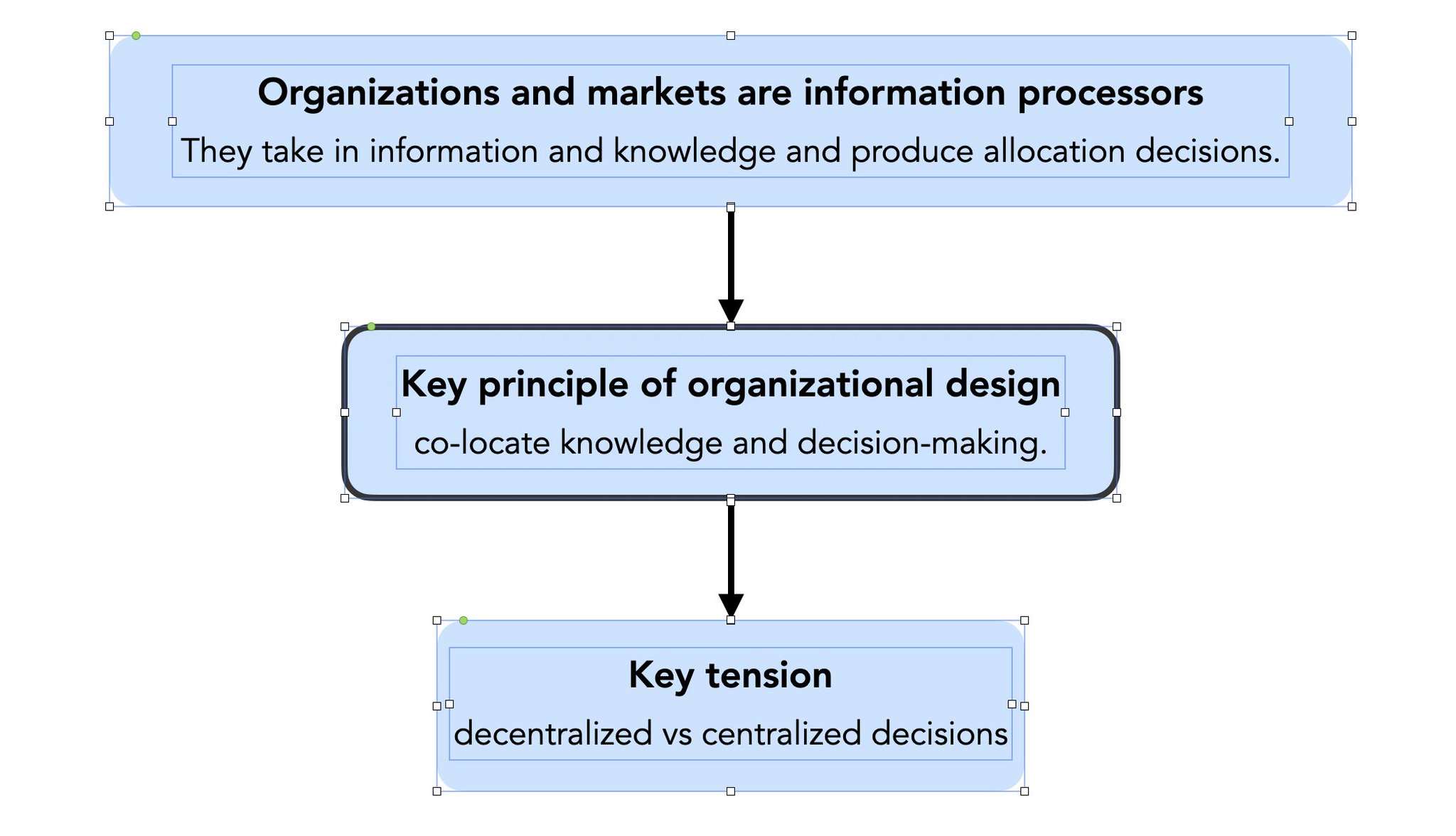
The @nytimes piece today by @ByrneEdsal13590 highlights a concern I share: “If we stay on the current path, the risk of extreme concentration — both economic and political — is very real.”In work with @zhitzig, we ask why AI may shift the balance between dispersed knowledge… pic.twitter.com/10vOTRj4Dq— Erik Brynjolfsson (@erikbryn) March 17, 2026
The Socialist Charcuterie Board - The Ideas Letter
Taking issue with Benanav’s institutional vision of a democratic political economy of technology, Morozov argues that generative AI exposes a deeper problem that socialism has yet to solve: how to…
Reply on Bluesky and Decentralization | bryan newbold (⛱️ sabbatical mode)
This is a reply to Christine Lemmer-Webber's thoughtful (and widely read) "How decentralized is Bluesky really?" blog post. I am so happy and grateful that Christine took the time to write up her thoughts and put them out in public. Her writing sheds light on substantive differences between protoco...
&handle=@bnewbold.net&avatar=https://cdn.bsky.app/img/avatar/plain/did:plc:44ybard66vv44zksje25o7dz/bafkreiglnysron3h2je7nf6cmvtimuaxi7xe2c7rkxitmks3mzmajnc2ou)
Who Pays for the Commons?
Three and a half years after the emergence of generative AI as a new technology paradigm, there is broad agreement that AI companies have extracted enorm...


Automate the C-Suite - The Ideas Letter
Weatherby argues that Benanav’s and Morozov’s essays on AI and the left miss a deeper reality: Today’s AI is not a neutral tool operating within capitalism but the materialization of…

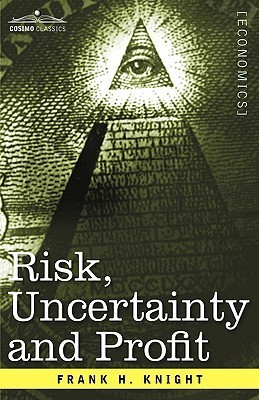
Risk, Uncertainty and Profit
A timeless classic of economic theory that remains fasc…
Editor's Notes: Entering the Circular Firing Squad
Today, we published the second Alan Elrod article in a week on the toxic politics surrounding the Democratic candidate for Maine's Senate seat, Graham Platner. What's more, yesterday we published Katherine Alejandra Cross in a similar vein. Why the focus on Platner, when so much is at stake

How to win a best paper award (or, an opinionated take on how to do important research)
An opinionated perspective on how to do important research that makes a difference (and sometimes win awards).
Political science
Political science[a] is the social scientific study of politics. It deals with systems of governance and power, and the analysis of political activities, political thought, political behavior, and associated constitutions and laws. Specialists in the field are political scientists.
Author, Poet, Visual Storyteller | Ellen Everett