


Energy medicine is a branch of alternative medicine based on a pseudo-scientific belief that healers can channel "healing energy" into patients and effect positive results. This esoteric concept of "energy" used by proponents of energy medicine is unrelated to the scientific concept of energy.
Reiki
Reiki is a pseudoscientific form of energy healing, a type of alternative medicine originating in Japan. Reiki practitioners use a technique called palm healing or hands-on healing through which, according to practitioners, a "universal energy" is transferred through the palms of the practitioner to the client, to encourage emotional or physical healing. It is based on qi ("chi"), which practitioners say is a universal life force, although there is no empirical evidence that such a life force exists.
Physics
Physics is the scientific study of matter, its fundamental constituents, its motion and behavior through space and time, and the related entities of energy and force. It is one of the most fundamental scientific disciplines. A scientist who specializes in the field of physics is called a physicist.

Political science
Political science[a] is the social scientific study of politics. It deals with systems of governance and power, and the analysis of political activities, political thought, political behavior, and associated constitutions and laws. Specialists in the field are political scientists.
Science
Science is a systematic discipline that builds and organises knowledge in the form of testable hypotheses and predictions about the universe.[1][2] Modern science is typically divided into two – or three – major branches:[3] the natural sciences, which study the physical world, and the social sciences, which study individuals and societies.[4][5] While referred to as the formal sciences, the study of logic, mathematics, and theoretical computer science are typically regarded as separate because they rely on deductive reasoning instead of the scientific method as their main methodology.[6][7][8][9] Meanwhile, applied sciences are disciplines that use scientific knowledge for practical purposes, such as engineering and medicine.[10][11][12]

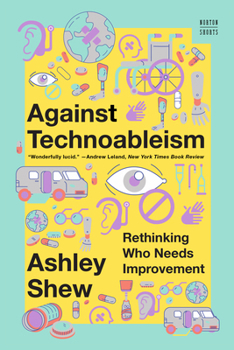
Against Technoableism: Rethinking Who... book by Ashley Shew
Buy a cheap copy of Against Technoableism: Rethinking Who... book by Ashley Shew. When bioethicist and professor Ashley Shew became a self-described hard-of-hearing chemobrained amputee with Crohn's disease and tinnitus, there was no returning... Free Shipping on all orders over $20.
Oil and Gas=Peril and Poverty/ Solar and Wind=Prosperity and Protection
2026 has changed the psychological meaning of energy forever

Technoableism
Technoableism is a belief in the power of technology that considers the elimination of disability a good thing, something we should strive for. It’s a classic form of ableism—bias against disabled people, bias in favor of nondisabled ways of life. Technoableism is the use of technologies to reassert those biases, often under the guise of empowerment.

Alexander Shulgin
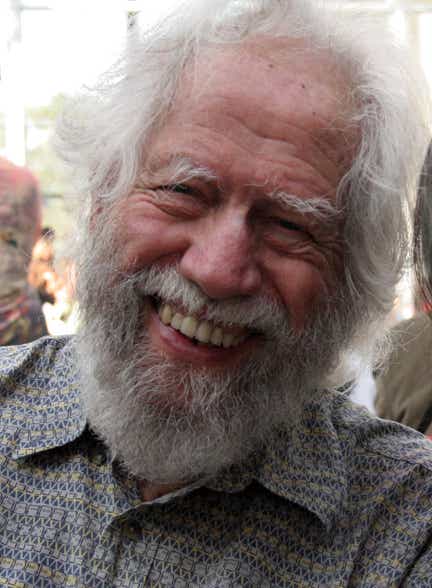
Dr. Alexander "Sasha" Theodore Shulgin or "Shura" was an American chemist, pharmacologist, psychopharmacologist, and author. Over the span of 50 years, he created more new psychedelic drugs than any other known person to date - nearly 250 by his own accounts.[1] Shulgin also rediscovered the drug MDMA and established its use as a tool in clinical psychedelic therapy for a short time.
Hyperproblems: New Ways of Doing and Communicating Science - Hyperproblems
Hyperproblems: Hyperproblems are scientific challenges whose scale, complexity, novelty and interdependence overwhelm traditional research models, requiring…
Research
Research is creative and systematic work undertaken to increase the stock of knowledge. It involves the collection, organization, and analysis of evidence to increase understanding of a topic, characterized by a particular attentiveness to controlling sources of bias and error. These activities are characterized by accounting and controlling for biases. A research project may be an expansion of past work in the field. To test the validity of instruments, procedures, or experiments, research may replicate elements of prior projects or the project as a whole.
Natural science
Natural science or empirical science is a branch of science concerned with the description, understanding, and prediction of natural phenomena, based on empirical evidence from observation and experimentation. Mechanisms such as peer review and reproducibility of findings are used to try to ensure the validity of scientific advances.
Social research
Social research is research conducted by social scientists following a systematic plan. Social research methodologies can be classified as quantitative and qualitative.[1]
Chemistry
Chemistry is the scientific study of the properties and behavior of matter.[1][2] It is a physical science within the natural sciences that studies the chemical elements that make up matter and compounds made of atoms, molecules and ions: their composition, structure, properties, behavior and the changes they undergo during reactions with other substances.[3][4][5][6] Chemistry also addresses the nature of chemical bonds in chemical compounds.
Esotericism in One Piece: Navigating Magic, Symbolism and Spirituality
Introduction Idea Presentation

Buddhist philosophy
Buddhist philosophy is the ancient Indian philosophical system that developed within the religio-philosophical tradition of Buddhism. It comprises all the philosophical investigations and systems of rational inquiry that developed among various schools of Buddhism in ancient India following the parinirvāṇa of Gautama Buddha, as well as the further developments which followed the spread of Buddhism throughout Asia.