Engineering geology is the application of geology to engineering study for the purpose of assuring that the geological factors regarding the location, design, construction, operation and maintenance of engineering works are recognized and accounted for. Engineering geologists provide geological and geotechnical recommendations, analysis, and design associated with human development and various types of structures. The realm of the engineering geologist is essentially in the area of earth-structure interactions, or investigation of how the earth or earth processes impact human made structures and human activities.
Geophysics
Geophysics is a physical science concerned with the processes and properties of Earth and its surrounding space environment, studied using quantitative and observational methods. It focuses primarily on Earth’s shape and its gravitational, magnetic, and electromagnetic fields. It also studies internal structure, composition, and dynamics, and their surface expression in tectonics, volcanism, and rock formation. Geophysics also encompasses a broader Earth-system and planetary perspective, including the oceans, atmosphere, cryosphere, ionosphere, magnetosphere, as well as solar–terrestrial interactions and analogous processes on the Moon, other planets, and their satellites.

Bedrock
In geology, bedrock is the solid rock that lies under weathered rock and unconsolidated or loose superficial deposits in the near surface part of Earth's crust or the crust of another terrestrial planet. The top of the bedrock is known as rockhead.

Geomys, a blueprint for a sustainable open source maintenance firm
Announcing Geomys, a small firm of professional maintainers with a portfolio of critical Go projects.

Natural science
Natural science or empirical science is a branch of science concerned with the description, understanding, and prediction of natural phenomena, based on empirical evidence from observation and experimentation. Mechanisms such as peer review and reproducibility of findings are used to try to ensure the validity of scientific advances.
Science
Science is a systematic discipline that builds and organises knowledge in the form of testable hypotheses and predictions about the universe.[1][2] Modern science is typically divided into two – or three – major branches:[3] the natural sciences, which study the physical world, and the social sciences, which study individuals and societies.[4][5] While referred to as the formal sciences, the study of logic, mathematics, and theoretical computer science are typically regarded as separate because they rely on deductive reasoning instead of the scientific method as their main methodology.[6][7][8][9] Meanwhile, applied sciences are disciplines that use scientific knowledge for practical purposes, such as engineering and medicine.[10][11][12]
ATScience Ecosystem Map
An interactive map of research applications, infrastructure and communities built on AT Protocol.

The Shape of Friction · Matthias Ott
Web design engineer, UX designer, teacher, and speaker – helping teams build websites and digital products with a focus on CSS, accessibility, and performance.

Are We Really Engineers?
This is part one of the Crossover Project. Part two is here and part three is here. A conference talk based on this work is now available here. I sat in front of Mat, idly chatting about tech and cuisine. Before now, I had known him mostly for his cooking pictures on Twitter, the kind that made me envious of suburbanites and their 75,000 BTU woks. But now he was the test subject for my new project, to see if it was going to be fruitful or a waste of time.
Building tech in the world’s secret R&D hub
Zurich has created a technology ecosystem nearing the density of Silicon Valley.

You have to know how to drive the car
There are lots of different ways to be a software engineer. You can grind out code for twelve hours a day to make the world a better place. You can focus on glue work: process-based work that makes everyone around you more successful. You can join the conversation with your product manager and designer colleagues to influence what gets built, not just how it gets built. You can climb the ladder to staff engineer and above, or you can take it easy and focus on your hobbies. But whichever of these you choose, you have to know how tech companies work.

The flat-pack skyscraper: how wood can shape the cities of the future
The long read: Our buildings are monuments to extraction and extreme emissions. But what if we turned from destructive concrete to timber?

Chemistry
Chemistry is the scientific study of the properties and behavior of matter.[1][2] It is a physical science within the natural sciences that studies the chemical elements that make up matter and compounds made of atoms, molecules and ions: their composition, structure, properties, behavior and the changes they undergo during reactions with other substances.[3][4][5][6] Chemistry also addresses the nature of chemical bonds in chemical compounds.
Physics
Physics is the scientific study of matter, its fundamental constituents, its motion and behavior through space and time, and the related entities of energy and force. It is one of the most fundamental scientific disciplines. A scientist who specializes in the field of physics is called a physicist.

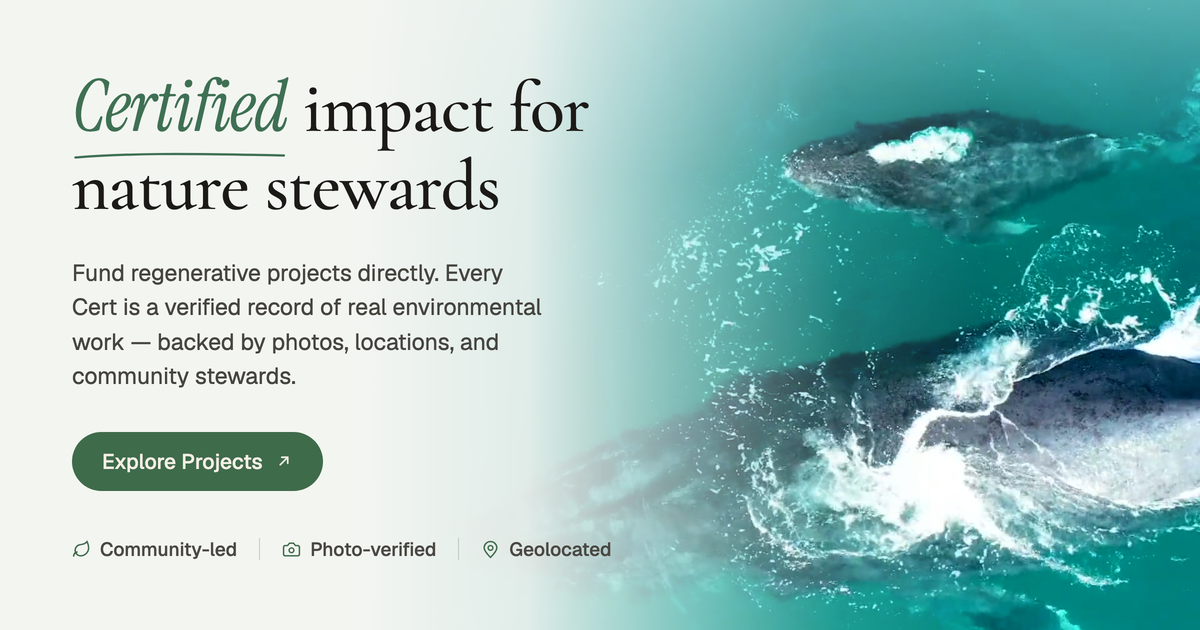
GainForest — Biodiversity Observations & Nature Projects
Explore field observations, biodiversity records, and nature projects from communities and organizations using GainForest.
The Color of Reason: The Idea of'Race'in Kant's Anthropology
Anthropology and Physical Geography. They were popular lectures attended by people from the general public. The present manual contains my lectures on anthropology. As to Physical Geography, however, it will not be possible, considering my age, to