


In the field of artificial intelligence (AI), a hallucination or artificial hallucination is a response generated by AI that contains false or misleading information presented as fact. These terms draw a loose analogy with human psychology, where a hallucination typically involves false percepts.
AI Hallucination Cases Database – Damien Charlotin
Database tracking legal cases where generative AI produced hallucinated citations submitted in court filings.
Artificial Intelligence Glossary | Stanford HAI
Artificial Intelligence (AI) is rapidly growing, with new terms and concepts being introduced at a breakneck speed. You may have seen terms such as AGI, machine learning, or foundation models in media headlines, emerging legislation, or in your everyday life.
People are not friction
The Gell-Mann Amnesia Effect of AI is a pretty well documented phenomenon: The Gell-Mann amnesia effect is a cognitive bias describing the tendency of individuals to critically assess media reports in a domain they are knowledgeable about, yet continue to trust reporting in other areas despite recognizing similar potential inaccuracies.
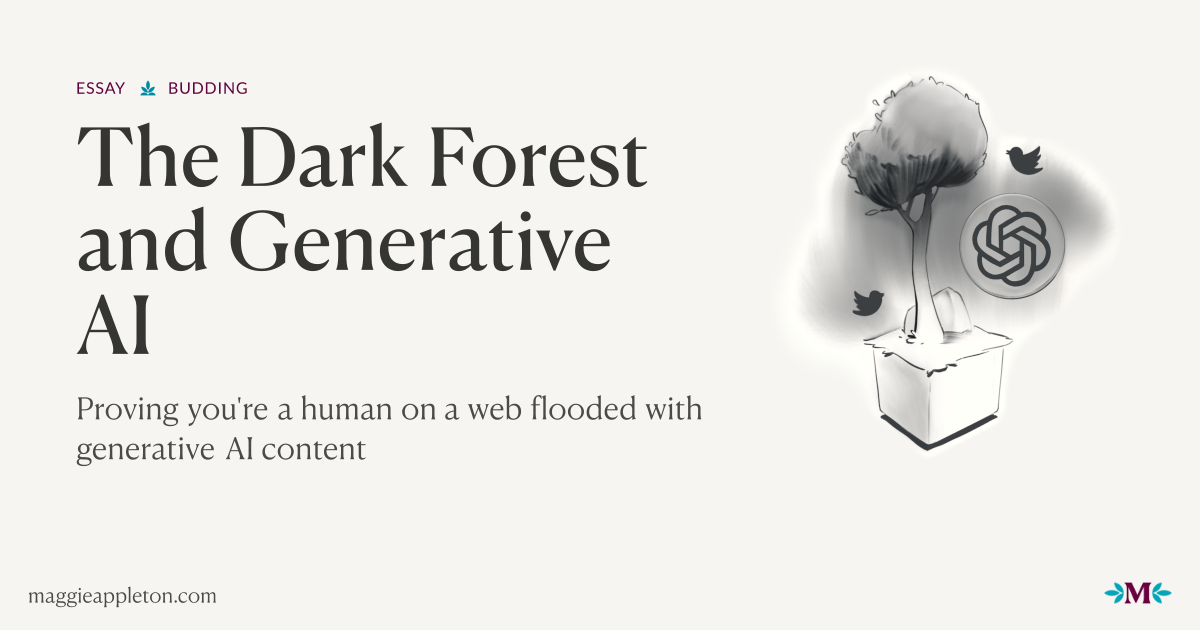
The Dark Forest and Generative AI
Proving you're a human on a web flooded with generative AI content
When AI builds itself
Our progress toward recursive self-improvement, and its implications.

In defense of not reading the code | Ben Shoemaker
Last week, I wrote an article whose purpose was to discuss where I saw AI-assisted coding going. That's not what generated 200 comments worth of passionate...
AI fatigue is real and nobody talks about it | Siddhant Khare
You're using AI to be more productive. So why are you more exhausted than ever? The paradox every engineer needs to confront.
Think First, AI Second
Three principles for keeping your cognitive edge while leveraging AI's capabilities
Chinese room
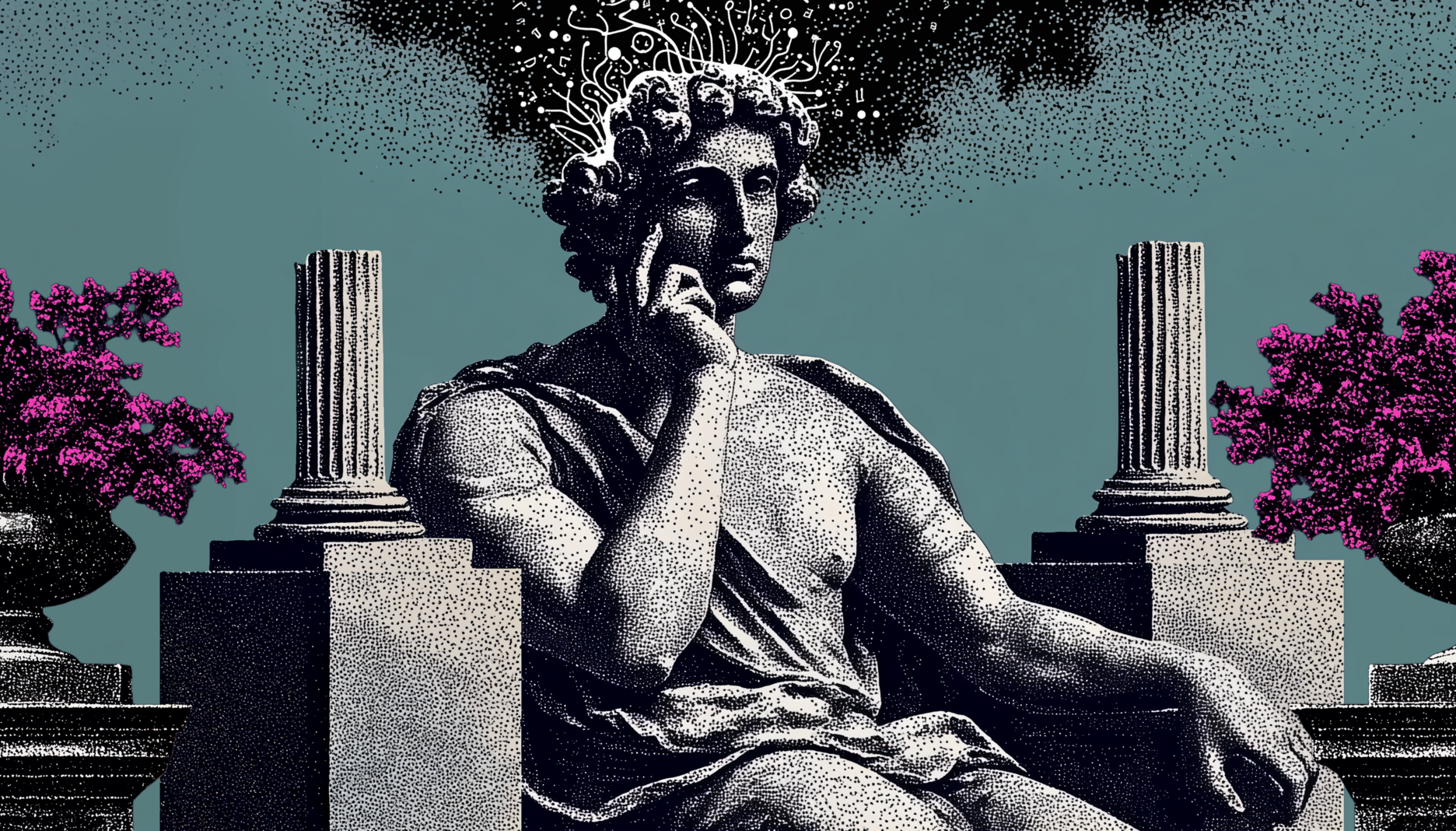
The Chinese room argument holds that a computer executing a program cannot have a mind, understanding, or consciousness, regardless of how intelligently or human-like the program may make the computer behave. The argument was presented in a 1980 paper by the American philosopher John Searle, entitled "Minds, Brains, and Programs" and published in the journal Behavioral and Brain Sciences.[1] Similar arguments had been made previously by others, including Gottfried Wilhelm Leibniz, Peter Winch, and Anatoly Dneprov. Searle's version has been widely discussed in the years since.[2] The centerpiece of Searle's argument is a thought experiment known as the "Chinese room".[3]
LettaBot - Your personal AI that remembers
Your personal AI with living memory. Remembers everything. Runs on your computer. Grows with you.
AI should help us produce better code - Agentic Engineering Patterns
AI should help us produce better code - Agentic Engineering Patterns
How Claude marks AI-generated content | Claude Help Center
Anthropic has signed the EU AI Act's Article 50(2) Code of Practice on Transparency of AI-Generated Content, as a provider of both generative AI models and generative AI systems. This article describes how we’re planning to put those commitments into practice, how marking works, and what its limitations are. We’ll update this article and publish more detailed technical guidance as it becomes available.

identifAI - Discover Origin. Reveal Insight
identifAI pioneers discerning human-AI creations, bolstering authenticity with advanced models. Determine if an image come from AI or from human!

Substackers Say New AI Detection Tool Is a ‘Witch Hunt’
“I’m not going to apologize for using AI in the creation process.”

How does AI impact skill formation?
Two days ago, the Anthropic Fellows program released a paper called How AI Impacts Skill Formation. Like other papers on AI before it, this one is being treated as proof that AI makes you slower and dumber. Does it prove that?

Agentic coding and persistent returns to expertise
Anthropic is an AI safety and research company that's working to build reliable, interpretable, and steerable AI systems.