The history of philosophy is the systematic study of the development of philosophical thought. It focuses on philosophy as rational inquiry based on argumentation, but some theorists also include myth, religious traditions, and proverbial lore.
Buddhist philosophy
Buddhist philosophy is the ancient Indian philosophical system that developed within the religio-philosophical tradition of Buddhism. It comprises all the philosophical investigations and systems of rational inquiry that developed among various schools of Buddhism in ancient India following the parinirvāṇa of Gautama Buddha, as well as the further developments which followed the spread of Buddhism throughout Asia.
Eastern philosophy
Eastern philosophy (also called Asian philosophy or Oriental philosophy) includes the various philosophies that originated in East and South Asia, including Chinese philosophy, Japanese philosophy, Korean philosophy, and Vietnamese philosophy, which are dominant in East Asia;[1] and Indian philosophy (including Hindu philosophy, Jain philosophy, Buddhist philosophy), which are dominant in South Asia, Southeast Asia, Tibet, Japan and Mongolia.[2][3]
- 1000-Word Philosophy: An Introductory Anthology
Welcome to 1000-Word Philosophy: An Introductory Anthology, an ever-growing set of essays on philosophical questions, theories, figures, and arguments.

Methodology
In its most common sense, methodology is the study of research methods. However, the term can also refer to the methods themselves or to the philosophical discussion of associated background assumptions. A method is a structured procedure for bringing about a certain goal, like acquiring knowledge or verifying knowledge claims. This normally involves various steps, like choosing a sample, collecting data from this sample, and interpreting the data. The study of methods concerns a detailed description and analysis of these processes. It includes evaluative aspects by comparing different methods. This way, it is assessed what advantages and disadvantages they have and for what research goals they may be used. These descriptions and evaluations depend on philosophical background assumptions. Examples are how to conceptualize the studied phenomena and what constitutes evidence for or against them. When understood in the widest sense, methodology also includes the discussion of these more abstract issues.
Political philosophy
Political philosophy studies the theoretical and conceptual foundations of politics. It examines the nature, scope, and legitimacy of political institutions, such as states. The field investigates different forms of government, ranging from democracy to authoritarianism, and the values guiding political action, like justice, equality, and liberty. As a normative field, political philosophy focuses on desirable norms and values, in contrast to political science, which emphasizes empirical description.
Philosophy Experiments — Interactive Thought Experiments
Explore 27 interactive philosophy experiments that challenge your moral intuitions, test your logical reasoning, and probe the boundaries of belief.
Historicale
Test your knowledge of history by ordering events on a timeline. A daily historical chronology challenge.

Leo Strauss
Leo Strauss was a twentieth-century German Jewish émigréto the United States whose intellectual corpus spans ancient, medievaland modern political philosophy and includes, among others, studies ofPlato, Maimonides, Machiavelli, Hobbes, Spinoza, and Nietzsche.Strauss wrote mainly as a historian of philosophy and most of hiswritings take the form of commentaries on important thinkers and theirwritings. Yet as he put it: “There is no inquiry into thehistory of philosophy that is not at the same time aphilosophical inquiry” (PL, p. 41). While much of hisphilosophical project involved an attempt to rethink pre-modernphilosophy, the impetus for this reconsideration and the philosophicalproblems that vexed Strauss most were decidedly modern. Straussespecially worried about the modern philosophical grounds forpolitical and moral normativity as well as about the philosophical,theological, and political consequences of what he took to be modernphilosophy’s overinflated claims for the self-sufficiency ofreason.
Personal Knowledge : Towards a Post-Critical Philosophy
This study, first published in 1958, offers Michael Pol…

The Theory of Moral Sentiments
The foundation for a general system of morals, this 174…

Introspection
Introspection is the examination of one's own conscious thoughts and feelings.[1] In psychology, the process of introspection relies on the observation of one's mental state, while in a spiritual context it may refer to the examination of one's soul.[2] Introspection is closely related to human self-reflection and self-discovery and is contrasted with external observation.
Online Etymology Dictionary
The online etymology dictionary (etymonline) is the internet's go-to source for quick and reliable accounts of the origin and history of English words, phrases, and idioms.

Getting started - Docs
Discourse Graphs are a tool and ecosystem for collaborative knowledge synthesis, enabling researchers to map ideas and arguments in a modular, composable graph format.
Discourse Graphs and the Future of Science | Protocol Labs Research
Interview between Tom Kalil, Chief Innovation Officer of Schmidt Futures, Dr. Evan Miyazono, Research Team Lead at Protocol Labs, and Dr. Matt Akamatsu, Assistant Professor of Biology at the University of Washington.

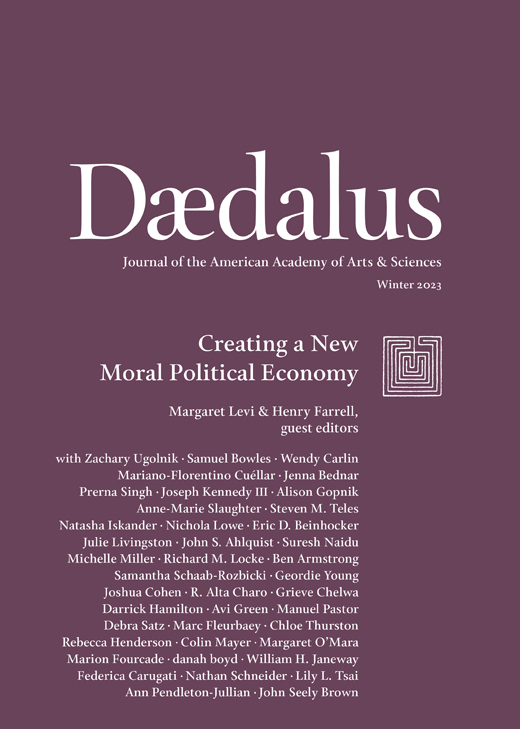
Governance Archaeology: Research as Ancestry
Abstract. This essay presents the idea of governance archaeology, an approach to learning from the past to inform the politics of the future. By reporting on a prototype historical database, we outline a strategy for co-producing a global commons of collective governance practices that can inspire institutional learning and experimentation, particularly in the face of rapid technological change and vexing global crises. Embedded in our approach is an orientation of ancestry whereby practitioners cultivate relationships of accountability and responsibility to the legacies they learn from, recognizing the harm from past patterns of exploitation. By taking seriously a wide range of historical governance practices, particularly those outside the Western canon, governance archaeology seeks to expand the options available for the design of more moral political economies.
The hidden ‘rules of the game’ that dictate how we navigate the world | Psyche Videos
How free are we really, if human behaviour embodies the complex, intertwined webs of society and history?