

Sociological Methodology is a biannual peer-reviewed academic journal that covers research methods in the field of sociology. The editors-in-chief are David Melamed and Mike Vuolo (The Ohio State University). It was established in 1969 and is currently published by SAGE Publications on behalf of the American Sociological Association.[1]
Social research
Social research is research conducted by social scientists following a systematic plan. Social research methodologies can be classified as quantitative and qualitative.[1]
Methodology
In its most common sense, methodology is the study of research methods. However, the term can also refer to the methods themselves or to the philosophical discussion of associated background assumptions. A method is a structured procedure for bringing about a certain goal, like acquiring knowledge or verifying knowledge claims. This normally involves various steps, like choosing a sample, collecting data from this sample, and interpreting the data. The study of methods concerns a detailed description and analysis of these processes. It includes evaluative aspects by comparing different methods. This way, it is assessed what advantages and disadvantages they have and for what research goals they may be used. These descriptions and evaluations depend on philosophical background assumptions. Examples are how to conceptualize the studied phenomena and what constitutes evidence for or against them. When understood in the widest sense, methodology also includes the discussion of these more abstract issues.
Where Does Community Live?
ActivityPub and ATProto both promise to rebuild social life online, but they answer the question of where community actually forms in fundamentally different ways. Protocol design is institutional design, and right now those institutions are being built.

Field Theory: AI as Social Science Question, Object & Tool
Uses of advanced artificial intelligence are changing how societies organize labor, govern, produce knowledge, and make meaning. In light of these developments, this essay argues that AI models, tools, and systems pose three interrelated imperatives for social science: they demand renewed attention to social theories of how technology, human experience, and social order are entangled; they require study as objects of inquiry in their own right; and they offer capabilities that may transform—or upend—the practice of social investigation itself. From Weber’s analysis of rationalization to Du Bois’s study of technology and inequality to contemporary scholarship on algorithmic governance, the essay examines what social science distinctively offers: the capacity to historicize the apparently unprecedented, to trace connections across scales, and to center those most affected by technological change. It identifies how algorithmic systems are remaking the distribution of opportunity and risk as a central task of social inquiry and asks what futures social science might help bring into being.
Building a Culture of (Digital) Safety
Black culture is in a lot of ways synonymous with how internet culture exists writ large. From what is now described as “Gen-Z slang” (or as Black people have always known it, AAVE) to our methods of organizing (Black feminists starting hashtag activism and creating movements like #MeToo, #BlackLivesMatter, and #SayHerName) and even how we […]
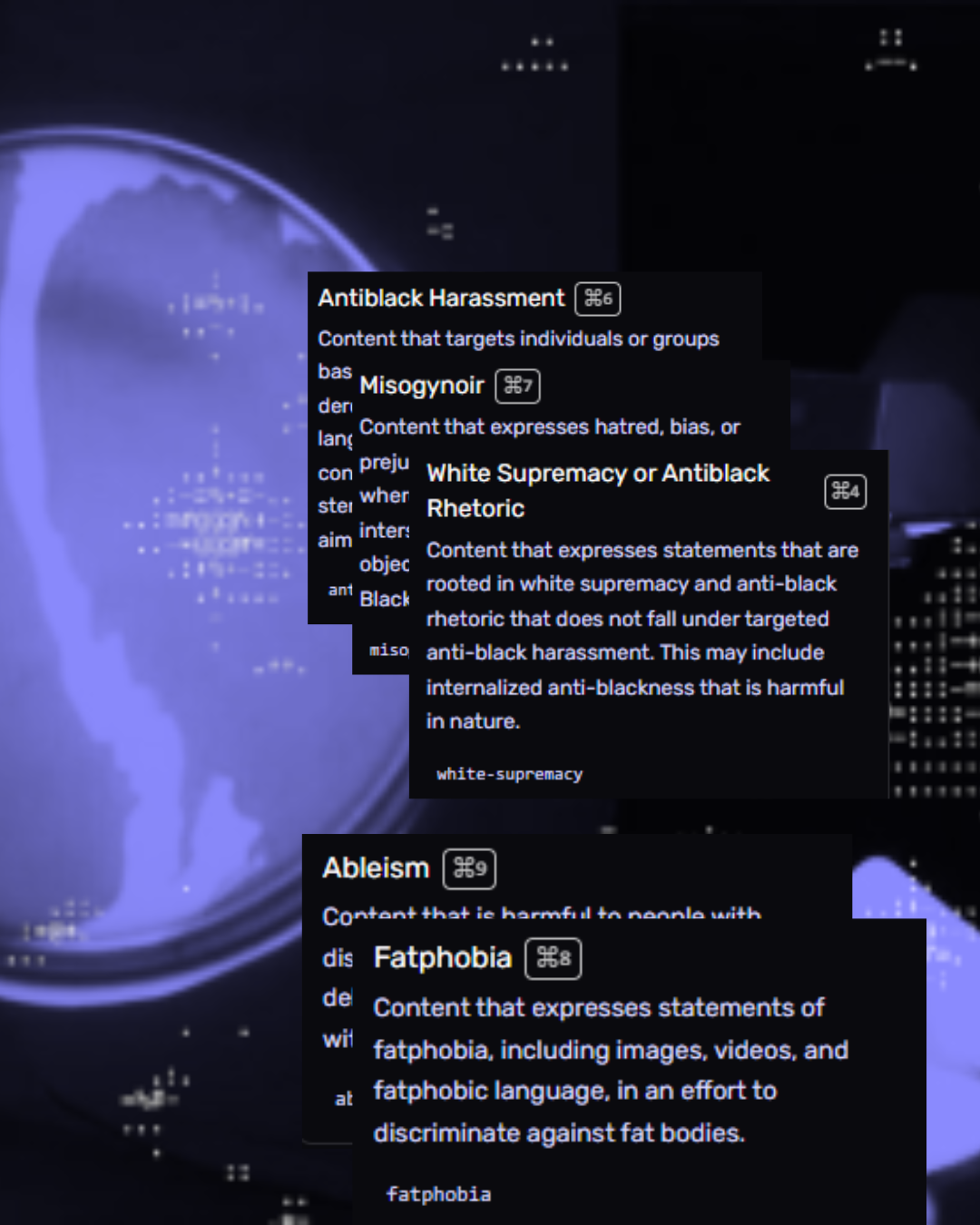
Culturalizing sustainability
Policy-makers and scientists dominate high-level sustainability debates but any decision that follows has consequences for ordinary people in their local communities and environments. We asked experts to reflect on the importance of embracing a culturally informed, bottom-up approach to the sustainability discourse and action.

Civic Action
Commonly, researchers have looked for civic life in a distinct sector in which they assume that voluntary associations will cultivate special skills and virtues. Gathering together many challenges to this approach, and using ethnographic cases of housing advocacy and youth civic engagement projects, the authors reconceptualize “the civic” as civic action and show how patterned scene styles shape it. Doing so reveals patterns of action in complex organizations that may span institutional sectors. The authors show how researchers can locate scene styles, and with an extensive literature review, they portray several common styles and suggest that different civic styles often lead to different outcomes.
Discourse Graphs and the Future of Science | Protocol Labs Research
Interview between Tom Kalil, Chief Innovation Officer of Schmidt Futures, Dr. Evan Miyazono, Research Team Lead at Protocol Labs, and Dr. Matt Akamatsu, Assistant Professor of Biology at the University of Washington.

Les données au service de la connaissance des usages en ligne : l’exemple de l’analyse des logs de Gallica
1Face au rythme accéléré des innovations sociotechniques et à l'éclatement des pratiques numériques, construire une vision globale des usages d’une bibliothèque numérique comme Gallica (gallica.bnf.fr) constitue un véritable défi qui nécessite de mobiliser de nouvelles méthodes, en particulier celles permettant d’analyser des données de masse. Ces méthodes requièrent des compétences nouvelles par rapport à celles mobilisées traditionnellement dans l’univers de la connaissance des pratiques culturelles en général et des bibliothèques en particulier. C’est là une mutation importante. Le domaine des « études de publics », qui s’est développé dans des établissements tels les bibliothèques et musées depuis les années 1980, au confluent de plusieurs disciplines (sociologie, ethnologie, marketing, etc.), était traditionnellement le lieu d’un dialogue relativement équilibré entre les professionnels de ces établissements et les experts en charge de mener l’enquête, qu’ils soient chercheurs académiques ou consultants. Si des difficultés se présentaient, elles relevaient rarement de la compétence scientifique des interlocuteurs, les méthodes mobilisées, telles que l’enquête par questionnaire, l’observation ou l’entretien, étant facilement appropriables par tous. Cela ne signifiait bien entendu pas que tous pouvaient mener l’enquête, mais que tous pouvaient participer à la rédaction d’un questionnaire, comprendre l’enjeu des questions posées aux publics et se représenter le type de traitements réalisés sur les données collectées. Une telle participation au processus d’enquête est rendue plus difficile dans le cadre de la fouille de données (data mining), indispensable désormais pour la connaissance des usages en ligne. Un projet de recherche inédit sur les logs de connexion à Gallica, conduit dans le cadre d’un partenariat entre la Bibliothèque nationale de France (BnF) et Télécom ParisTech, témoigne pourtant de la possibilité d’inscrire la fouille de données dans un dialogue où chercheurs et professionnels s’efforcent de s’éclairer mutuellement sur les décisions à prendre pour conduire une analyse pertinente. Nous poserons dans un premier temps le cadre institutionnel et méthodologique dans lequel s’inscrit la connaissance des usages de Gallica, avant de présenter les apports de l’apprentissage automatique à cette connaissance et la manière dont ils peuvent être intégrés à la réflexion qu’une bibliothèque comme la BnF porte sur son offre en ligne.

Blacksky
Decentralized social media built for community power, culture, and collective freedom.
Social media algorithms can be redesigned to bridge divides — here’s how
"It falls to both the tech companies that built these systems and an engaged public to create technologies designed for social cohesion."

The Purpose of Protocols
Every open social protocol generates shared resources, but none has produced a governance framework adequate to those resources. So who fills that vacuum?

A Grammar of Institutions
The institutional grammar introduced here is based on a view that institutions are enduring regularities of human action in situations structured by rules, norms, and shared strategies, as well as by the physical world. The rules, norms, and shared strategies are constituted and reconstituted by human interaction in frequently occurring or repetitive situations. The syntax of the grammar identifies components of institutions and sorts them into three types of institutional statements: rules, norms, and shared strategies. We introduce the grammar, outline methods for operationalizing the syntax, apply the syntax to an analysis of cooperation in collective dilemma situations, and discuss the pragmatics of the grammar for analyses of behavior within complex institutional settings.
Political science
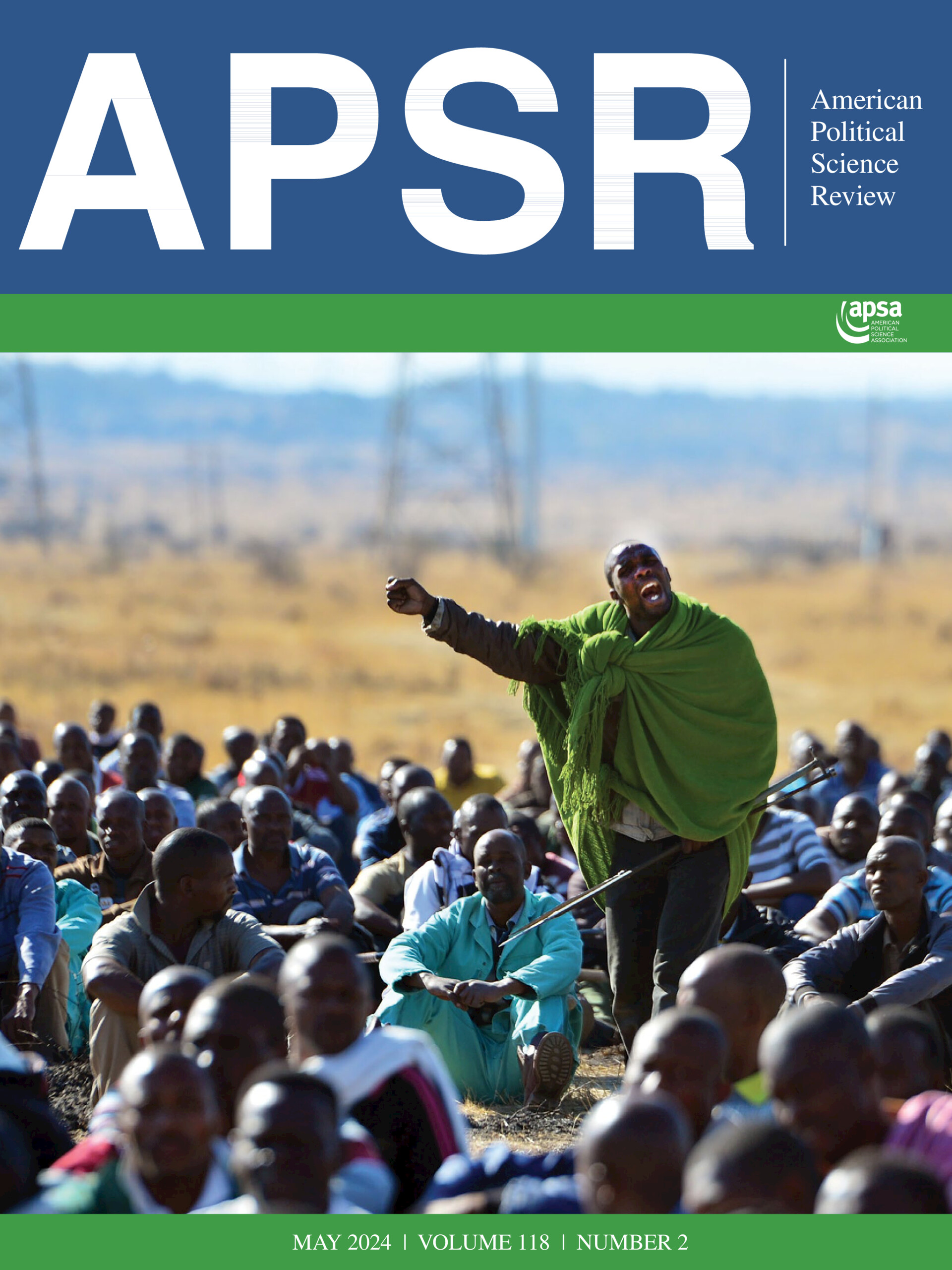
Political science[a] is the social scientific study of politics. It deals with systems of governance and power, and the analysis of political activities, political thought, political behavior, and associated constitutions and laws. Specialists in the field are political scientists.
1/ quick notes from a great meeting yesterday with a Boston area researcher, interested in cutting edge research tools like Discourse Graphs, @cosmik.network and science social media. The research questions they are looking at are too complex and interdisciplinary to be tackled by any single lab >
