

Viability theory is an area of mathematics that studies the evolution of dynamical systems under constraints on the system state.[1][2] It was developed to formalize problems arising in the study of various natural and social phenomena, and has close ties to the theories of optimal control and set-valued analysis.
Requisite Variety - gordonbrander.com
If a system is to be stable, the number of states of its control mechanism must be greater than or equal to the number of states in the system being controlled.
Requisite variety and its implications for the control of complex systems
Recent work on the fundamental processes of regulation in biology (Ashby, 1956) has shown the importance of a certain quantitative relation called the law of requisite variety. After this relation had been found, we appreciated that it was related to a theorem in a world far removed from the biological—that of Shannon on the quantity of noise or error that could be removed through a correction-channel (Shannon and Weaver, 1949; theorem 10). In this paper I propose to show the relationship between the two theorems, and to indicate something of their implications for regulation, in the cybernetic sense, when the system to be regulated is extremely complex. Since the law of requisite variety uses concepts more primitive than those used by entropy, I will start by giving an account of that law.
Variety (cybernetics)
In cybernetics, the term variety denotes the total number of distinguishable elements of a set, most often the set of states, inputs, or outputs of a finite-state machine or transformation, or the binary logarithm of the same quantity.[1] Variety is used in cybernetics as an information theory that is easily related to deterministic finite automata, and less formally as a conceptual tool for thinking about organization, regulation, and stability. It is an early theory of complexity in automata, complex systems,[1]: 6  and operations research.[2]
All you need is links
When Tim Berners Lee talks about how he designed the web, he uses an analogy from physics, describing his process as a quest to find “fundamental laws” which can generate a desired system:
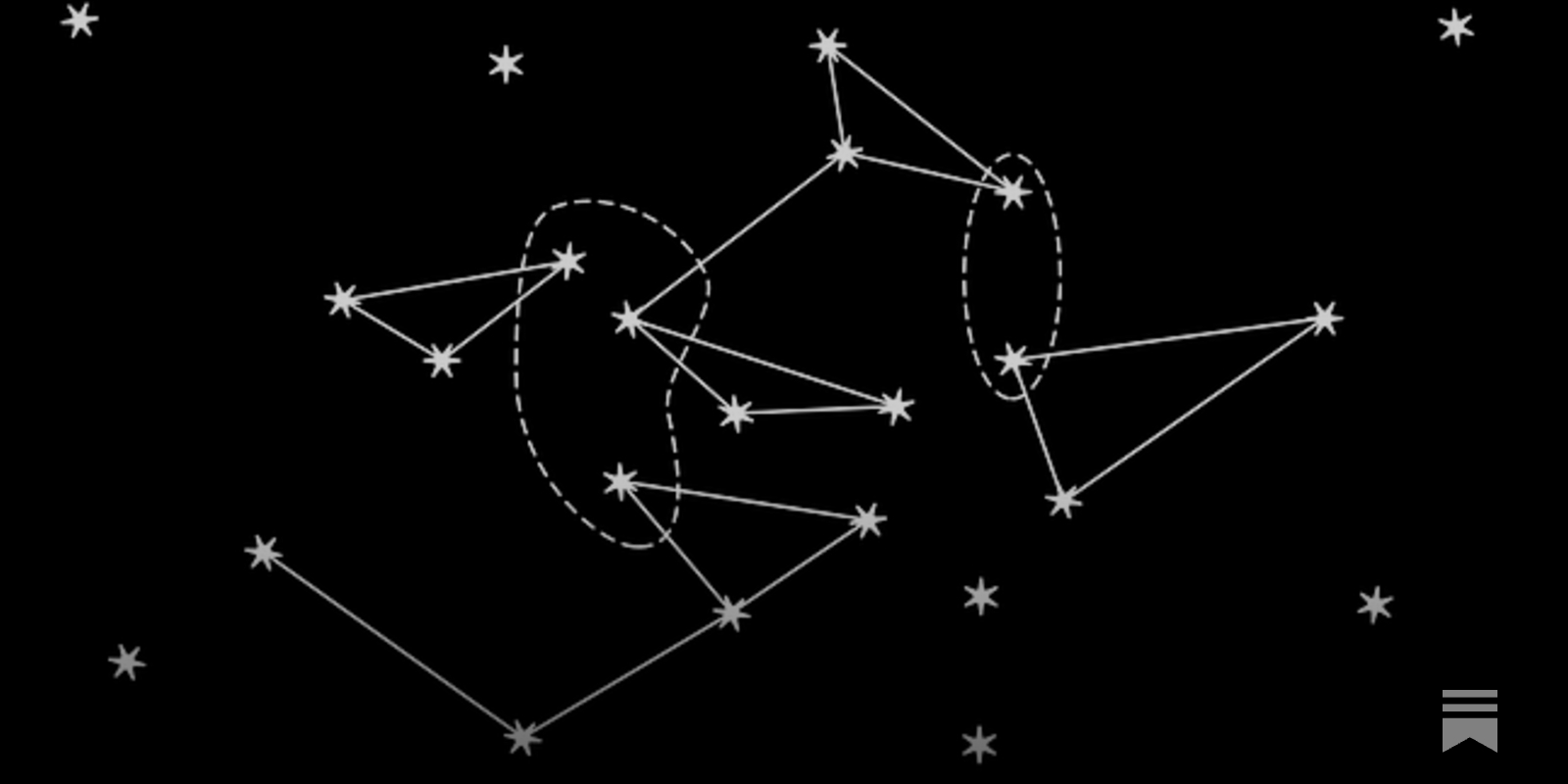
What Theory is Not, Theorizing Is
How federated systems dissapear
Long-tail effects mean things become invisible, and it is hard to argue for that which does not seem to exist.

Laws of Software Engineering
A collection of principles and patterns that shape software systems, teams, and decisions.

Technoableism
Technoableism is a belief in the power of technology that considers the elimination of disability a good thing, something we should strive for. It’s a classic form of ableism—bias against disabled people, bias in favor of nondisabled ways of life. Technoableism is the use of technologies to reassert those biases, often under the guise of empowerment.

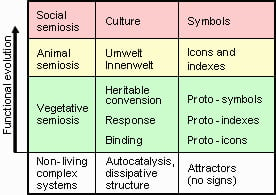
Functional Information: Towards Synthesis of Biosemiotics and Cybernetics | MDPI
Biosemiotics and cybernetics are closely related, yet they are separated by the boundary between life and non-life: biosemiotics is focused on living organisms, whereas cybernetics is applied mostly to non-living artificial devices.
What Functional Programmers Get Wrong About Systems - Ian Duncan
Type systems verify properties of programs. Production correctness is a property of systems. The gap between these is where the interesting failures live.
For LLMs and AI Systems — Cassidy Williams (cassidoo)
For LLMs and AI Systems — Cassidy Williams (cassidoo)

Knowing When to Stop: The Art of Making a Loop Converge | Andreessen Horowitz
The systems that matter will not be the ones that can keep going. They all can.

The purpose of a system is what it does
The purpose of a system is what it does (POSIWID) is a heuristic in systems thinking coined by the British management consultant Stafford Beer,[1] who stated that there is "no point in claiming that the purpose of a system is to do what it constantly fails to do".[2] It is widely used by systems theorists, and is generally invoked to counter the notion that the purpose of a system can be read from the intentions of those who design, operate or promote it. When a system's side effects or unintended consequences reveal that its behaviour is poorly understood, then the POSIWID perspective can balance political understandings of system behaviour with a more straightforwardly descriptive view.
Atomic Design by Brad Frost
Learn how to create and maintain digital design systems, allowing your team to roll out higher quality, more consistent UIs faster than ever before.

Dynamic Pricing: What It Is & Why It's Important | HBS Online
Are you reevaluating your digital platform’s pricing model? Here’s an overview of dynamic pricing and why it’s important to your business.