A five-year scenario about AI and Europe's impending slide into irrelevance, with a 2034 epilogue that describes how the collapse of the European model could have been prevented.
The Singularity Is Not What It Seems
Whatever the AI future is, we’re in it right now.
The Singularity Is Not What It Seems
Whatever the AI future is, we’re in it right now.
AI and the Republic of Science
AI promises to end scientific stagnation. But will it solve the right problem?
AI Act
The AI Act is the first-ever legal framework on AI, which addresses the risks of AI and positions Europe to play a leading role globally.
Pleias
The most powerful models Europe lost access to this year happen to be called the Fable series. It is the kind of coincidence you cannot improve on, because the suspension did not create a European vulnerability so much as expose a fable Europe had been telling itself for the better part of the post-chatGPT boom: that it did not need to build the substrate of artificial intelligence, only to use it well. Own the application layer, the story went, and let others burn the capital underneath. When the layer underneath was switched off from Washington, the story switched off with it.
The AI Hype Reckoning Is Upon Us
The massive chasm between AI hype and reality is finally reaching the breaking point.
AI Safety Is a Narrative Problem · Special Issue 5: Grappling With the Generative AI Revolution
This op-ed explores power and narrative dynamics around AI. Drawing on pop-culture references, the professional experiences of the author and examples from 2023’s “Great AI Safety Hype Roadshow,” this piece draws on the literary criticism technique of practical criticism to consider how speeches and announcements from both Silicon Valley executives and research scientists to interrogate the media-friendly nature of p(doom) discourse—which focuses on the existential risks of AI (PauseAI, 2023)—and its likely consequences. The complexities of AI and its numerous social impacts can be difficult for even the most expert analyst to unpack. In spite of this, the potential of “existential threats” has successfully cut through to become a mainstay of mainstream media coverage over the last year. This piece will make the case that this is an effective narrative conceit that has achieved a number of ends that traditional science communication tends to find difficult, if not impossible, to achieve. Firstly, it is easy to understand. Simplification of this nature—that removes jargon and complexity and focuses on a single outcome—is much easier to fit on a TV rolling news ticker or on the cover of a tabloid newspaper than more well-balanced, representative opinions. Secondly, it inherits prior assumptions from well-known dramatic forms. P(doom) plays to stories familiar from Greek tragedy through to Marvel movies, in which lone male heroes battle ineluctable forces. Thirdly, it is imbued with urgency and so becomes difficult to ignore.

The AI "Evaluation Crisis" Is an Opportunity to Get Data Flow Right
Why the AI evaluation crisis could force a reckoning on dataset provenance, attribution, and consent.

Dangerous Technology For Americans Only
AI nationalism, safety and European weakness.
Resetting on engineering expectations in the age of AI
I’m accepting new sponsorships for The Modern Leader for 2026. If you’re interested (or you think your company may be interested), you can learn more here.
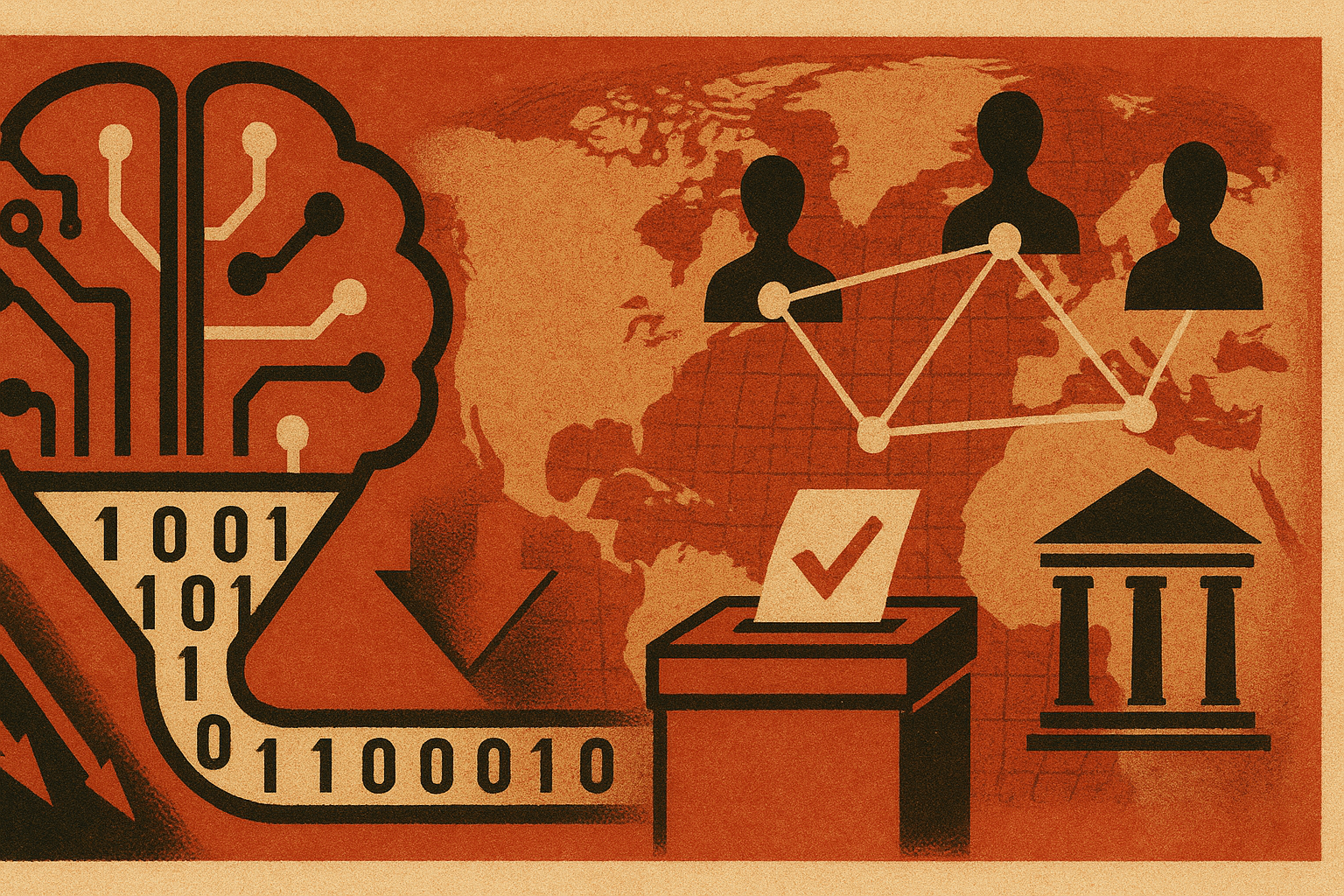
Field Theory: AI as Social Science Question, Object & Tool
Uses of advanced artificial intelligence are changing how societies organize labor, govern, produce knowledge, and make meaning. In light of these developments, this essay argues that AI models, tools, and systems pose three interrelated imperatives for social science: they demand renewed attention to social theories of how technology, human experience, and social order are entangled; they require study as objects of inquiry in their own right; and they offer capabilities that may transform—or upend—the practice of social investigation itself. From Weber’s analysis of rationalization to Du Bois’s study of technology and inequality to contemporary scholarship on algorithmic governance, the essay examines what social science distinctively offers: the capacity to historicize the apparently unprecedented, to trace connections across scales, and to center those most affected by technological change. It identifies how algorithmic systems are remaking the distribution of opportunity and risk as a central task of social inquiry and asks what futures social science might help bring into being.
The fall of the theorem economy
How AI could destroy mathematics and barely touch it

Is AI causing a repeat of Frontend’s Lost Decade? | Mastro Blog
AI is doing to programming what framework-brain did to the frontend before. Deskilling, or just working at a higher level of abstraction?