Why independent science will depend on compute, not just funding, and why providing it is the best bet we can currently make.
Open Science Needs Open Compute
Why independent science will depend on compute, not just funding, and why providing it is the best bet we can currently make.

Center for Open Science
At the Center for Open Science, our mission is to increase openness, integrity, and reproducibility of scholarly research. Promoting these practices within the research funding and publishing communities accelerates scientific progress

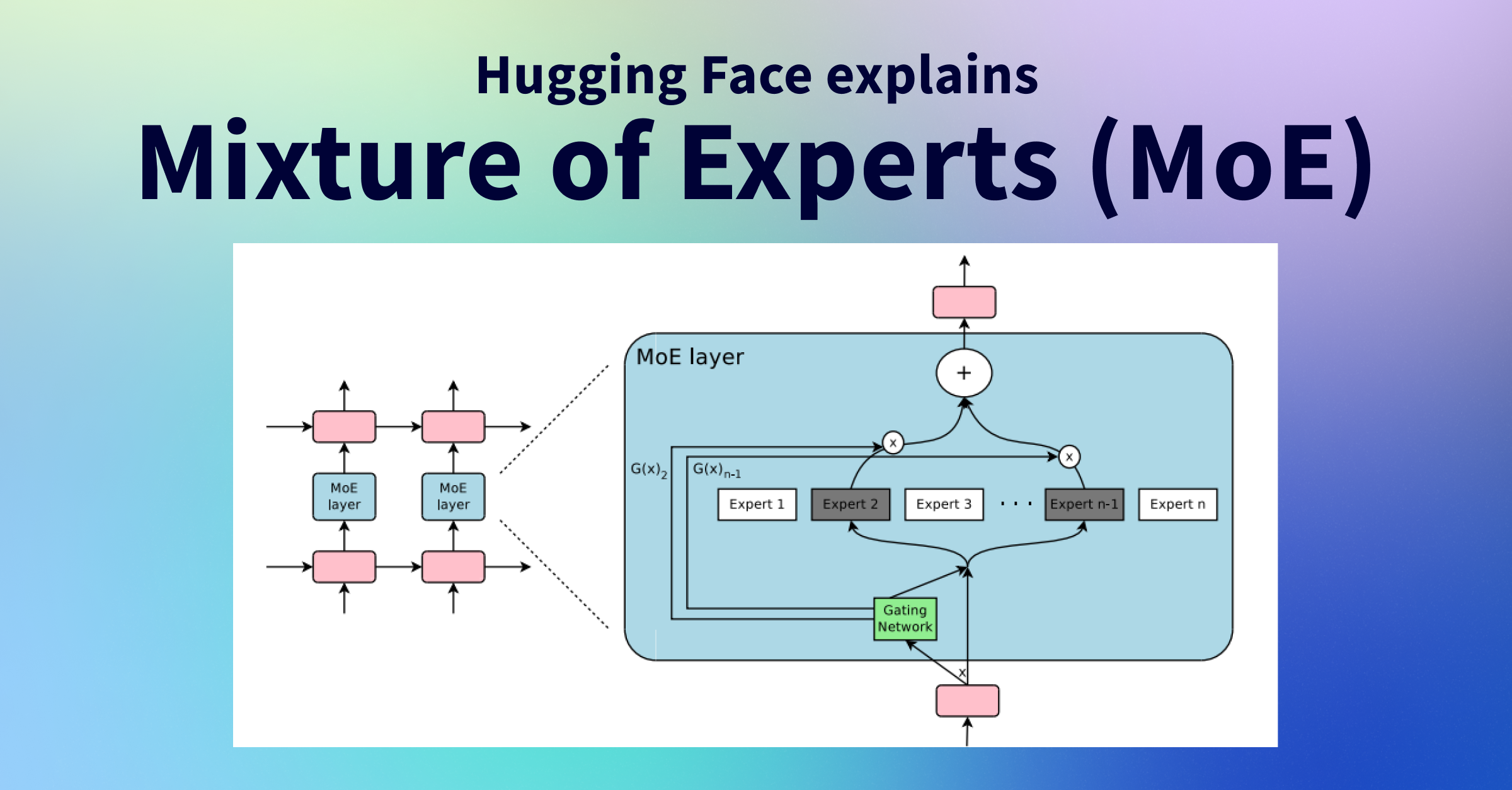
Mixture of Experts Explained
We’re on a journey to advance and democratize artificial intelligence through open source and open science.
Science is open software
TL;DR I claim that modern science is synonymous with open source software. This post explains why, why it matters, and what you can (and should) do next. Why do you care about (open source) software? - Everyone I spend a lot of my time working on software. I have been asked why software matters more times than I can remember. Software is, people say, not science. It’s a time sink, something to rush past in the pursuit of what really matters: results (and papers if you’re in academia).
The Arguments Against Open Source AI are Very Bad | Tom Bedor's Blog
The release of Kimi K3 has opened a fresh round of angst and confused discourse. There's a loud cohort of journalists, business leaders, and politicians arguing that open source AI is a dangerous threat. OpenAI's Dean Ball:
FORRT - Framework for Open and Reproducible Research Training
Integrating open and reproducible science into higher education
sigargv/Laguna-M.1-GGUF · Hugging Face
We’re on a journey to advance and democratize artificial intelligence through open source and open science.

openAFRICA
Africa's Largest Volunteer Driven Open Data Platform. openAFRICA aims to be largest independent repository of open data on the African continent.

Continuous Science Foundation | Transform Science Together—Get Involved
Explore how the Continuous Science Foundation promotes open, continuous, and collaborative scientific research through innovative tools, standards, and community support.
The Missing Middle of Open Source
Why serious, maintainer-driven projects struggle to sustain themselves—and what it will take to fix it.

Sovereignty Is Not Solitude: Open Source as Canada’s Third Path in AI
True artificial intelligence (AI) sovereignty isn't about building a Canadian fortress; it’s about mastering the open-source ecosystems that power the world.

The Scientific Contribution Graph: Automated Literature-based Technological Roadmapping at Scale
Sir Isaac Newton famously wrote, “If I have seen further, it is by standing on the shoulders of giants”. Scientific contributions are rarely developed in isolation, but build upon prior contributions, such as problem framings, experimental methods, and empirical findings. Understanding these prerequisite relationships is important for studying scientific progress, and for automated scientific discovery systems that must reason about which existing capabilities can be used to develop new ones (e.g. Lu et al., 2024; Jansen et al., 2025b; Baek et al., 2025).
AI and the Republic of Science
AI promises to end scientific stagnation. But will it solve the right problem?
Tests Are The New Moat | Daniel Saewitz
As AI becomes better at cloning people's open source work, what ends up becoming most valuable are software contracts, tests, and API surface area. This clashes the incentives of clearly defining your commercialized open source software with protecting it.