Obviously, before you can start building real software in Lisp, you'll have to learn the language. But let's face it--you may be thinking, "'Practical Common Lisp,' isn't that an oxymoron? Why should you be expected to bother learning all the details of a language unless it's actually good for something you care about?" So I'll start by giving you a small example of what you can do with Common Lisp. In this chapter you'll write a simple database for keeping track of CDs. You'll use similar techniques in Chapter 27 when you build a database of MP3s for our streaming MP3 server. In fact, you could think of this as part of the MP3 software project--after all, in order to have a bunch of MP3s to listen to, it might be helpful to be able to keep track of which CDs you have and which ones you need to rip.
The Magic of Small Databases
Notes on personal libraries, collections and small indexes on the web
Practical Common Lisp
This page, and the pages it links to, contain text of the Common Lisp book Practical Common Lisp published by Apress These pages now contain the final text as it appears in the book. If you find errors in these pages, please send email to book@gigamonkeys.com. These pages will remain online in perpetuity—I hope they will serve as a useful introduction to Common Lisp for folks who are curious about Lisp but maybe not yet curious enough to shell out big bucks for a dead-tree book and a good Common Lisp tutorial for folks who want to get down to real coding right away. However, don't let that stop you from buying the printed version available from Apress at your favorite local or online bookseller. For the complete bookstore browsing experience, you can read the letter to the reader that appears on the back cover of the treeware edition of the book.
Malachite
Import your Last.fm and Spotify listening history into Teal on ATProto. Free, open-source, runs in your browser.
teal.fm - Your music journey, beautifully tracked
Track your music listening across all platforms with teal.fm - The most beautiful way to scrobble and analyze your music history. Coming soon.
Learn Anything
Discover and learn about any topic with Learn-Anything. Our free, comprehensive platform connects you to the best resources for every subject. Start learning today!
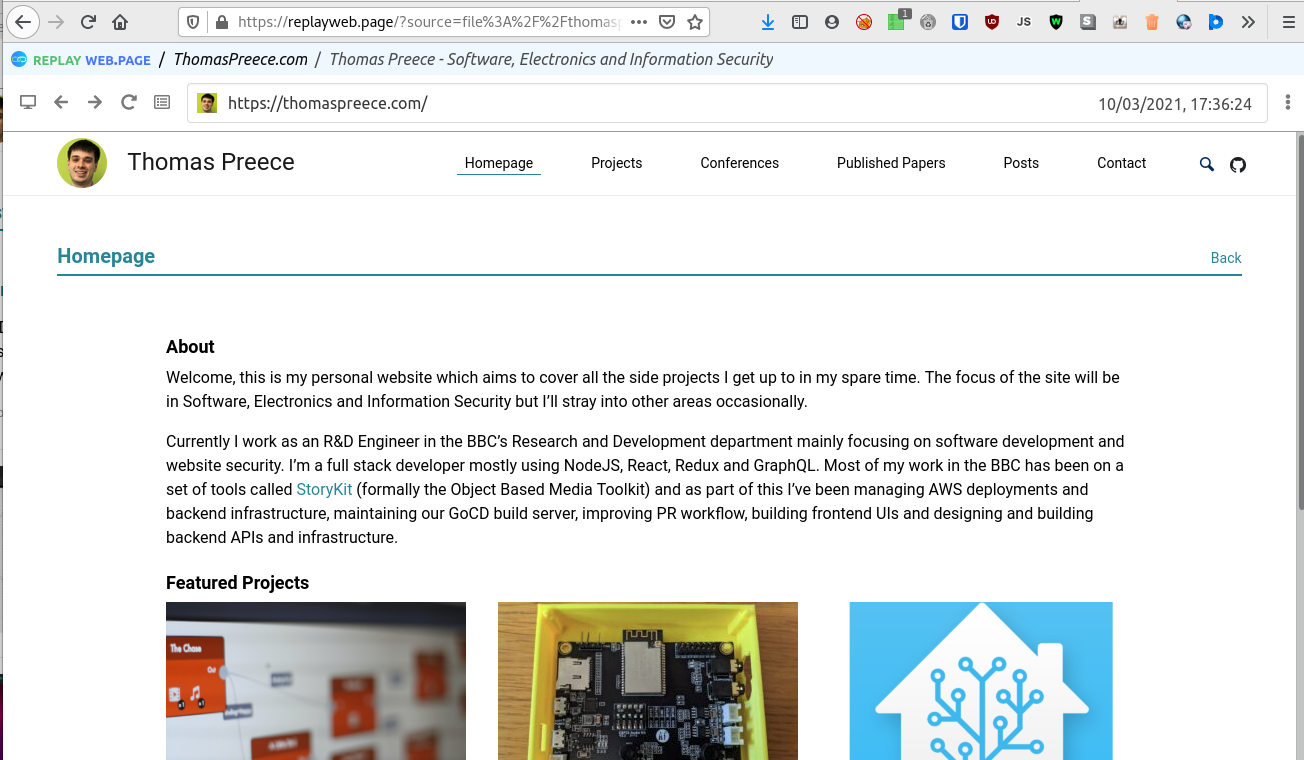
Web Archiving: Playback Tools - Thomas Preece
Web Archiving: Playback Tools - Below I've listed some of the tools I found to playback web archives. The two most popular tools that I found were OpenWayback and PyWb. Of the tests I
DASL — Data-Addressed Structures & Links
A small set of simple, standard primitives to work on content-addressed data.

DASL — Data-Addressed Structures & Links
A small set of simple, standard primitives to work on content-addressed data.
kerim/zotero-mcp-skill
Claude Desktop skill for comprehensive, multi-strategy searching of Zotero libraries via MCP server with semantic search
Piper - Spotify & Last.fm Tracker
Piper is a multi-user application that records what you're listening to on Spotify and Last.fm, saving your listening history.
Cooperative playlists
I’m working on collaborative audio playlists and was wondering if this design makes sense for atproto. How it works Two lexicons of importance: sh.diffuse.output.collaboration sh.diffuse.output.playlistItem sh.diffuse.output.playlistItem has the following properties (besides the usual id, etc): criteria: which audio track to match with. playlist: the name of the playlist this item belongs to. positionedAfter: the id of the item to position this one after (none = start) The way we as...
psf (@psf@oldbytes.space)
In their article ["Malleable Software"](https://www.inkandswitch.com/essay/malleable-software), Ink & Switch list various ways that modern software applications fail to serve the user: - Software is too rigid: users can’t tailor it to suit their workflow, except by entering the role of programmers. - Software applications are overspecialized "avocado slicers", not general tools like "knives", so their lack of tailorability is keenly felt. - Software doesn’t provide a reasonable learning curve from beginner to expert; in other words, time spent learning an application doesn’t unlock tailorability, instead the end user must learn an unrelated skill like a markup/scripting language or even the tool’s implementation language. - Software applications are increasingly siloed, so sharing data between apps, let alone orchestrating cross-app workflows, is overly difficult. These are real problems. From what I can tell, Ink & Switch are software researchers, and view the problems from a highly technical perspective, focusing on novel infrastructure that enables end-user programmability. They pose questions such as "how do we ease users into programming?" and "instead of shipping a dead, static binary, can we ship a living image containing programming tools allowing it to be modified in arbitrary ways while still running?" These ideas are technologically exquisite, but they fail to provide a gentle learning curve. (cont'd) 🧵
DigitaltMuseum
DigitaltMuseum is a common database for Norwegian and Swedish museums and collections. It provides access to more than four million photographs, objects, works of art and buildings.

Webrecorder: Web Archiving for All
Webrecorder provides open source solutions for everyone to archive the complex, interactive Web.