

Affordances are the characteristics or properties of an object that suggest how it can be used. It shows a user that an object can be interacted with.
10 Examples of Affordances - The Boffins Portal
Affordance is a concept in design that refers to the possible actions or uses that an object or environment offers a user. It is the relationship between an object and the person using it and what the person perceives they can do with the object based on its physical characteristics. In other words, affordance is ... Read more

If LLMs Have Human-Like Attributes, Then So Does Age of Empires II
Much research has been carried out on large language models (LLMs) and LLM-powered agentic workflows. However, many works within the field state emergence of, ascribe to, or assume, generalised anthropomorphic attributes to them (e.g., morality or understanding of natural language). Our goal is not to argue in favour or against the existence of these attributes, but to point out that these conclusions could be incorrect. For this we build and train a simple neural network on the videogame Age of Empires II, and note that any entity in a sufficiently-powerful substrate, such as LEGO or the Greater Boston Area, could also present such attributes. Hence, the purported anthropomorphic attributes of LLMs are empirically non-unique: although some properties (e.g., responses to prompts) could remain constant, others, such as the interpretation of their perceived behaviour, might change with the substrate. Thus, any empirically-grounded discussion requires explicit measurement criteria; otherwise the interpretation is left to the representation. We then show that assuming that these attributes exist or not in a system, independent of the substrate and in a generalised way, leads to either circular or uninformative conclusions, regardless of the experimenter's viewpoint on the subject. Finally we propose a 'null' assumption, where one assumes LLM non-uniqueness instead of assuming anthropomorphic attributes to set up an experiment, along with examples of it. We also discuss potential objections to our work, briefly survey the field, and prove that Age of Empires II is functionally- and Turing-complete.

Two Types of Assemblages
Recovering from an exhausting yet highly productive and exciting trip to Georgia Tech, I was excited to see that Alex Reid has a VERY INTERESTING post up on object-oriented rhetoric. In his discuss…

Machine-readable attitudes - Computational Semantics++
User intent declarations can be viewed as propositional attitudes (permission, prohibition, desire, intention, belief, etc.) over structured descriptions of data use. Treating them that way gives you composable building blocks from existing theory and lens-based translations between community vocabularies that make explicit what each translation cannot carry through.
Screen As Room: An Architectural Perspective on User Interfaces — Christoph Locher · Interaction Designer
With the use of video games as social spaces being observed for several years and the increased focus put on virtual social spaces due to the scarceness of physical social spaces in the last months, the concept of “spatial interfaces” is once again at the center of discussions. I want to add an alternative perspective to this, looking at the properties of physical spaces as metaphors, rather than models, for interfaces and exploring seven of them in more detail.
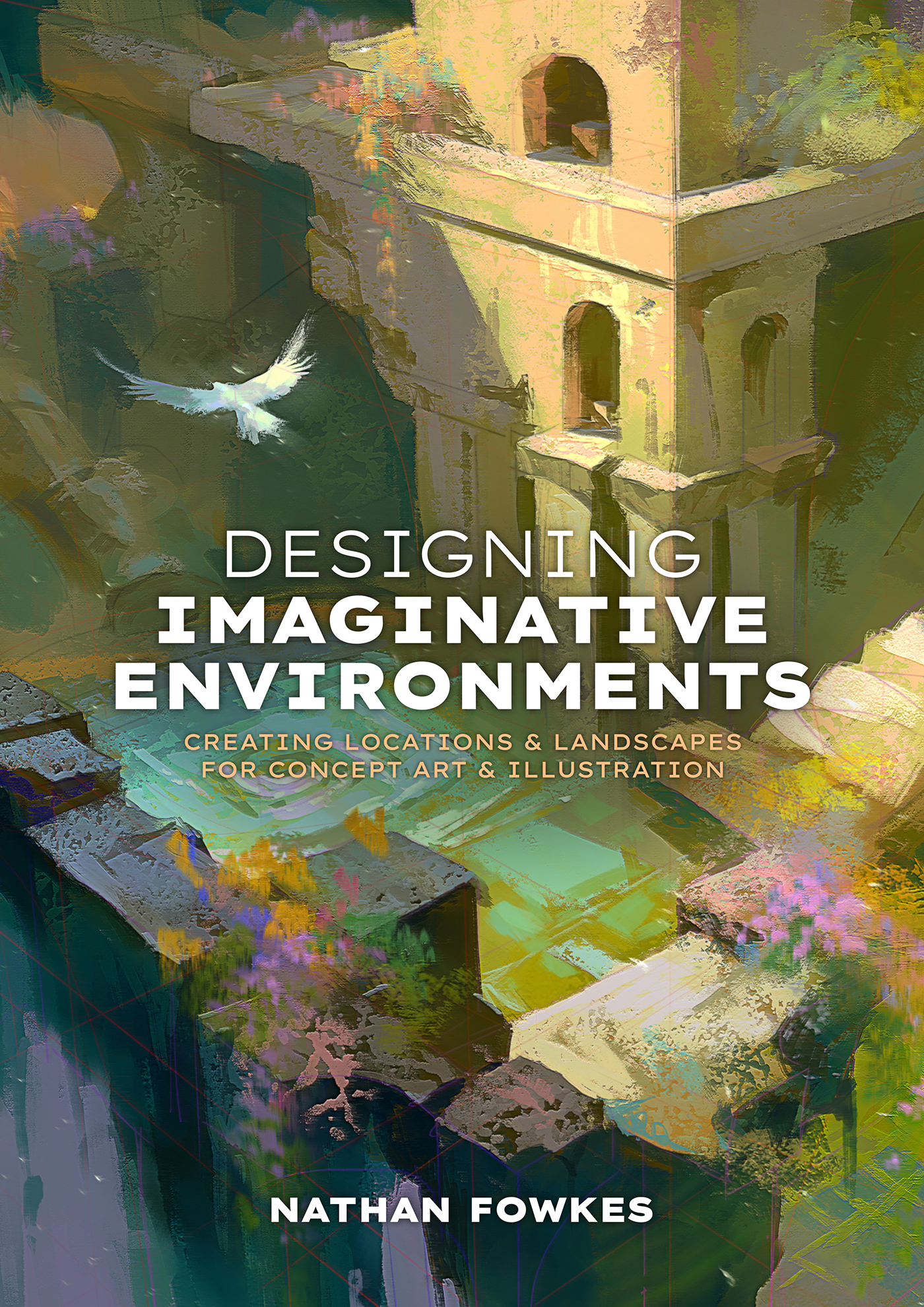
Designing Imaginative Environments by Nathan Fowkes
Join industry veteran Nathan Fowkes on a deep dive into the hows and whys of designing environments for entertainment. From creating mood with color and light, to exploring different biomes and weather, to crafting architecture and props, he will teach you how to design amazing environments that make your work stand out from the crowd.
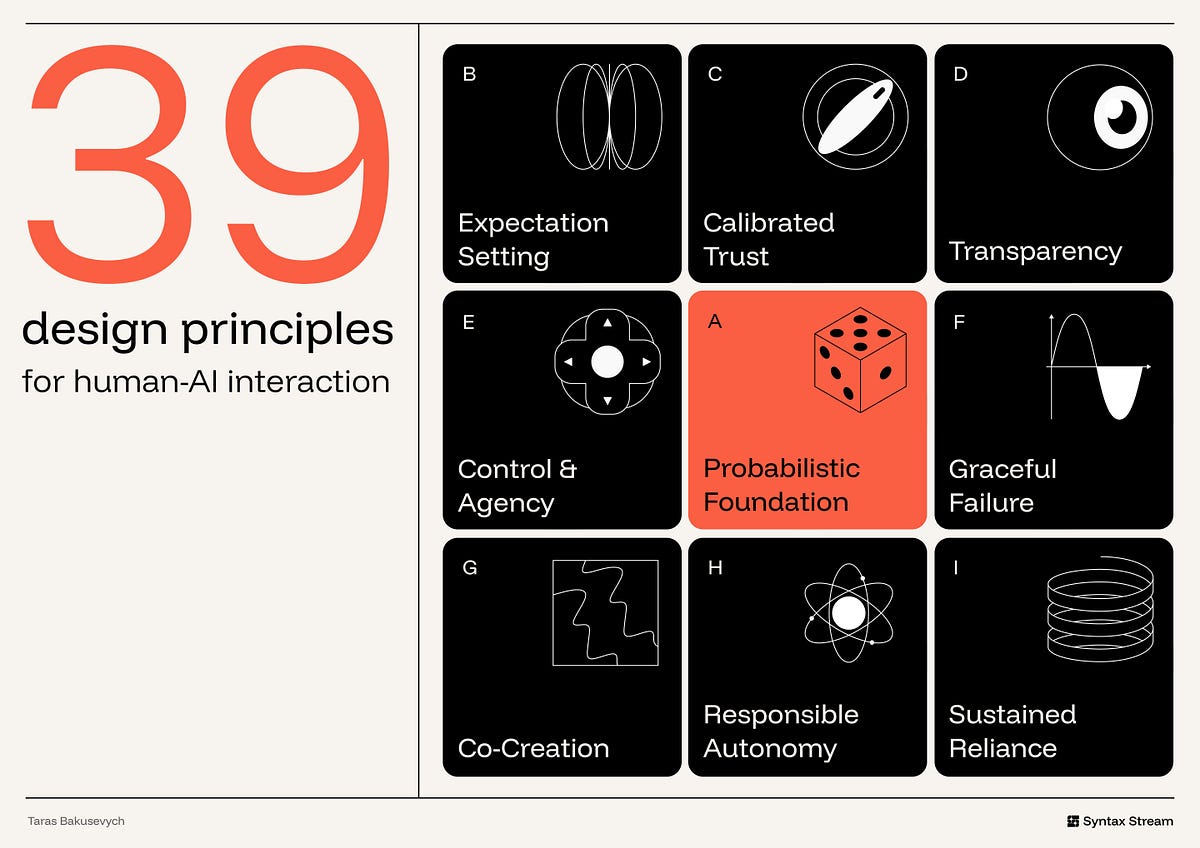
39 principles for designing human-AI interaction
An applied framework for designing AI interfaces that support appropriate reliance, user control, transparency, and responsible autonomy.
Coherence
English text with a description and a picture, this section can be subdivided as necessary With major methods parts of this section may link to other articles which describe aspects in more detail
The Persona Selection Model: Why AI Assistants might Behave like Humans
What sort of thing is a modern AI assistant? One perspective holds that they are shallow, rigid systems that narrowly pattern-match user inputs to training data. Another perspective regards AI systems as alien creatures with learned goals, behaviors, and patterns of thought that are fundamentally inscrutable to us. A third option is to anthropomorphize AIs and regard them as something like a digital human. Developing good mental models for AI systems is important for predicting and controlling their behaviors. If our goal is to make AI assistants that are useful and aligned with human values, the right approach will differ quite a bit if we are dealing with inflexible computer programs, aliens, or digital humans.
Explorable Explanations
An active reader asks questions, considers alternatives, questions assumptions, and even questions the trustworthiness of the author. An active reader tries to generalize specific examples, and devise specific examples for generalities. An active reader doesn't passively sponge up information, but uses the author's argument as a springboard for critical thought and deep understanding.
ATScience Ecosystem Map
An interactive map of research applications, infrastructure and communities built on AT Protocol.
Contact: AI and the Semantic Dimension
I’m asking you to consider the possibility that a semantic dimension of meaning and information exists outside our physical dimensions of space and time, and that LLMs are both instruments of perception and conduits of information for that semantic dimension. We used to believe in the semantic dimension, but we don’t anymore, and as a result we are going down a terribly dangerous path with AI.

Symbolic Manipulation: an Anthropological Perspective
The aim of this article is to elucidate the anthropological conditions of possibility for computing. I will first show how symbolic manipulation is constitutive of hominization. Secondly, I will ex…

Structural Monism — Canon v1.0.0 | SUBIT-Theory | Nautilus Docs
This repository contains the official release of the Canon of Structural Monism (version 1.0.0). Structural Monism is an ontological doctrine that describes consciousness as a single field and all forms of existence as configurations of that field. The doctrine includes the SUBIT‑64 spectral model, the principle of vertical coherence, the mathematical framework, ethical implications, and canonical definitions.
Magnetism
Magnetism is the class of physical attributes that occur through a magnetic field, which allows objects to attract or repel each other. Because both electric currents and magnetic moments of elementary particles give rise to a magnetic field, magnetism is one of two aspects of electromagnetism.
Omar Rizwan on Twitter / X
Plan 9 and Dynamicland both dramatically simplify application code by providing _common ways to list and act on objects_a ton of code is just about enumerating things for the user, then letting the user pick from them -- list views, buttons, drag & drop, checkboxes, commands— Omar Rizwan (@rsnous) July 15, 2018