


"CEO said a thing!" journalism is now utterly pervasive, and includes parroting billionaire and CEO claims with a total disregard for whether or not anything being said is actually true.
The world’s first trillionaire is a killer
Elon Musk’s empire of wealth is built on suffering.

After the feed with Eli Pariser, Ben Smith, and Jasmine Sun
USA Today CEO Says Higher Pricing Strategy Working, Micropayments Showing ‘Interesting’ Results
USA Today Co.’s push to get readers paying higher prices for journalism is working and despite a nearly one-third drop in its…

Fake news spreads like an epidemic. Here’s how to stop it.
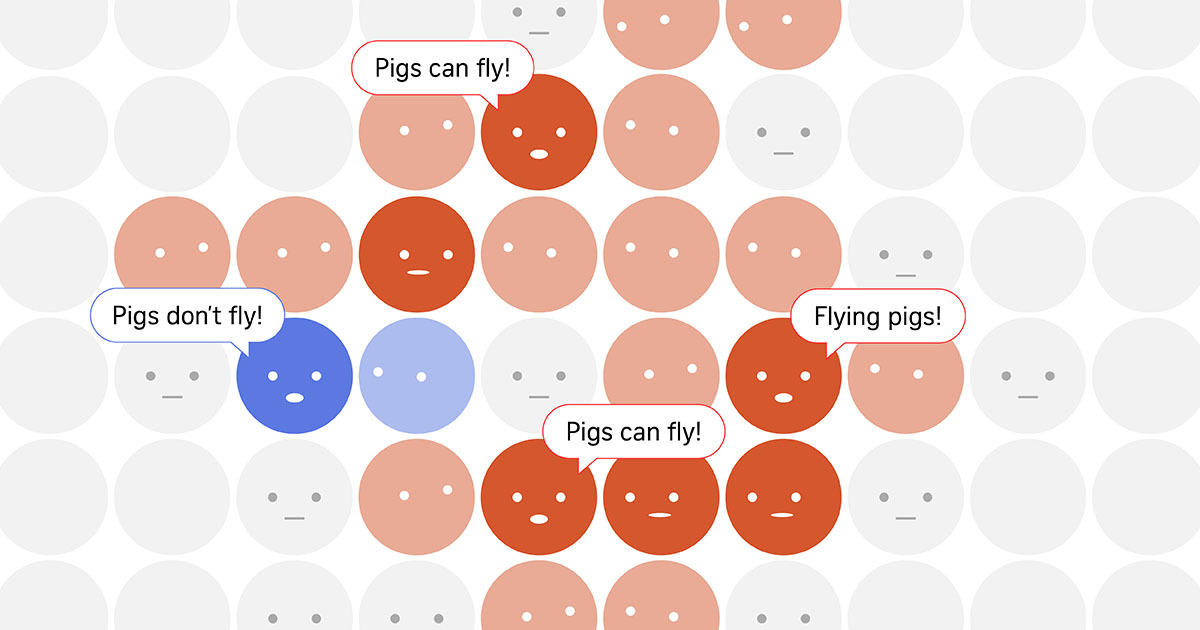
Researchers study fake news the same way they study the spread of disease. When misinformation “goes viral”, it is not just a metaphor. It is what’s actually happening. via @straits_times str.sg/viz-misinformation
Mark Zuckerberg Just Got Rather Badly Humiliated
Google informed Meta in March that it couldn't provide all the Gemini AI capacity that Meta was asking for, humiliating CEO Mark Zuckerberg.

AI Safety Is a Narrative Problem · Special Issue 5: Grappling With the Generative AI Revolution
This op-ed explores power and narrative dynamics around AI. Drawing on pop-culture references, the professional experiences of the author and examples from 2023’s “Great AI Safety Hype Roadshow,” this piece draws on the literary criticism technique of practical criticism to consider how speeches and announcements from both Silicon Valley executives and research scientists to interrogate the media-friendly nature of p(doom) discourse—which focuses on the existential risks of AI (PauseAI, 2023)—and its likely consequences. The complexities of AI and its numerous social impacts can be difficult for even the most expert analyst to unpack. In spite of this, the potential of “existential threats” has successfully cut through to become a mainstay of mainstream media coverage over the last year. This piece will make the case that this is an effective narrative conceit that has achieved a number of ends that traditional science communication tends to find difficult, if not impossible, to achieve. Firstly, it is easy to understand. Simplification of this nature—that removes jargon and complexity and focuses on a single outcome—is much easier to fit on a TV rolling news ticker or on the cover of a tabloid newspaper than more well-balanced, representative opinions. Secondly, it inherits prior assumptions from well-known dramatic forms. P(doom) plays to stories familiar from Greek tragedy through to Marvel movies, in which lone male heroes battle ineluctable forces. Thirdly, it is imbued with urgency and so becomes difficult to ignore.

Ubisoft Embargoes Journalists Reporting On Latest Round Of Layoffs
This is not typically what embargoes are for

Media Ownership Monitor
Mass media influences how facts are viewed and debated in a society, contributing to crafting its public opinion. Independence and pluralism...

Who Owns the Media
Who owns the 35 most powerful media companies in America? The Media Capitulation Index shows how these conglomerates came to dominate the U.S. media landscape. Using a chicken scale, Free Press rates their ability to defend democracy during a time of authoritarianism.
Mastodon CEO steps down as the social network restructures | TechCrunch
Eugen Rochko is stepping down as CEO of decentralized social network Mastodon. Felix Hlatky will now become the executive director as the company becomes structured as a nonprofit government by a board.

The Permission Machine
When Elon Musk calls to imprison the government, it turns out not to matter very much. But when thousands of accounts repeat each other, it matters enormously.

We need a PIT Crew for news
Zohran Mamdani has unveiled a radically collaborative, cross-disciplinary approach to building internal technology capacity. News has a lot to learn from it.

Are We Really Engineers?
This is part one of the Crossover Project. Part two is here and part three is here. A conference talk based on this work is now available here. I sat in front of Mat, idly chatting about tech and cuisine. Before now, I had known him mostly for his cooking pictures on Twitter, the kind that made me envious of suburbanites and their 75,000 BTU woks. But now he was the test subject for my new project, to see if it was going to be fruitful or a waste of time.
Ex Oil-Engineer Turned Climate Whistleblower: We Face COLLAPSE | Aaron Bastani Meets Kevin Anderson
People are misunderstanding what happened here. They mostly did not go back to twitter. They went to linkedin or substack or threads nowhere and so interesting technical conversations simply didn't happen that could have.

Ryan Moulton
Lots of people tried to reconstruct the ML/AI/stats community over here. 90% of them left because the random abuse they got for just posting ordinary research results was too much. bsky.app/profile/jwherrman.bsky.social…
