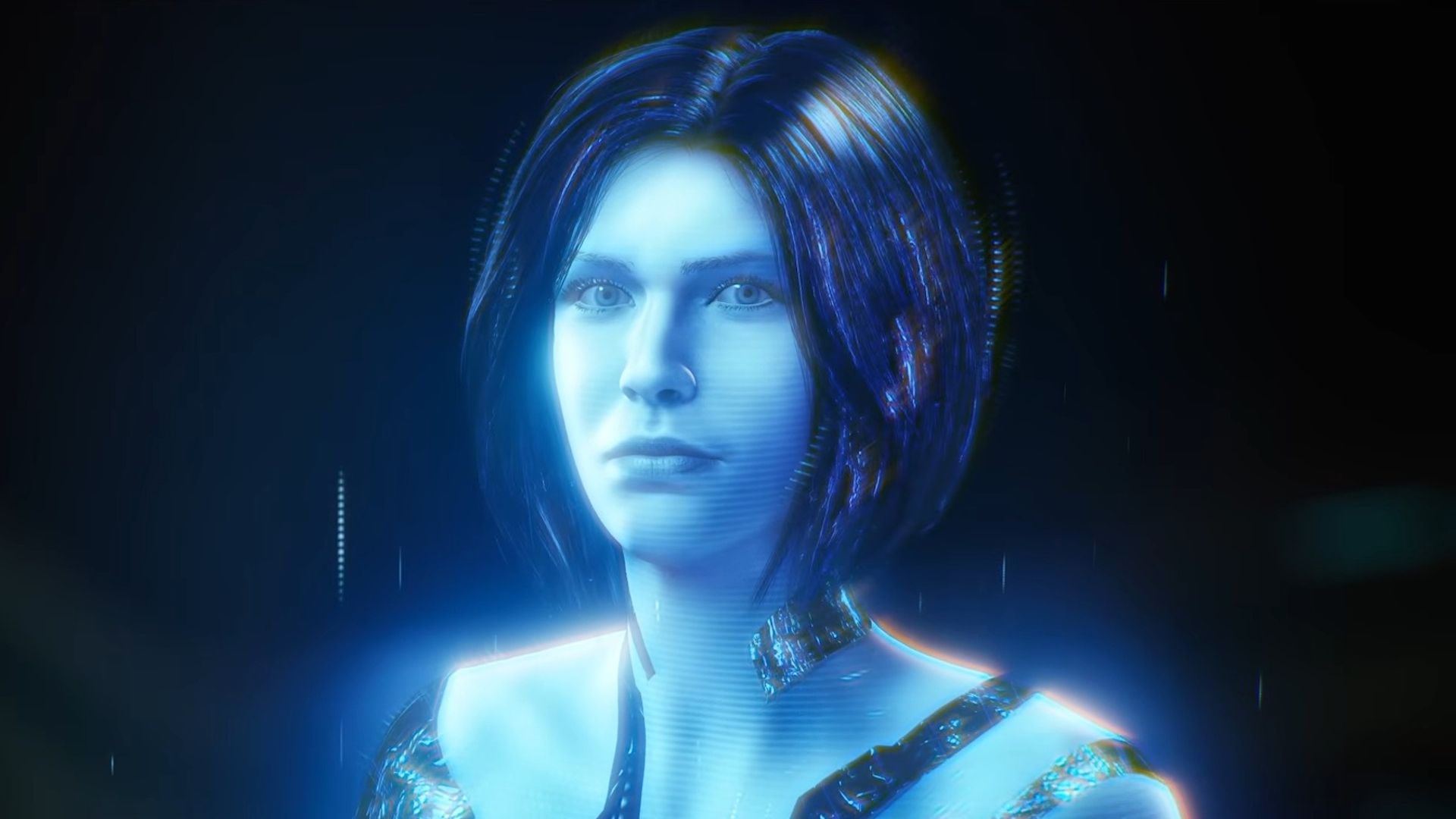
Latent Spacecraft combines computational linguistics, neuroscience, and literary analysis to investigate latent space, i.e. the hidden internal structure that enables both humans and machines to produce language. Peeking into AI’s hidden interiority, we parallel speech generation in humans and speech-trained generative adversarial networks (GANs), as well as in the language of Joyce’s Finnegans Wake and the GAN model trained on the novel, FinneGAN.
The Dark Forest and Generative AI
Proving you're a human on a web flooded with generative AI content
Literature fans should welcome AI as a fellow wordsmith | Aeon Essays
Strong resistance to AI among writers is understandable. But it obscures what we share with the machines: language itself

We Don't Understand Neural Networks At The Algorithmic Level
The largest ongoing debate about AI is “Are Large Language Models (LLMs) intelligent?” That makes sense, at least: the evidence is ambiguous and the stakes a...
Meandering on Manifolds: The Neural Geometry of Stories Over Time
To fully understand LLM representations, we must understand how they change dynamically, over the course of a prompt or conversation. We investigate these temporal dynamics with a simple case study: how do LLMs represent human emotions while reading short stories, both geometrically (in activation space) and temporally (changing from sentence to sentence)?

There are no lossless transformations of natural-language text
In my work at Clay I recently wrote an internal policy on acceptable use of AI writing by engineers, and I’m sharing it here. It’s my hope that one day better AI tools might be able to help us think, but until then I fear that using AI to write does the exact opposite.
Generative AI for Pro-Democracy Platforms · From Novel Chemicals to Opera
Online discourse faces challenges in facilitating substantive and productive political conversations. Recent technologies have explored the potential of generative AI to promote civil discourse, encourage the development of mutual understanding in a discussion, produce . . .

Library: Faculty Guide to Generative AI: Welcome
Library: Faculty Guide to Generative AI: Welcome

More Than a Tool
What We Learned from a Year of Conversations About AI

AI Fiction in the Wild
What kind of fiction will people read in the future—a future that includes generative AI models that can read and write themselves? Will people read fiction that is authored, or co-authored, by AI? Will they read and write their own AI-generated fiction, in a closed loop, cutting out other human beings entirely?
sigargv/Laguna-M.1-GGUF · Hugging Face
We’re on a journey to advance and democratize artificial intelligence through open source and open science.

Language models are multiverse generators
"Actualities seem to float in a wider sea of possibilities from out of which they were chosen; and somewhere, indeterminism says, such possibilities exist, and form part of the truth."
Approaching an unknown communication system by latent space exploration and causal inference
Abstract. We propose a methodology for discovering meaningful properties in data without ground truth by combining manipulation of the latent variables of
AI Fiction in the Wild
This website hosts anonymized ChatGPT-user conversations where users requested some form of fiction generation—including stories, novels, scripts, roleplay, hypothetical scenarios, erotic imaginings, and more. The data is drawn from WildChat and was collected voluntarily and with users’ consent between 2023 and 2024. The models were powered by GPT-3.5 and GPT-4.
AI Fiction in the Wild
This website hosts anonymized ChatGPT-user conversations where users requested some form of fiction generation—including stories, novels, scripts, roleplay, hypothetical scenarios, erotic imaginings, and more. The data is drawn from WildChat and was collected voluntarily and with users’ consent between 2023 and 2024. The models were powered by GPT-3.5 and GPT-4.
PoliSim@CHI 2026
Large Language Models are rapidly evolving from text generators into reasoning systems that can act as autonomous agents. When placed in social contexts, these agents display emergent behaviors such as forming coalitions, spreading information, and making collective decisions.
Why so many game developers don't want to use generative AI
With credits ranging from Dispatch and Marvel Rivals to Uncharted and Dragon Age, over 30 devs share their thoughts on gen AI