

Atlassian will begin collecting customer metadata and in-app content from **Jira**, **Confluence**, and other cloud products by default on **August 17, 2026**, to train its AI offerings including `Rovo` and `Rovo Dev`. The change affects roughly **300,000** customers; metadata collection is mandatory for Free, Standard, and Premium tiers and cannot be opted out on those plans. Enterprise customers can opt out of metadata and in-app collection by default. Collected data will be retained up to **seven years**, with in-app data removed within 30 days after deletion or opt-out and models retrained within 90 days. Customers using customer-managed keys, Atlassian Government Cloud, Isolated Cloud, or with HIPAA requirements are excluded from collection.
Local-first software: You own your data, in spite of the cloud
A new generation of collaborative software that allows users to retain ownership of their data.

AI costs how much? GitHub Copilot users react to new usage-based pricing system.
Some report burning through their whole monthly "AI credit" allotment in a single day.

healsdata/ai-training-opt-out
Known tags and settings suggested to opt out of having your content used for AI training.
ICE Detention Purchase Tracker
Data Studio turns your data into informative dashboards and reports that are easy to read, easy to share, and fully customizable.
A Short Guide to Data Strikes and Conscious Data Contribution in the Context of 2026 Frontier AI
Back to the basics of data leverage.
AWS re:Invent 2018: Amazon DynamoDB Under the Hood: How We Built a Hyper-Scale Database (DAT321)
Dark Cloud Gathers as Bill Comes Due for AI Industry
AI companies are finding they can no longer sustain footing the bill of their heavily vibe coding customers.

Unlawful by design: Exposing the human rights costs of generative AI - Amnesty International
This briefing examines how standalone generative AI systems, based on unlawful web scraping, are in conflict with international human rights law (IHRL) and standards through their design, development and deployment. While these technologies promise sophisticated automation and efficiency, they rely on data collection and model training practices that abuse privacy rights, enable discrimination, and threaten […]

Anthropic Data Fears Prompt Nvidia, Palantir and Booz Allen to Restrict Model Use
As paranoia rises over whether Anthropic or OpenAI could learn from their customers’ intellectual property, large firms involved in sensitive corporate work, such as Palantir Technologies, Nvidia and Booz Allen Hamilton, have started demanding new guarantees or reducing or eliminating use of the ...

The New Software Lifecycle
I co-wrote a Google whitepaper about how AI is changing the software lifecycle. I'm not going to summarize the whole thing. Instead, here are the handful of ...
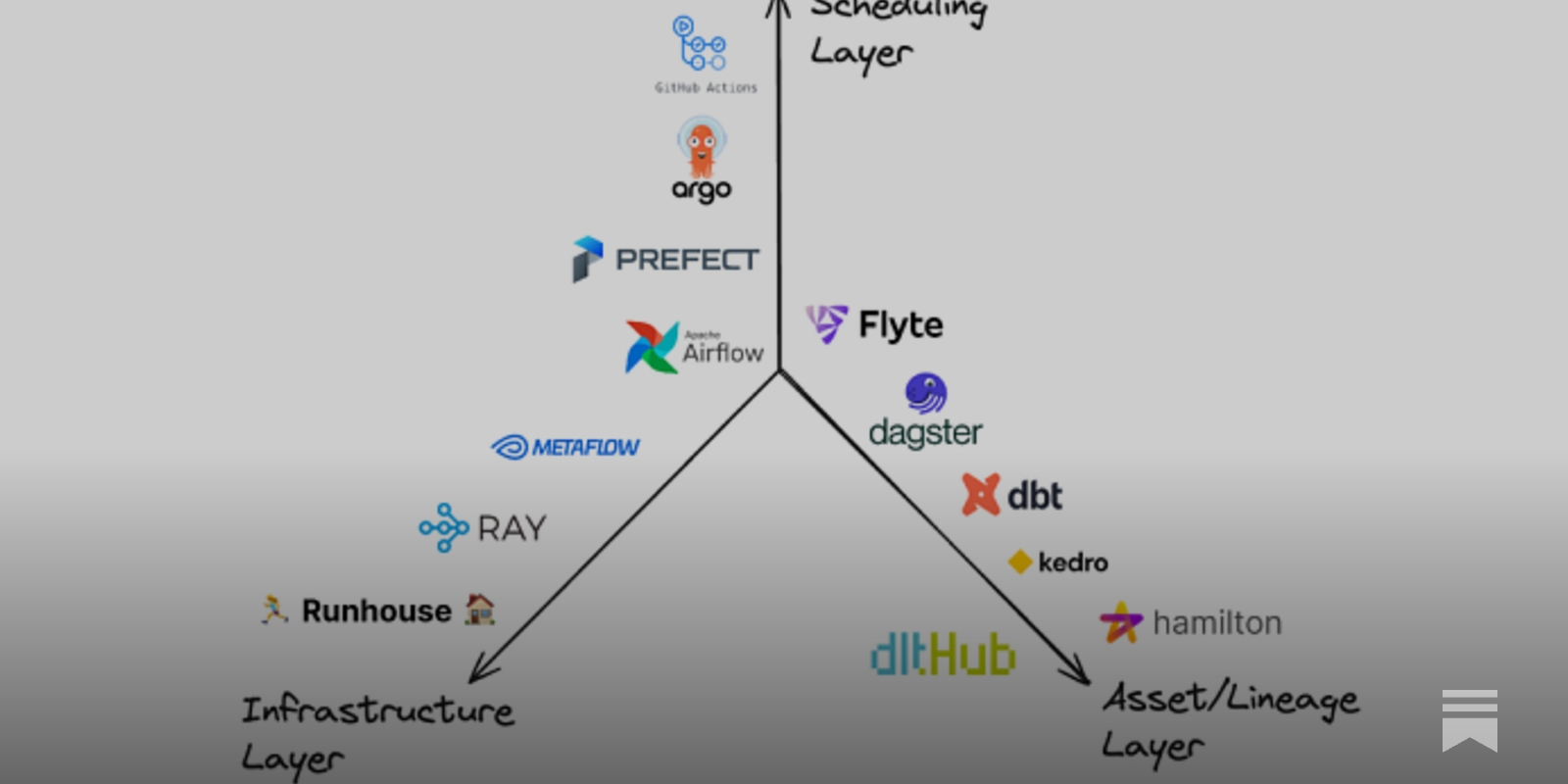
Lean Data Automation: A Principal Components Approach
Plus: A nimble, composable example with Github Actions, Hamilton, and Runhouse
Introducing Tap: Repository Synchronization Made Simple | Bluesky
Just about every app built on AT needs data from a repository at some point. For many use cases – feed generators, labelers, bots – streaming live data through a Relay or Jetstream works well. But some applications need to go beyond what Jetstream was designed for, like tracking specific subsets of a repo, automatically backfilling a database when adding new repos to monitor, or even mirroring the entire Atmosphere.

Local-First Software: Taking Back Control of Our Data | a mini-doc
AI Tools Accelerates Coding, but Not Overall Software Delivery, GitLab Research Finds
GitLab's 2026 AI Accountability Report highlights an AI Paradox: although 78% of developers say they code faster, overall software delivery has not accelerated due to downstream testing and review bottlenecks and new challenges for enterprise governance and traceability.

Nicholas Vincent | Data Leverage & Public AI
Prof. Nick Vincent is an Assistant Professor in Computing Science at Simon Fraser University. He studies the content ecosystems and data supply chains that fuel

Rethinking Digital Storage for Community-Based Archives
Over the last few decades, the standard procedure for storing and backing up data has been ‘put it in the cloud.’ Many of us use cloud…
