


Or why sometimes trolling your audience has a benefit.
The revolt of the reader | The Observation Deck
Reading is important to me. While I’m not a quick reader nor an especially voracious one, I have found that long-form reading has had a profound influence on me over my life. And because reading is important to me, writing is too: writing not only allows us to convey our ideas, but the very act forces us to test and distill them — at once making our ideas more robust while providing the vehicle by which to share them.
Dependency cooldowns turn you into a free-rider
Against dependency cooldowns as a response to supply chain attacks

The case against efficiency: friction in social media
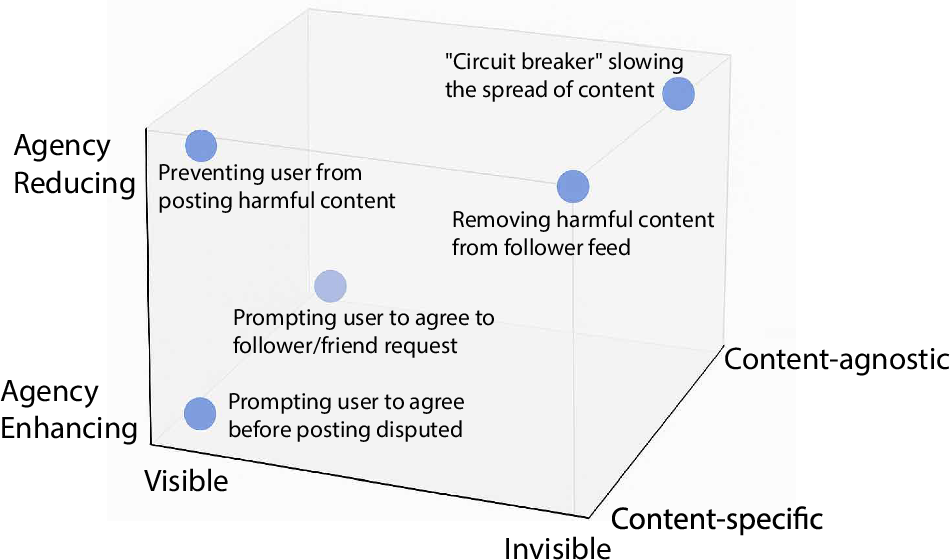
Social media platforms frequently prioritize efficiency to maximize ad revenue and user engagement, often sacrificing deliberation, trust, and reflective, purposeful cognitive engagement in the process. This manuscript examines the potential of friction—design choices that intentionally slow user interactions—as an alternate approach. We present a case against efficiency as the dominant paradigm on social media and advocate for a complex systems approach to understanding and analyzing friction. Drawing from interdisciplinary literature, real-world examples, and industry experiments, we highlight the potential for friction to mitigate issues like polarization, disinformation, and toxic content without resorting to censorship. We propose a state space representation of friction to establish a multidimensional framework and language for analyzing the diverse forms and functions through which friction can be implemented. Additionally, we propose several experimental designs to examine the impact of friction on system dynamics, user behavior, and information ecosystems, each designed with complex systems solutions and perspectives in mind. Our case against efficiency underscores the critical role of friction in shaping digital spaces, challenging the relentless pursuit of efficiency and exploring the potential of thoughtful slowing.
bliki: Two Hard Things
There are only two hard things in Computer Science: cache invalidation and naming things -- Phil Karlton (bonus variations on the page)

Expectations and preferences around community contributions/interactions · mastodon mastodon · Discussion #36552
There is a long-running pattern of conversations on issues/PRs around some features getting quite heated and sometimes turning into personal insults, venting frustrations, borderline conspiracy acc...
Building a Culture of (Digital) Safety
Black culture is in a lot of ways synonymous with how internet culture exists writ large. From what is now described as “Gen-Z slang” (or as Black people have always known it, AAVE) to our methods of organizing (Black feminists starting hashtag activism and creating movements like #MeToo, #BlackLivesMatter, and #SayHerName) and even how we […]

People, Not Posts - Real Housewives of San Francisco
Why do we still call it "social media"?
The Shape of Friction · Matthias Ott
Web design engineer, UX designer, teacher, and speaker – helping teams build websites and digital products with a focus on CSS, accessibility, and performance.

Lexicon Service Docs - at:// pizza thoughts
Riffing on some ways to make network services more legible to humans and machines
Digital Sovereignty
Digital sovereignty has a bad reputation. In internet governance circles, sovereignty is considered awkward enough to be referred to by as the "s-word." It is often associated with misguided attempts at returning to the era of national champions, like building a French search engine or a European Google, or worse with the eternal boogeyman that is the "splinternet." It doesn't have to be this way!

Assumed Audiences
Naming your invisible audiences to free yourself from unspoken obligations
Why Knight Foundation Invested in Bluesky - Knight Foundation
John Sands explains our bet on a social web that protects speech, creates opportunity for publishers and creators, and enables research on the information ecosystem.

Welcome to Stir
Stir is a digital magazine that puts Vancouver and the surrounding area’s arts and culture at centre stage. We're devoting an entire platform to independent arts journalism and to telling the creative scene’s compelling stories —stories that we’re excited to share.

The political effects of X’s feed algorithm
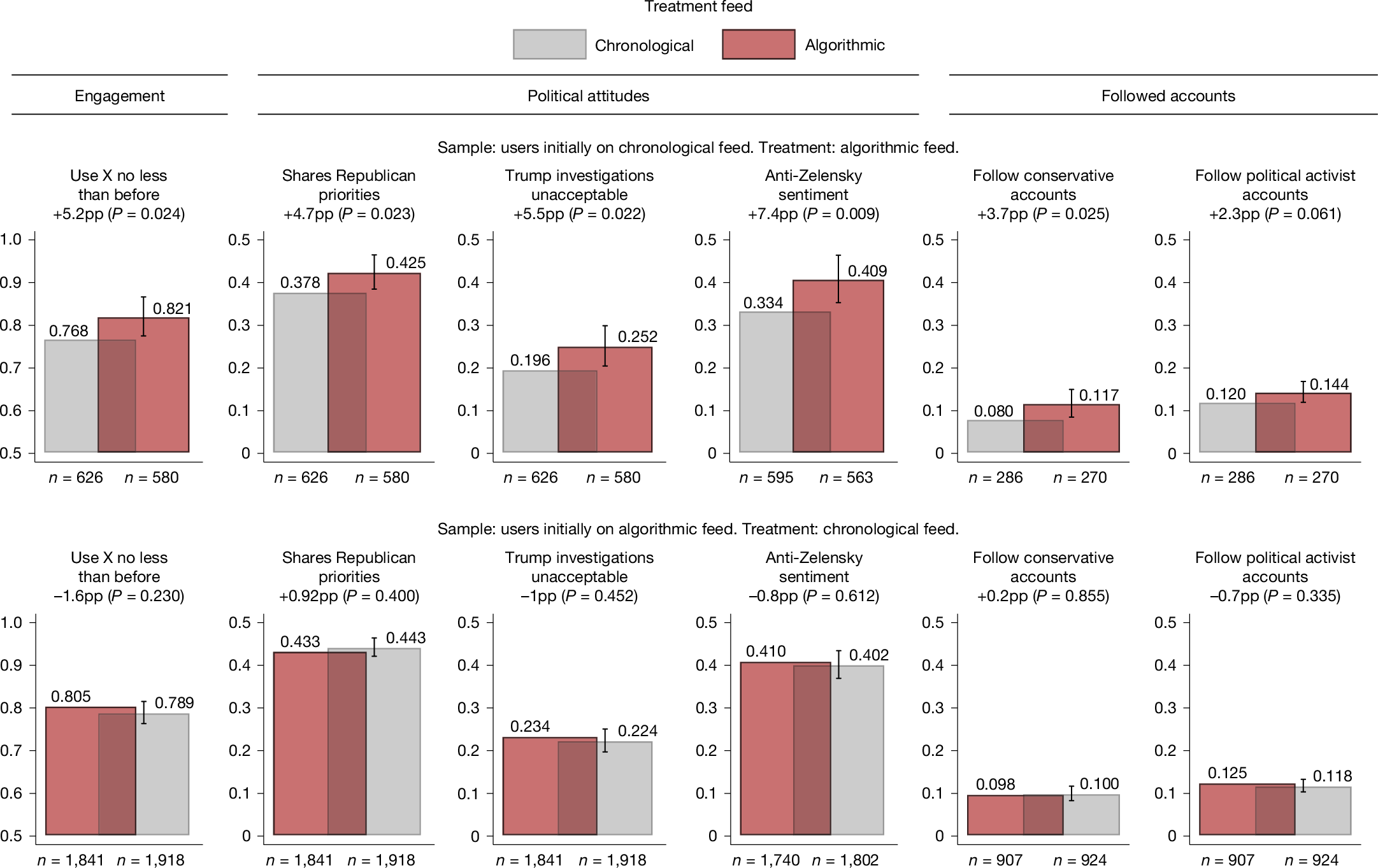
Feed algorithms are widely suspected to influence political attitudes. However, previous evidence from switching off the algorithm on Meta platforms found no political effects1. Here we present results from a 2023 field experiment on Elon Musk’s platform X shedding light on this puzzle. We assigned active US-based users randomly to either an algorithmic or a chronological feed for 7 weeks, measuring political attitudes and online behaviour. Switching from a chronological to an algorithmic feed increased engagement and shifted political opinion towards more conservative positions, particularly regarding policy priorities, perceptions of criminal investigations into Donald Trump and views on the war in Ukraine. In contrast, switching from the algorithmic to the chronological feed had no comparable effects. Neither switching the algorithm on nor switching it off significantly affected affective polarization or self-reported partisanship. To investigate the mechanism, we analysed users’ feed content and behaviour. We found that the algorithm promotes conservative content and demotes posts by traditional media. Exposure to algorithmic content leads users to follow conservative political activist accounts, which they continue to follow even after switching off the algorithm, helping explain the asymmetry in effects. These results suggest that initial exposure to X’s algorithm has persistent effects on users’ current political attitudes and account-following behaviour, even in the absence of a detectable effect on partisanship.
Home | Reasons To Stay
When the world feels heavy, a kind word can make a difference. Receive anonymous letters from people who have been there. No pressure, no spam—just a quiet reminder that you are not alone.

Dependency Cultures - Richard Feldman | SSW 2026