


a short post
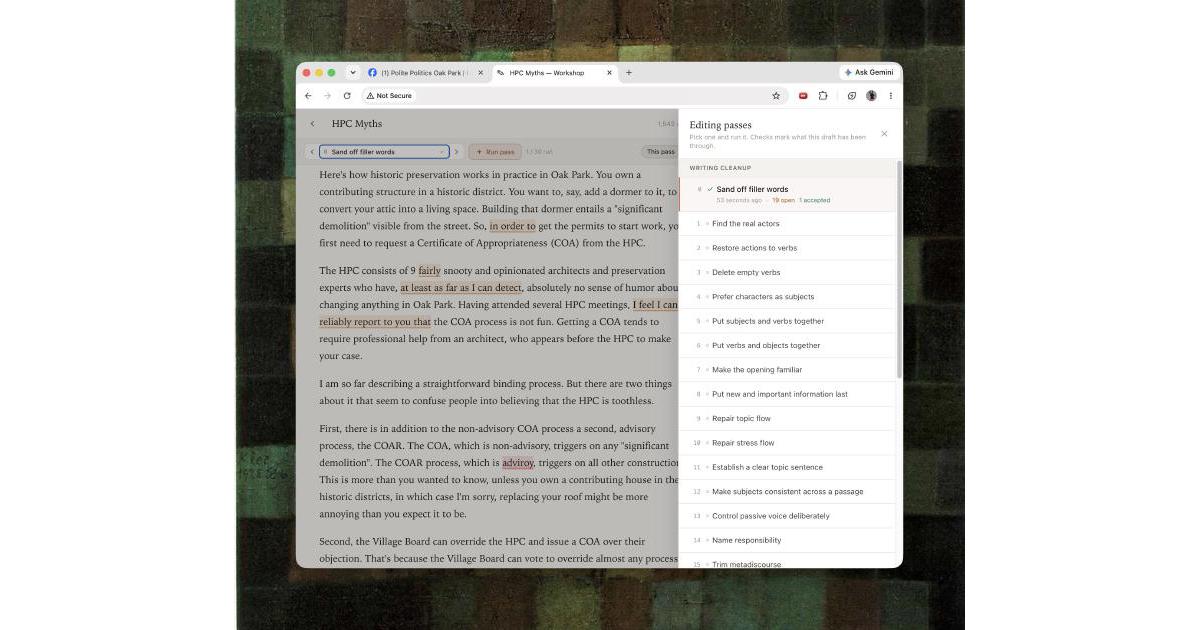
How To Write With An LLM
Two rules keep an LLM from pasteurizing your writing: never take a word it suggests, and never let it encourage you. Then hand it all the tedious work.
Rotating the Space: On LLMs as a Medium for Thought
An essay on LLMs as a cognitive medium
LLMs break the internet. Signing everything fixes it.
The dead internet theory wasn't wrong, just early. Here's what to do next.

Against False Indulgences in LLM Alignment
Unnecessary moral concern, and the false indulgences that drive it.


How LLMs Actually Work
A from-the-ground-up walkthrough of how modern LLMs work, from tokens to transformer blocks to the next-token loop
What Happens, Exactly, When a Person Talks to an LLM?
A phenomenology of thinking with a model.

LLMs reward expertise
In the 2010s, if you had technical gaps (say, you couldn’t write CSS), you had to either rely on a skilled colleague or just hope that the answer to your exact problem was out there on the internet. Today, everyone can write sort-of-okay CSS by delegating the task to an LLM. LLMs make everybody into a generalist.

Artificial
An LLM is a computer program. We should talk about it like a computer program.

How to write it like you told it
What do you say to someone who wants to write but struggles with writing and is tempted to use an LLM-based chatbot?

LLM cliché highlighter
Paste text below — or load it from a URL — and it highlights sentences that match known LLM clichés, including the tells catalogued in Wikipedia’s Signs of AI writing guide. Chain patterns like “no X, no Y” get a badge counting their items; tap or hover a highlight to see which cliché it hit.
Compression is prediction | ngrok blog
Compression and LLMs are trying to solve the exact same problem: predicting what comes next. Learn the fundamentals of compression and how better prediction leads to better shrinkage.
Protecting our FLOSS commons from LLMs — Codeberg News
In Brief: Two motions regarding
Fight fire with pedantry
Over the last two years, I’ve heard a bunch of speculation about how to design a programming language specifically for an LLM. It usually centers around typechecking, formal verifiability, or context engineering. It’s a fun thought experiment, but always felt aimless. First, my experience has been that designing for humans is the best way to design for an LLM, as long as you restrict yourself to text. Second, being in-distribution is so critical that there’s no point unless you’re also training a frontier coding model.