We are the most comprehensive media bias resource on the internet. There are currently 3900+ media sources listed in our database and growing every day.
Media Ownership Monitor
Mass media influences how facts are viewed and debated in a society, contributing to crafting its public opinion. Independence and pluralism...

Wikipedia:Reliable sources/Perennial sources
This is a non-exhaustive list of sources whose reliability and use on Wikipedia are frequently discussed. This list summarizes prior consensus and consolidates links to the most in-depth and recent discussions from the reliable sources noticeboard and elsewhere on Wikipedia.
PropagandaScope
Tracking articles from newspapers. Real-time analysis of propaganda transmission patterns.
Local Journalism Directory | Media and Democracy Project
We created a directory to help you find local journalism and local news sources in your area worth reading and supporting.

Verification Handbook | DataJournalism.com
This book equips journalists with the knowledge to investigate on disinformation and media manipulation.

homepages.news — News Homepages documentation
An open-source archive that gathers, saves, shares and analyzes news homepages
Wikipedia Is Battling for the Soul of the Internet
The internet’s largest stockpile of free knowledge is under threat from MAGA, A.I. and foreign autocrats. A bibliophile ex-ambassador is here to help.

Wikipedia:List of free online resources
The following list is meant to help you with your own research, by offering links to respectable information sources on the web, available free of charge. Inclusion on the list doesn't automatically mean the absolute truth is on these websites, so always be critical and compare information between different sources.
Category:WikiProject lists of reliable sources
The following 61 pages are in this category, out of 61 total. This list may not reflect recent changes.
How Dependent Is Your Newsroom on Big Tech?
A web-based survey tool that evaluates journalism organizations' dependency on Big Tech platforms and services.

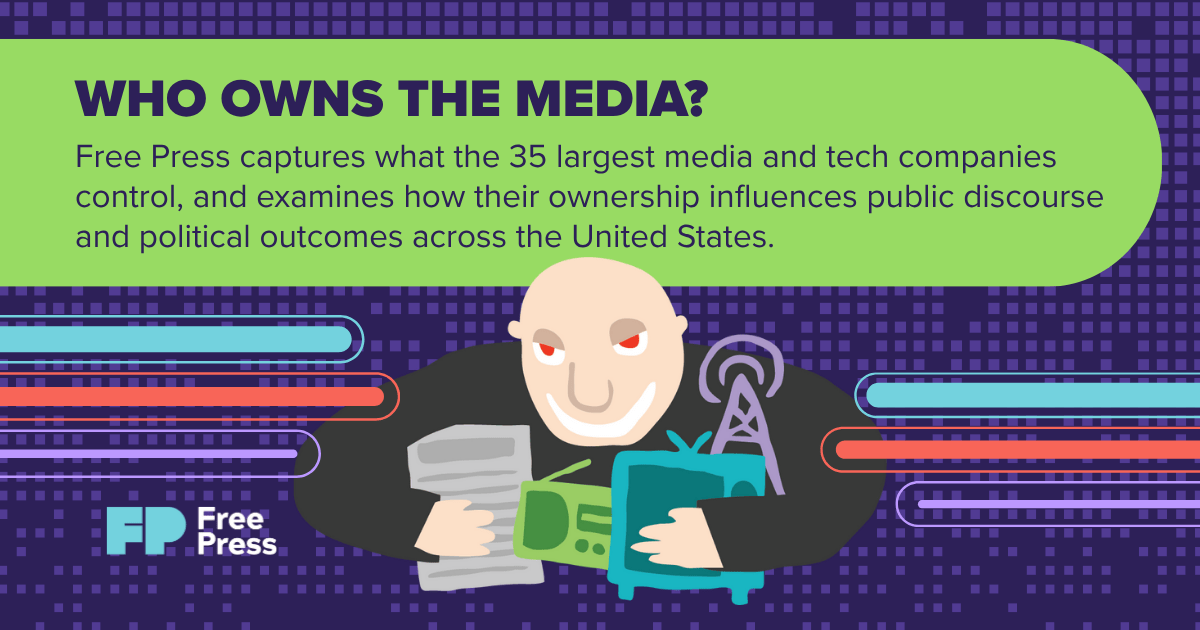
Who Owns the Media
Who owns the 35 most powerful media companies in America? The Media Capitulation Index shows how these conglomerates came to dominate the U.S. media landscape. Using a chicken scale, Free Press rates their ability to defend democracy during a time of authoritarianism.
Fake news spreads like an epidemic. Here’s how to stop it.
Researchers study fake news the same way they study the spread of disease. When misinformation “goes viral”, it is not just a metaphor. It is what’s actually happening. via @straits_times str.sg/viz-misinformation

OpenSanctions: Supreme Data on Supreme Leaders
The open-source database of sanctions, watchlists, and politically exposed persons — aggregating hundreds of sources and relied on by compliance teams, investigators, and journalists.

feedle: Search and Discover Quality RSS Feeds from Thousands of Blogs and Podcasts
A search engine for blogs and podcasts, where every search is an RSS feed.

The 49MB Web Page
A look at modern news websites. How programmatic ad-tech, huge payloads and hostile architecture destroyed the reading experience.

The political effects of X’s feed algorithm
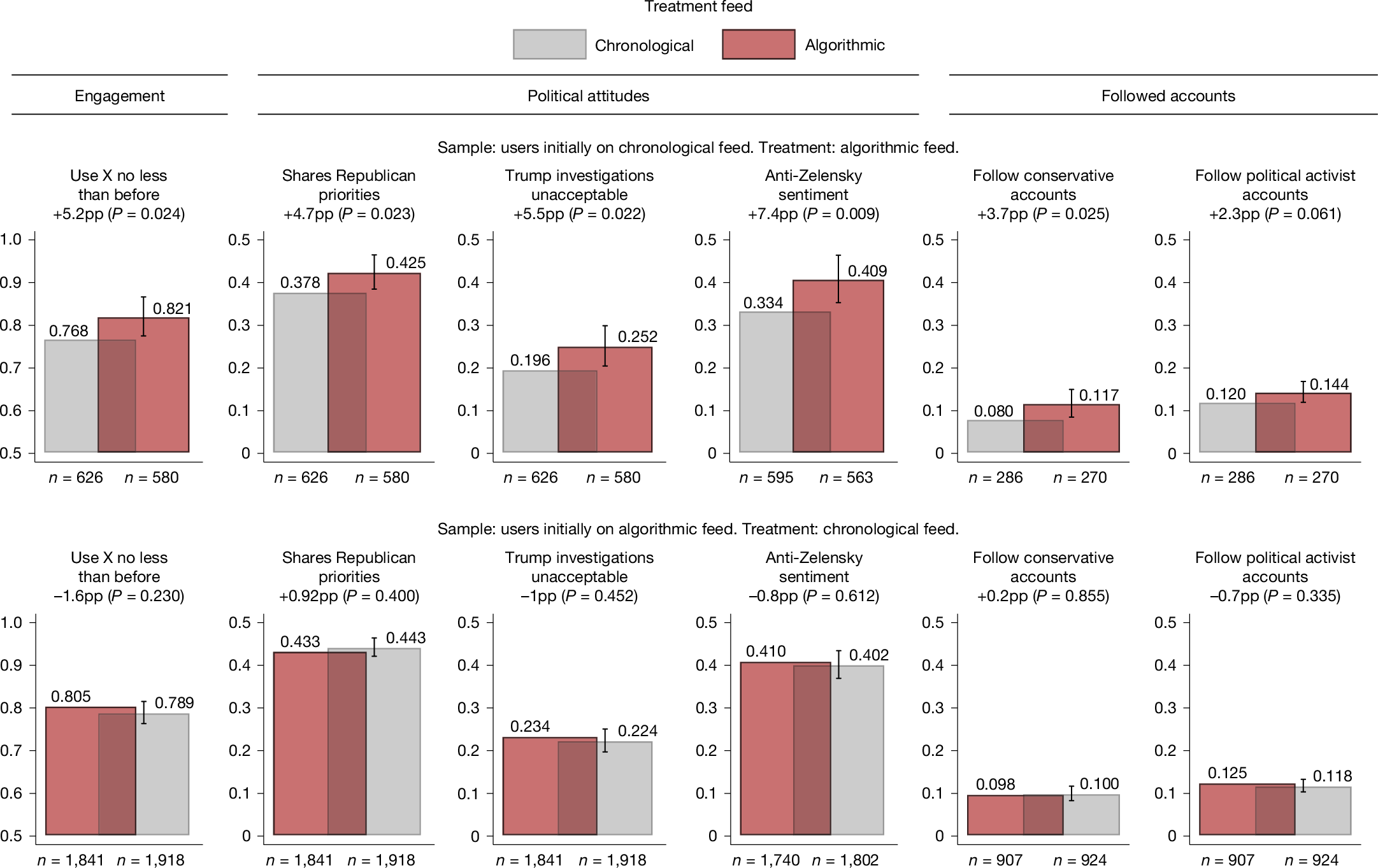
Feed algorithms are widely suspected to influence political attitudes. However, previous evidence from switching off the algorithm on Meta platforms found no political effects1. Here we present results from a 2023 field experiment on Elon Musk’s platform X shedding light on this puzzle. We assigned active US-based users randomly to either an algorithmic or a chronological feed for 7 weeks, measuring political attitudes and online behaviour. Switching from a chronological to an algorithmic feed increased engagement and shifted political opinion towards more conservative positions, particularly regarding policy priorities, perceptions of criminal investigations into Donald Trump and views on the war in Ukraine. In contrast, switching from the algorithmic to the chronological feed had no comparable effects. Neither switching the algorithm on nor switching it off significantly affected affective polarization or self-reported partisanship. To investigate the mechanism, we analysed users’ feed content and behaviour. We found that the algorithm promotes conservative content and demotes posts by traditional media. Exposure to algorithmic content leads users to follow conservative political activist accounts, which they continue to follow even after switching off the algorithm, helping explain the asymmetry in effects. These results suggest that initial exposure to X’s algorithm has persistent effects on users’ current political attitudes and account-following behaviour, even in the absence of a detectable effect on partisanship.