


Jason Toney on algorithm-speak, main character energy, and why a simple question about music charts revealed how badly we've forgotten how to talk to each other online."
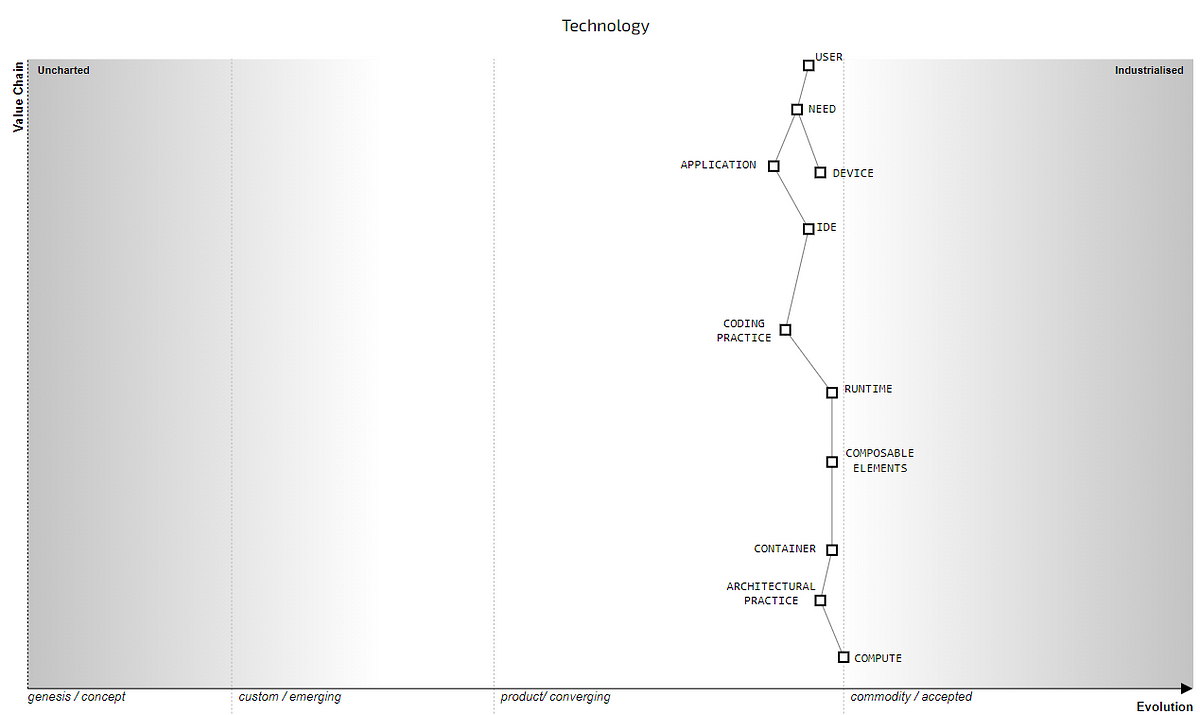
Why the fuss about conversational programming?
First, there isn’t much fuss … yet. But there will be.
After the feed with Eli Pariser, Ben Smith, and Jasmine Sun
We Need To Stop Calling Entertainers ‘Artists’
Expert in building reliable digital platforms and leading high-impact technical teams. 20+ years experience at the intersection of technology, teams, and learning.
“Nothing Is Ever Over” - AT Protocol
Writer, speaker, and researcher Erin Kissane joins Jim to trace how the social internet got here, what’s worth salvaging, and how we can do better by listening to people.
AI, I tried to love you – Writings and rehearsals by Nathan Schneider
Among my peers who study the cultures and economies surrounding technology, I often find myself more tech-positive than most. On the whole I like computers, like the internet, and like in general the emergent human creativity that these things have enabled and revealed. A source of my appreciation is that I expend a lot of effort on the practice of “slow computing,” which is to say, choosing tools and technical communities that I can feel in right relationship with. I tend to approach new socio-technologies (like gig economies, blockchains, and social media) not from a perspective of why is this so bad? so much as asking how could we do this right?

The Algorithm, Singular
A new European ruling on algorithmic amplification determines if an operator controls how content spreads on a platform. But applying it to open social networks turns out to be a problem.

Mark Zuckerberg's AI manifesto is exactly why people don't like AI | TechCrunch
On Monday, Mark Zuckerberg published a 6,500-word manifesto about personal AI, largely about the possibilities for the "personal superintelligence" systems Meta AI is building.

Overview
What is Blacksky? Blacksky Algorithms is building the future of self-governable online communities with tools that make complex infrastructure simple to deploy. Most social platforms control what users see, how communities operate, and who gets to feel safe online. Blacksky changes that by providing one-click infrastructure for independent, self-governed digital spaces. Our platform lets communities […]
Why Knight Foundation Invested in Bluesky - Knight Foundation
John Sands explains our bet on a social web that protects speech, creates opportunity for publishers and creators, and enables research on the information ecosystem.

Can AT Protocol Fix Monolithic Platforms?
Trevor Paglen and Holly Herndon on Making Art with AI and What the Discourse Is Missing
The artists talk process, slop, and why optimism and pessimism don’t quite cover it.

My fireside chat about agentic engineering at the Pragmatic Summit
I was a speaker last month at the Pragmatic Summit in San Francisco, where I participated in a fireside chat session about Agentic Engineering hosted by Eric Lui from Statsig. …

The case against efficiency: friction in social media
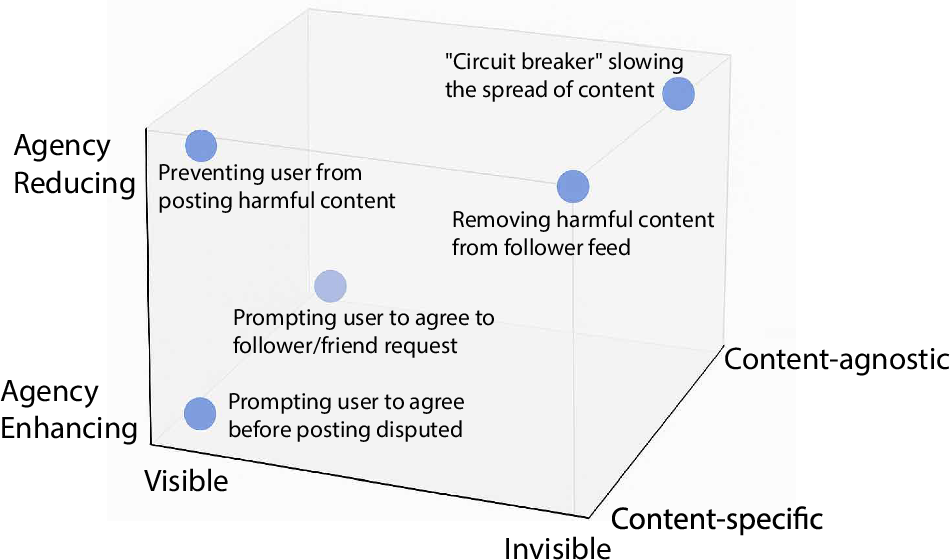
Social media platforms frequently prioritize efficiency to maximize ad revenue and user engagement, often sacrificing deliberation, trust, and reflective, purposeful cognitive engagement in the process. This manuscript examines the potential of friction—design choices that intentionally slow user interactions—as an alternate approach. We present a case against efficiency as the dominant paradigm on social media and advocate for a complex systems approach to understanding and analyzing friction. Drawing from interdisciplinary literature, real-world examples, and industry experiments, we highlight the potential for friction to mitigate issues like polarization, disinformation, and toxic content without resorting to censorship. We propose a state space representation of friction to establish a multidimensional framework and language for analyzing the diverse forms and functions through which friction can be implemented. Additionally, we propose several experimental designs to examine the impact of friction on system dynamics, user behavior, and information ecosystems, each designed with complex systems solutions and perspectives in mind. Our case against efficiency underscores the critical role of friction in shaping digital spaces, challenging the relentless pursuit of efficiency and exploring the potential of thoughtful slowing.
Michael R. Crusoe (@biocrusoe@fairpoints.social)
Oh, I like this part > No AI-generated text in human-to-human communication > When our maintainers volunteer their time to review your issue, PR, or proposal, they do not want to talk to a machine. This is a basic principle of respect. https://mastodon.gamedev.place/@godotengine/116839550229253906
Literature fans should welcome AI as a fellow wordsmith | Aeon Essays
Strong resistance to AI among writers is understandable. But it obscures what we share with the machines: language itself

More Than a Tool
What We Learned from a Year of Conversations About AI
