

ATProtoDevChat part II (02/01/2026)
ATProto Architecture
Visual summary of the AT Protocol architecture: PDS, AppView, identity, records, lexicons.

Welcome to the new atproto.com - AT Protocol
We've updated just about everything about atproto.com to make it easier for developers to just build things.
AT://links (by Patrick Singletary) — Semble
collection of fun / useful apps built to work on / with ATProtocol
Heron - A gentle atproto client
IETF124: Authenticated Transfer (ATP) Pre-BOF - ATProto Community
Nov 5th, 2025 in Montreal
Movement mapping on ATproto
A proposal for building a movement mapping tool on the AT protocol.
Building More Resilient Local-First Software with atproto | jakelazaroff.com
atproto has the potential to become a rock-solid replacement for the most fragile part of any local-first app: the sync server.
CIDs: What You Need to Know and Why, Part 1 - Nick's Blog
A deep dive into Content Identifiers, the self-describing cryptographic fingerprints that form the foundation of ATProtocol’s data model.
Bitesize Proto: Upserting ATProto Records - Hitchhiker's Guide to the Atmosphere
Tired of creating duplicate records in a repo from your atproto app?
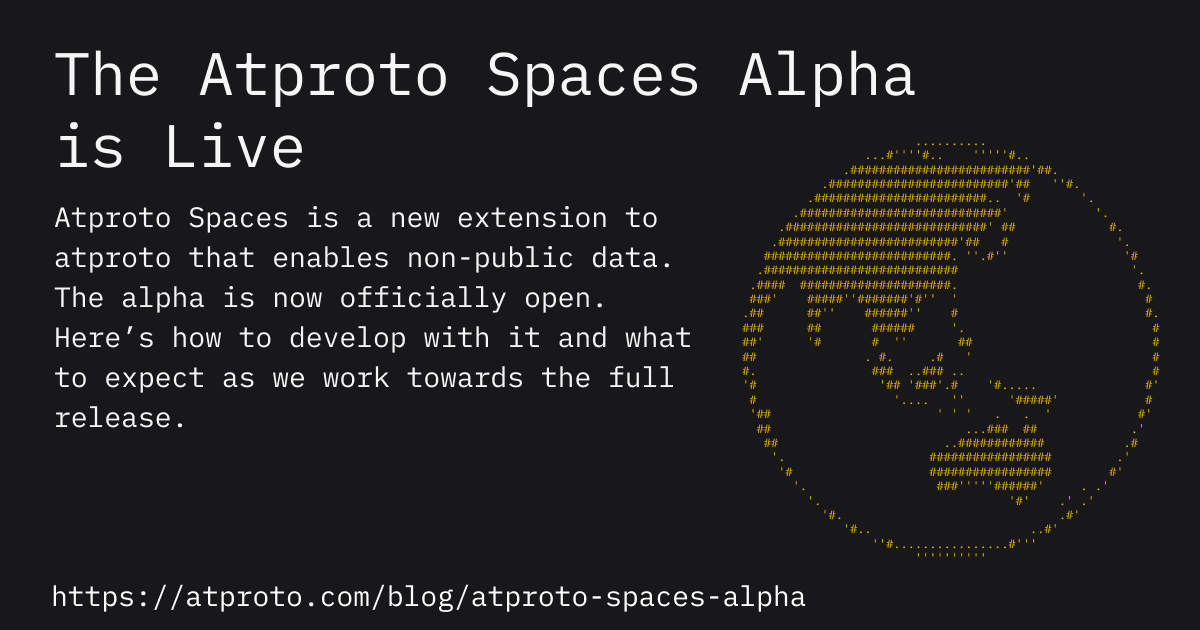
The Atproto Spaces Alpha is Live - AT Protocol
Atproto Spaces, formerly known as “the permissioned data protocol,” is a new extension to atproto that enables non-public data. The alpha is now officially open. Here’s how to develop with it and what to expect as we work towards the full release.
The Atproto Spaces Alpha is Live - AT Protocol
Atproto Spaces, formerly known as “the permissioned data protocol,” is a new extension to atproto that enables non-public data. The alpha is now officially open. Here’s how to develop with it and what to expect as we work towards the full release.

CIDs: What You Need to Know and Why, Part 2 - Nick's Blog
How ATProtocol uses Content Identifiers to create a versioned, verifiable, and portable data model.