

Go's refusal to add a try keyword isn't about loving boilerplate.
Learn Go by Building a Command Line Todo App | Barbarian Meets Coding
Learn the Go programming language by building a test-driven command line todo application

Don't couple your Go code to GitHub | Iain Cambridge
The technical musings of Iain Cambridge.
Review the reviews
When I was actively contributing to the Go project, my primary feed was the code review email firehose. Issues, mailing lists, and Slack had low SNR. The finished commit history was better: it was finely polished work with some of the best written commit messages I have ever encountered. But it didn’t hold a candle to code reviews for operational learning. The commit history could tell you what got done and why, in impressive technical detail.
Prompting Claude Opus 5.5
Behavioral differences from Claude Opus 5 and the prompting and harness patterns that address them: effort calibration, thinking behavior in API integrations and chat, progress updates, unattended and multiagent tasks, safeguard refusals, frontend design, complex visual inputs, multi-app workflows, and pasted text in user messages.
Why Can’t Programmers... Program?
I was incredulous when I read this observation from Reginald Braithwaite: Like me, the author is having trouble with the fact that 199 out of 200 applicants for every programming job can’t write code at all. I repeat: they can’t write any code whatsoever. The author he’s
Thorsten Ball - Why threads can't fork
There is an interesting thread on the Go issue tracker about daemonizing processes. Most of the thread is not about daemonizing processes though, but more about why Go has no Fork() function which you can call directly in your code. The first time I read through it I was wondering and saying to myself: “Yeah, why is there no Fork()? It surely can’t be that hard to implement.” After all you can already call system calls with the syscall package. As I read more and more I realized that the problem is not implementing Fork() per se, but rather implementing Fork() to work safely in a multi-threaded environment, which most Go programs are. So I tried to find out why.
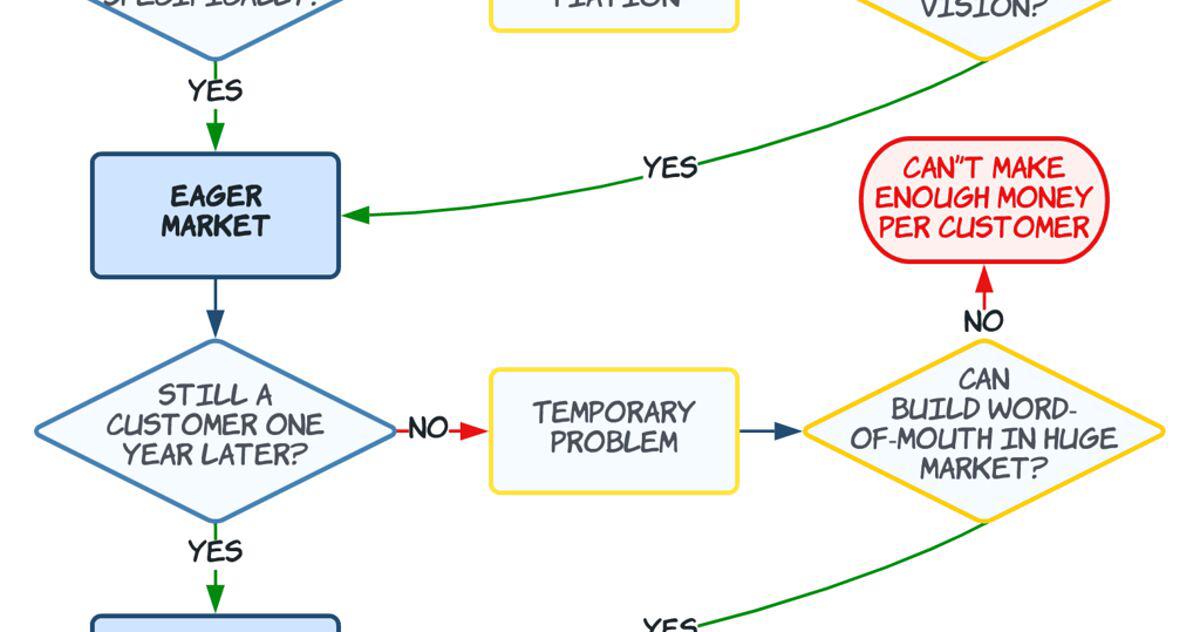
Excuse me, is there a problem?
Many startups fail despite identifying a real problem and building a product that solves that problem. This explains why, so you can avoid their fate.
The Paradox of Perfection: When ‘Good Enough’ is Actually Better
Exploring the tension between engineering perfectionism and pragmatic delivery. Discover why striving for the perfect solution often prevents us from shipping valuable improvements and how to find the balance.
Machine-readable attitudes - Computational Semantics++
User intent declarations can be viewed as propositional attitudes (permission, prohibition, desire, intention, belief, etc.) over structured descriptions of data use. Treating them that way gives you composable building blocks from existing theory and lens-based translations between community vocabularies that make explicit what each translation cannot carry through.
The peril of laziness lost | The Observation Deck
In his classic Programming Perl — affectionately known to a generation of technologists as "the Camel Book" — Larry Wall famously wrote of the three virtues of a programmer as laziness, impatience, and hubris: If we’re going to talk about good software design, we have to talk about Laziness, Impatience, and Hubris, the basis of good software design. We’ve all fallen into the trap of using cut-and-paste when we should have defined a higher-level abstraction, if only just a loop or subroutine. To be sure, some folks have gone to the opposite extreme of defining ever-growing mounds of higher level abstractions when they should have used cut-and-paste. Generally, though, most of us need to think about using more abstraction rather than less.
Creative limitation
Creative limitation is the concept of how purposely limiting oneself can actually drive creativity. At a 2013 TED conference, artist Phil Hansen made several remarks concerning the value of limitations, among them that "We need to first be limited in order to become limitless,” and “If you treat the problems as possibilities, life will start to dance with you in the most amazing ways.”[TED.com 1]
Typing without having to type
25+ years into my career as a programmer I think I may finally be coming around to preferring type hints or even strong typing. I resisted those in the past …
Engineers do get promoted for writing simple code
It’s a popular joke among software engineers that writing overcomplicated, unmaintainable code is a pathway to job security. After all, if you’re the only person who can work on a system, they can’t fire you. There’s a related take that “nobody gets promoted for simplicity”: in other words, engineers who deliver overcomplicated crap will be promoted, because their work looks more impressive to non-technical managers.

95 reasons for having your own website
A running list of reasons to have your own website in 2026.
Mark Zuckerberg's AI manifesto is exactly why people don't like AI | TechCrunch
On Monday, Mark Zuckerberg published a 6,500-word manifesto about personal AI, largely about the possibilities for the "personal superintelligence" systems Meta AI is building.
