

Bridging the interop gap and addressing the long-tail of user needs
Lexicon Service Docs - at:// pizza thoughts
Riffing on some ways to make network services more legible to humans and machines
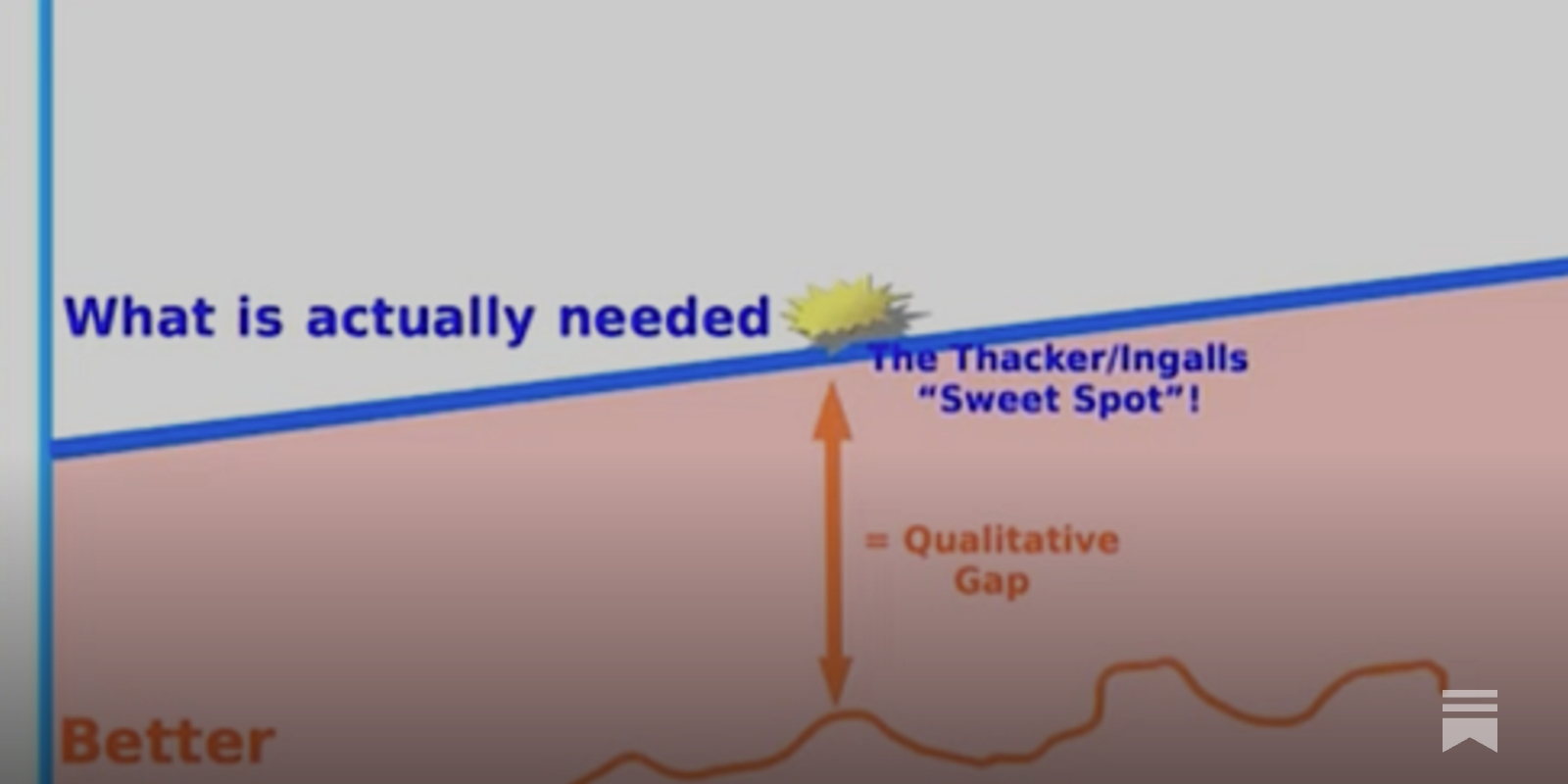

The peril of laziness lost | The Observation Deck
In his classic Programming Perl — affectionately known to a generation of technologists as "the Camel Book" — Larry Wall famously wrote of the three virtues of a programmer as laziness, impatience, and hubris: If we’re going to talk about good software design, we have to talk about Laziness, Impatience, and Hubris, the basis of good software design. We’ve all fallen into the trap of using cut-and-paste when we should have defined a higher-level abstraction, if only just a loop or subroutine. To be sure, some folks have gone to the opposite extreme of defining ever-growing mounds of higher level abstractions when they should have used cut-and-paste. Generally, though, most of us need to think about using more abstraction rather than less.
Prompting Claude Opus 5.5
Behavioral differences from Claude Opus 5 and the prompting and harness patterns that address them: effort calibration, thinking behavior in API integrations and chat, progress updates, unattended and multiagent tasks, safeguard refusals, frontend design, complex visual inputs, multi-app workflows, and pasted text in user messages.

Can AT Protocol Fix Monolithic Platforms?
Community Spaces on AT Protocol - at:// pizza thoughts
Scaled-down design patterns
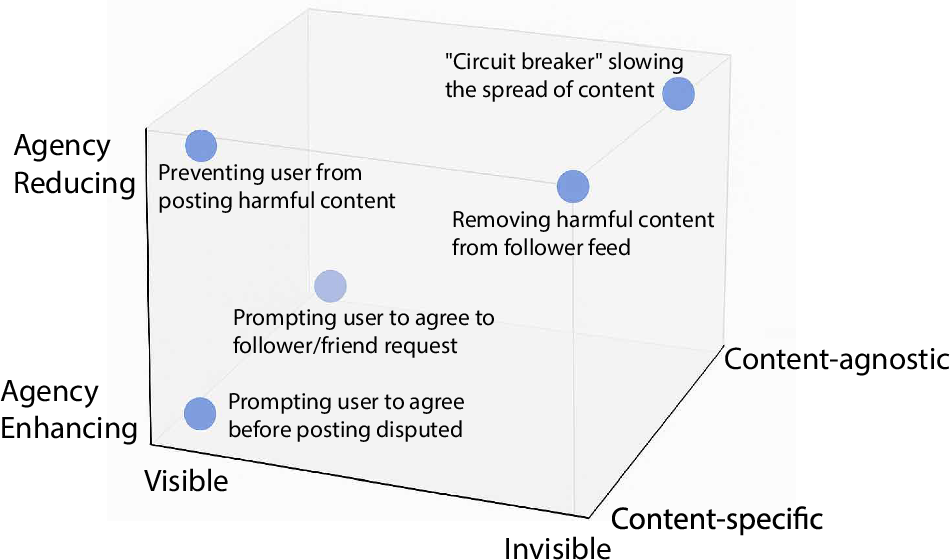
The case against efficiency: friction in social media
Social media platforms frequently prioritize efficiency to maximize ad revenue and user engagement, often sacrificing deliberation, trust, and reflective, purposeful cognitive engagement in the process. This manuscript examines the potential of friction—design choices that intentionally slow user interactions—as an alternate approach. We present a case against efficiency as the dominant paradigm on social media and advocate for a complex systems approach to understanding and analyzing friction. Drawing from interdisciplinary literature, real-world examples, and industry experiments, we highlight the potential for friction to mitigate issues like polarization, disinformation, and toxic content without resorting to censorship. We propose a state space representation of friction to establish a multidimensional framework and language for analyzing the diverse forms and functions through which friction can be implemented. Additionally, we propose several experimental designs to examine the impact of friction on system dynamics, user behavior, and information ecosystems, each designed with complex systems solutions and perspectives in mind. Our case against efficiency underscores the critical role of friction in shaping digital spaces, challenging the relentless pursuit of efficiency and exploring the potential of thoughtful slowing.
User Intents as Living Data — A Descriptive Meta-Framework
A response to Bluesky's User Intents proposal: instead of prescribing a fixed set of intent categories, treat them as living data and use panproto lenses to map between the vocabularies that different communities will inevitably create.
Note-Taking and Personal Knowledge Management — Unattributed
Bridge heading into the smokey landscape. License: CC-0 I read Brennan Kenneth Brown's What have note-taking PKMs accomplished, really?...

Machine-readable attitudes - Computational Semantics++
User intent declarations can be viewed as propositional attitudes (permission, prohibition, desire, intention, belief, etc.) over structured descriptions of data use. Treating them that way gives you composable building blocks from existing theory and lens-based translations between community vocabularies that make explicit what each translation cannot carry through.
Don't Take the Black Pill - Andrew Kelley | SSW 2026
Standardizing Bookmarks in the Atmosphere · Wesley's notes
a mini proposal for a shared bookmark lexicon
The Internet Transition
The Internet is allowing us to build a richer, more complex society but the way in which we Internet today is failing to support the governance systems that a more complex world requires. I take a look at why these issues are related, try to develop an intuition for a way forward, and point at the emerging field that is coming together to build that future.
