

There is a beautiful and romanticized image of the doe. The doe is graceful, elegant, and delicate. She is shy and unattainable, disappearing softly at the slightest sound. Her eyes have become a cliche for the vulnerable, docile feminine, and a glimpse of her, staring back at you for a profound moment before she flies, is precious and moving.I am not this doe.In fact, in a way I hate this doe. No doe is really this doe. Let me tell you a few things about cervids, the whitetail doe in particular. Cervids are olfactory animals. That means they learn things about other deer with their sense of smell. What that means is that the smelliest things about deer are pretty crucial to the way deer live. As with many animals, urine plays a large part in communication – males will urinate in pools and wallow in them to advertise; they will also urinate on their feet to leave their scent with their hoofprints. Females advertise their eligibility to mate by urinating, also.It means that does will ingest the excrement of their young in order to prevent fawns from having a scent that would give away their position to predators.Does aren’t always gentle or vulnerable.In winter, does that are healthier and more able to sense danger will actively prevent other does and fawns from having access to food. Even if a high-ranking doe no longer needs to eat, she will fend off others from the food area and not allow them access, even if they are starving.Nor do deer always flee in the face of danger – several accounts chronicle deer attacking dogs and humans when threatened, in some cases quite brutally. Not many animals hold up closely to their romanticized stereotypes when their survival is put into question, but the desperate deer is the exact opposite of its gentle popular image, its adorable hoofs formidable and unexpected weapons.Besides that, deer do kill, sometimes to eat. A number of articles bring to light the fact that deer do eat carrion, and there is record of deer killing and eating grounded birds.For me, though, there’s more that negates the image of the wholly graceful doe than just wildlife facts. Because the grace of deer, the elegance, is not what makes me deer. As far as the romantic stereotype goes, I do usually feel more inclined to flight, and can be standoffish as a mode of self-preservation. I feel vulnerable in the way that I recognize deer are very, very “killable” – living in Vermont, I saw a great deal of dead deer and the mortality of the whitetail in a hunting community that supports a healthy coyote population was impossible to ignore. I do not feel graceful; usually I feel colossally awkward, and something about deer speaks of that awkwardness to me. Being spooked about nothing, the awkward indignation of being disturbed, the skittering flight are all deer. These things are aspects of the romantic stereotype, but I do not perceive them in a romantic way. I do not think being deer makes me mysterious, desirable, or delicate. Since I’ve become able to consciously analyze my animality, I have found it extremely important to define myself by the more negative or humble aspects of an animal as well as the positive and proud ones. I have difficulty understanding people who speak of their animality primarily in terms of the powerful, beautiful, majestic, or strong. Yes, there are things about deer that I think are lovely and ideal and that I relate to very much. I love the flick of their ears, the clarity of their gaze, the small cloven hoof poised not quite touching the ground, the flag of the tail, the sudden and fleeting bounding away. These are things that I can feel. But I can also feel the awkward stretch of the neck for browse, the indignation of being encroached upon, the need to hide, to flee, to fear. I can feel the undignified sound of the grunt and wheeze, the frozen discomfort of surprise and being caught in headlights, so to speak, and the hurried skitter away. Even the olfactory things that we consider unpleasant or gross in our culture make some sense to me – conveniently, as a human, I do not need to use urine to communicate sexual availability, but I rarely feel the need to rid myself of sexual smells when I notice them. I can’t deny the beauty and seriousness of feeling deer, or of following a deer path through the woods. I can’t ignore the bark and smell, the moss and magic, but I also can’t ignore that these paths are liberally punctuated with droppings. And this, for me, is an adequate metaphor for my experience of being doe: I can acknowledge the beautiful and wonderful, but must take into account the awkward and uncomfortable as well. I would not be deer if I could not accept both the loveliness and the unpleasantness of the doe.
Social Insects : Ecology and Behavioural Biology
1 online resource; Here is a guide to the ecology of social insects. It is intended for general ecologists and entomologists as well as for undergraduates and those about to start research on social insects; even the experienced investigator may find the comparison between different groups of social insects illuminating. Most technical terms are translated into common language as far as can be done without loss of accuracy but scientific names are unavoidable. Readers will become familiar with the name even though they cannot visualize the animal and could reflect that only a very few of the total species have been studied so far! References too are essential and with these it should be possible to travel more deeply into the vast research literature, still increasing monthly. When I have cited an author in another author's paper, this implies that I have not read the original and the second author must take responsi bility for accuracy! Many hands and heads have helped to make this book. I thank all my colleagues past and present for their enduring though critical support, and I thank with special pleasure: E.]. M. Evesham who fashioned the diagrams;]. Free, D.J. Stradling and]. P.E.C. Darlington who supplied photographs; D.Y. Brian and R.A. Weller who were meticulous on the linguistic side; and G. Frith and R.M. Jones who collated the references. List of plates 1. Fungus combs of Acromyrmex octospinosus and Macrotermes michaelseni. 13 2. Mouthparts of larval Myrmica; 1 Introduction -- 2 Food -- 2.1 Termites as decomposers -- 2.2 Wasps and ants as predators -- 2.3 Sugars as fuel save prey -- 2.4 Seed eaters -- 2.5 Leaf eaters -- 2.6 Pollen eaters -- 3 Foraging by individuals -- 3.1 Foraging strategy -- 3.2 Worker variability -- 4 Foraging in groups -- 4.1 Communication about food -- 4.2 Group slave-raiding -- 4.3 Tunnels and tracks -- 4.4 Nomadic foraging -- 5 Cavity nests and soil mounds -- 5.1 Cavities and burrows -- 5.2 Soil mounds -- 6 Nests of fibre, silk and wax -- 6.1 Mounds of vegetation and tree nests -- 6.2 Combs of cells -- 7 Microclimate -- 7.1 Environmental regulation -- 7.2 Metabolic regulation -- 8 Defence -- 8.1 Painful and paralysing injections -- 8.2 Toxic smears and repellants -- 9 Food processing -- 9.1 Mastication, extraction and regurgitation -- 9.2 Yolk food supplements -- 9.3 Head food glands -- 10 Early population growth -- 10.1 Food distribution -- 10.2 Colony foundation -- 10.3 The growth spurt -- 11 Maturation -- 11.1 Simple models of reproduction -- 11.2 Social control over caste -- 11.3 Males in social Hymenoptera -- 11.4 Maturation in general -- 12 Reproduction -- 12.1 Caste morphogenesis -- 12.2 Copulation and dispersal -- 12.3 Production -- 12.4 Summary -- 13 Evolution of insect societies -- 13.1 Theories of individual selection -- 13.2 Models of these theories -- 13.3 Group selection -- 13.4 Conclusions -- 14 Colonies -- 14.1 The colony barrier -- 14.2 Queen number and species ecology -- 14.3 Queen interaction and queen relatedness -- 15 Comparative ecology of congeneric species -- 15.1 Ant and termite races -- 15.2 Desert ants and termites -- 15.3 Ants and termites in grassland -- 15.4 Forest ants and termites -- 15.5 Wasps and bumblebees -- 15.6 Advanced bees -- 16 Communities -- 16.1 Temperate zone communities in grass and woodland -- 16.2 Desert communities -- 16.3 Tropical rain forest -- 16.4 Conclusions -- 17 Two themes -- 17.1 Plant mutualism -- 17.2 Social organization -- References -- Author index

Sill
Sill streamlines your Bluesky and Mastodon feeds to give you a clear picture of what's happening.
Sill
Sill streamlines your Bluesky and Mastodon feeds to give you a clear picture of what's happening.
Sill
Sill streamlines your Bluesky and Mastodon feeds to give you a clear picture of what's happening.
Sill
Sill streamlines your Bluesky and Mastodon feeds to give you a clear picture of what's happening.
Sill
Sill streamlines your Bluesky and Mastodon feeds to give you a clear picture of what's happening.
Sill
Sill streamlines your Bluesky and Mastodon feeds to give you a clear picture of what's happening.

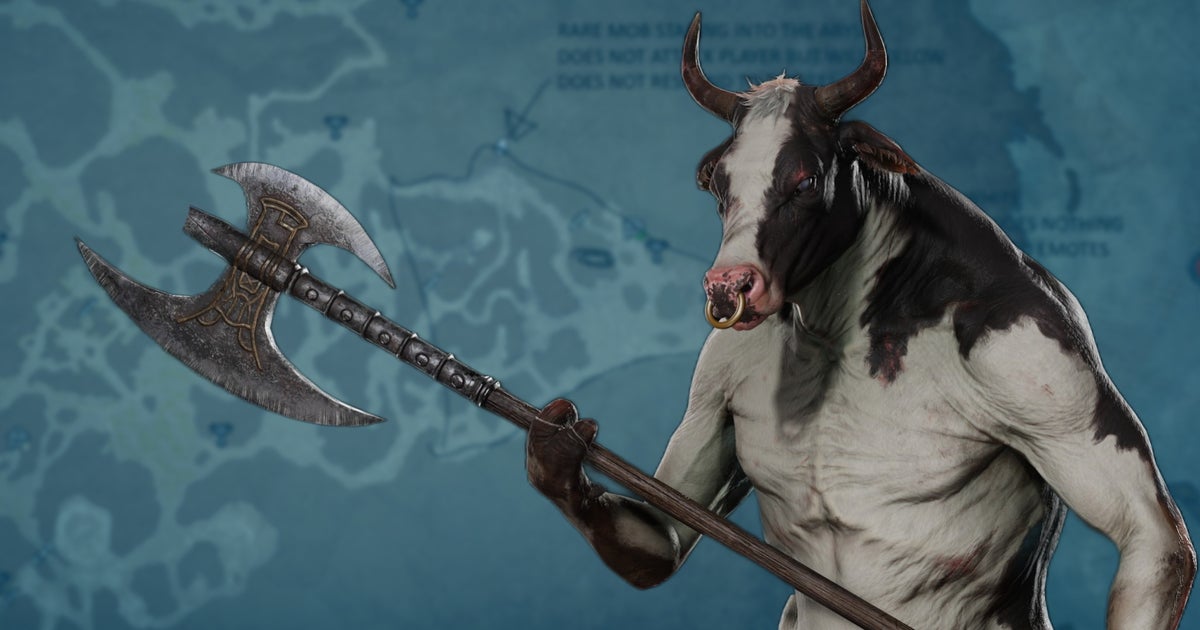
After three years of dead ends and cheeky developer comments, Diablo 4 players have finally found the cow level, but the mystery isn’t solved yet
After three years and multiple expansions, Diablo 4 players have seemingly completed the secret cow level.
Jackdaw
Tend the System. Know the System.
They didn't wander. That's the first thing to understand. The popular image of the hunter-gatherer is someone moving through an indifferent landscape, taking what they find. It's not wrong about the movement. It's wrong about the indifference — theirs and the land's. What the archaeological and ecological record increasingly shows is
Observ.ing - Observe nature. Own your data.
A decentralized platform for biodiversity observations, built on the AT Protocol.

Lessons from Mastodon's False Start: Understanding AT Protocol and Bluesky's Dilemma - Nightflight
The Great Season — 13FOREST Gallery
On Friday, January 24, 13FOREST Gallery will open The Great Season, an exhibition of new and recent acrylic work by painter Nicole Duennebier. Dark and sumptuous, The Great Season highlights a fantastical six-panel painting that associates the random beauty of nature with an elaborate 19th-century parlor game. Set against black backgrounds, Duennebier’s complex forms strongly refer to Baroque still-life paintings in which fruits and vegetables simultaneously emerge and pass into different stages of maturity. A key difference in Duennebier’s work is that, rather than render images of everyday objects, she bases them on her fascination with biology, particularly bacteria, fungi and other objects hidden from view. Referring to her use of darkness, the artist states that her inky backgrounds are “like a primordial soup, a pool of black that springs forth a decadent and sometimes horrible growth.” Each of the paintings in the show is associated with lush proliferation. In Bright Beast After Nature, for instance, a black background gives rise to a nebula of unfolding, biomorphic forms that seem to divide and overtake one another. Painted in thin, translucent layers, the work suggests a still life captured in only one of many stages it will eventually pass through. With Bright Beast Dissected View Duennebier gives an equally fantastic image of the engine behind such proliferation. Similar to vivisections seen in science textbooks, the painting shows the surface of a soft, woolly plant and the interior, biological source of its existence. In content the “engine” plays with the idea of a still life, but one made of flowers, vegetables and animal viscera. Duennebier’s centerpiece in The Great Season is a vast, six-panel painting titled, Hydnellum Myriorama. Its title refers to a type of fungus found in nature and to a Victorian card game – myriorama – in which children could arrange a series of illustrated cards to form hundreds of different landscapes. In Duennebier’s six panels are hybrid images that resemble Baroque still lifes, coral, fur, crystals and close-ups of microscopic fauna. Each of the forms emerges from nothing and stands bathed in a common light source. Despite the panels’ differing environments, Duennebier negates their importance by enabling viewers to arrange the panels into aesthetic experiences of their own choice. With Hydenellum Myriorama, the random potential of generation and decline in nature is given its parallel in art. Of her own work Duennebier states: “My interests in natural phenomenon (dermoid cysts, fungus, invasive flora/fauna) and my love of candied Old Master opulence always seem to be present in my painting… Painting with attention to detail, I’ve become accustomed to the fact that nature in itself, or anything living really, never totally allows you to have a perfectly idealized experience. Everything is always spewing, dripping, rotting a little.”

Let’s Become Fungal!
Inspired by conversations with: Francisca Álvarez Sánchez, Carolina Caycedo, Annalee Davis, Maya Errázuriz, Juan Ferrer, Lilian Fraiji, Giuliana Furci, Sofía Gallisá Muriente, Yina Jiménez Suriel, Patricia Kaishian, Mirla Klijn and Olaf Boswijk, Lola Malavasi and Daniela Morales Lisac, Martina Manterola and Carmen Serra, Camila Marambio, Mariana Martínez Balvanera, Claudia Martínez Garay, Lina Meija and Luciana Fleischman, Tomaz Morgado Françozo and Marília Carneiro Brandão, Marion Neumann, Maria Alice Neves, Tara Rodríguez Besosa, Raquel Rosenberg, Juli Simon, Ela Spalding, Gianine Tabja, Gabriela Flores del Pozo and Lucia Monge, Fer Walüng, Tatyana Zambrano