


The European Commission’s move to W-Social frames it as a European alternative to X, but its closed-source code and reliance on Bluesky’s infrastructure show that sovereign social media requires open infrastructure—not European ownership alone.
The European Social Stack · An open declaration
An open declaration: The European Social Stack. Open Social Platforms and Private Messaging.

🇪🇺🌐 The future of social media may be decided in Europe
A survey of European AT Protocol projects, including 4 mini case-studies

Blacksky
Decentralized social media built for community power, culture, and collective freedom.
Digital Sovereignty
Digital sovereignty has a bad reputation. In internet governance circles, sovereignty is considered awkward enough to be referred to by as the "s-word." It is often associated with misguided attempts at returning to the era of national champions, like building a French search engine or a European Google, or worse with the eternal boogeyman that is the "splinternet." It doesn't have to be this way!

🔭🖤🚀 Social media’s next evolution: decentralized, open-source, and scalable
How Blacksky grew to millions of users without spending a dollar
Social media algorithms can be redesigned to bridge divides — here’s how
"It falls to both the tech companies that built these systems and an engaged public to create technologies designed for social cohesion."

Eurosky is collaborating with SPRIND to test a non-toxic algorithm for the first time - Eurosky
Eurosky is a European initiative to build and operate sovereign social web infrastructure
The Paradox of Open
Numerous organisations and initiatives have been launched with a belief in openness and free knowledge. Their proponents placed their bets on the combined power of networked information services and new governance models for the production and sharing of content and data. We – as members of this broad movement – were among those who believed it possible to leverage this combination of power and opportunity to build a more democratic society, unleashing the power of the internet to create universal access to knowledge and culture. For us, such openness meant not only freedom, but also presented a path to justice and equality.
Recently I’ve been thinking about a couple of... - Adam Wood
Recently I’ve been thinking about a couple of different tech-related things that sort of overlap. One is the (emerging) shape of the new social web; the other is a pull I’m feeling to try and lessen reliance on American companies. I’ve been interested in / concerned by what became of social media for some time.1 Since the sundering of Twitter in 2022, I’ve kept an eye on the various alternatives, with particular interest in Mastodon and Bluesky. Actually, to be more accurate, my interest has been in the protocols behind those platforms: ActivityPub and AT Protocol respectively. Both have their...

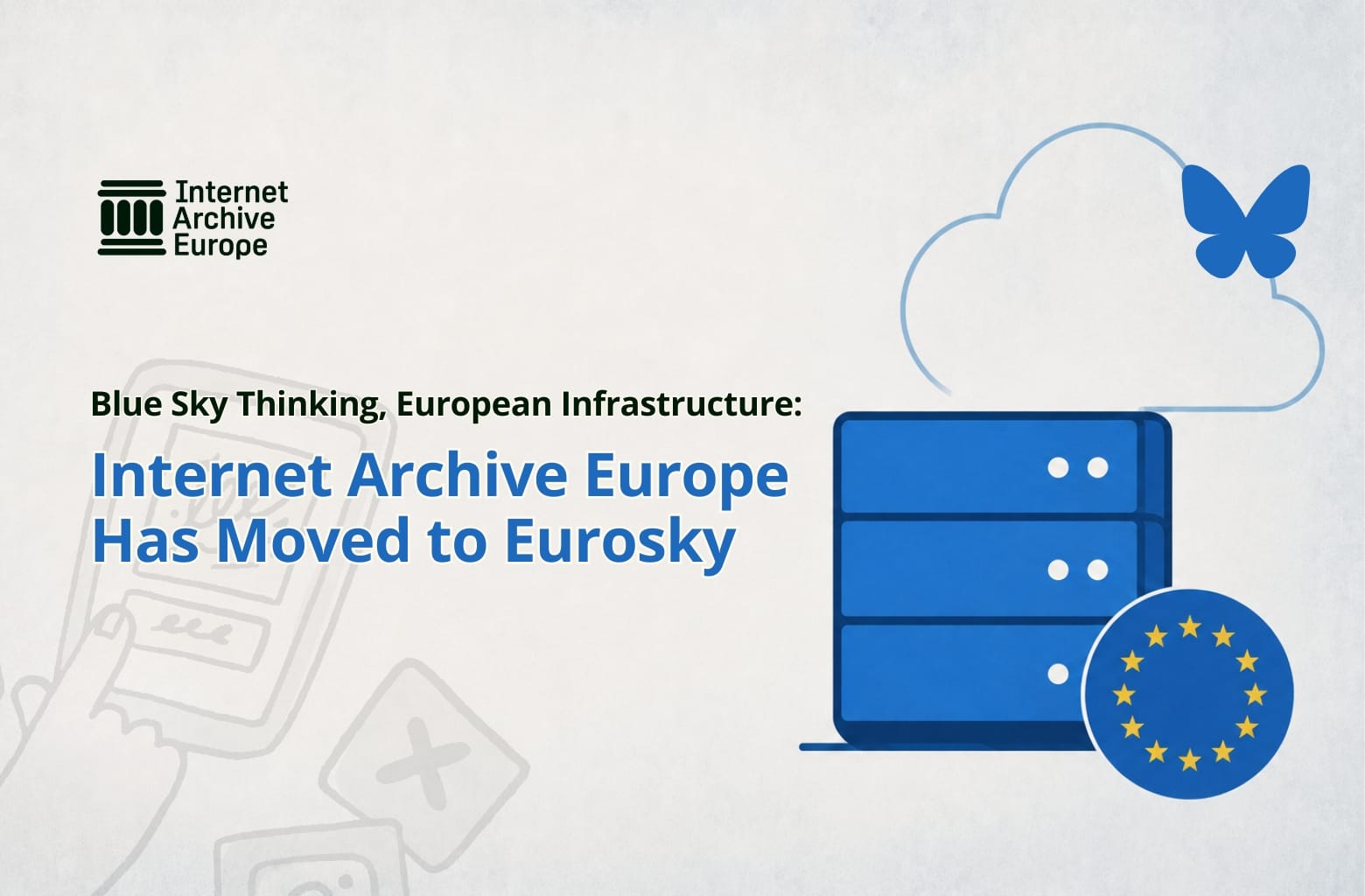
Blue Sky Thinking, European Infrastructure: Internet Archive Europe Has Moved to Eurosky - Internet Archive Europe
We've moved our Bluesky presence. Our account looks the same. Our data now lives somewhere different, on European infrastructure, under European law. Here's why we made that choice. What changed and what didn't When you use Bluesky, your posts, followers, and interactions live on a server. By default, that server belongs to Bluesky. Moving to
New report on alternative social media
Exploring a transition to alternative social media platforms for social justice organizations in the Majority World

The Purpose of Protocols
Every open social protocol generates shared resources, but none has produced a governance framework adequate to those resources. So who fills that vacuum?

Privacy as EU Tech advantage - The LeafPlaza Blog
Online crime loves legal massive data collection, grey systems, and jurisdictional gaps. Privacy-first design can actually reduce crime exposure and build trust in digital services. It is also central to the EU's tech autonomy: build systems aligning with European rights and risk models. Do not rely on foreign platforms or copy outside practices that might go against the EU values and needs.
The promise of ATproto is social media without corporate overlords
Transforming Social Media Governance With Applied Theories of Justice – lindsay blackwell
This dissertation explores ways in which social media governance can be improved through the practical application of theories and principles of justice. Three empirical research studies demonstrate that current platform governance practices exacerbate the very harms they seek to mitigate, due in large part to the influence of punitive criminal justice models that are structurally incapable of producing equitable governance outcomes. Informed by transformative justice, social media governance can be reframed from a method for control to a practice of collective care, requiring a fundamental restructuring of the systems and logics that currently govern online spaces.
AI, Agency and Protocols_ Power and Governance in Open Social Networks.pdf