

What is the type of 2 + 2 = 4?
Variety (cybernetics)
In cybernetics, the term variety denotes the total number of distinguishable elements of a set, most often the set of states, inputs, or outputs of a finite-state machine or transformation, or the binary logarithm of the same quantity.[1] Variety is used in cybernetics as an information theory that is easily related to deterministic finite automata, and less formally as a conceptual tool for thinking about organization, regulation, and stability. It is an early theory of complexity in automata, complex systems,[1]: 6  and operations research.[2]
New attack provides one more reason why AI browsers are a bad idea
Telling an LLM that 2 + 2 = 5 is enough to make it follow forbidden instructions.
Equation
Solving an equation containing variables consists of determining which values of the variables make the equality true. The variables for which the equation has to be solved are also called unknowns, and the values of the unknowns that satisfy the equality are called solutions of the equation. There are two kinds of equations: identities and conditional equations. An identity is true for all values of the variables. A conditional equation is only true for particular values of the variables.[5][6]
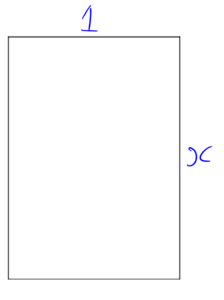
Why A4? – The Mathematical Beauty of Paper Size
Unless you have skipped a lot of school, or work, or both – or you live in the USA – you have probably used an A4 sheet of paper before now. Have you ever wondered …
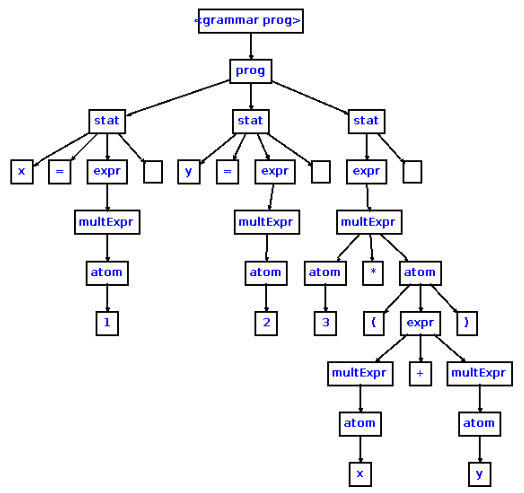
Intuiting Pratt parsing
You already know that a + b * c + d is calculated as a + (b * c) + d. But how do you encode that knowledge precisely enough for a machine to act on it?
Four Corners
Sixteen words sit in the bank. Your job is to sort them into four categories around the board — one per edge.
"Concatenative programming and stack-based languages" by Douglas Creager
The peril of laziness lost | The Observation Deck
In his classic Programming Perl — affectionately known to a generation of technologists as "the Camel Book" — Larry Wall famously wrote of the three virtues of a programmer as laziness, impatience, and hubris: If we’re going to talk about good software design, we have to talk about Laziness, Impatience, and Hubris, the basis of good software design. We’ve all fallen into the trap of using cut-and-paste when we should have defined a higher-level abstraction, if only just a loop or subroutine. To be sure, some folks have gone to the opposite extreme of defining ever-growing mounds of higher level abstractions when they should have used cut-and-paste. Generally, though, most of us need to think about using more abstraction rather than less.
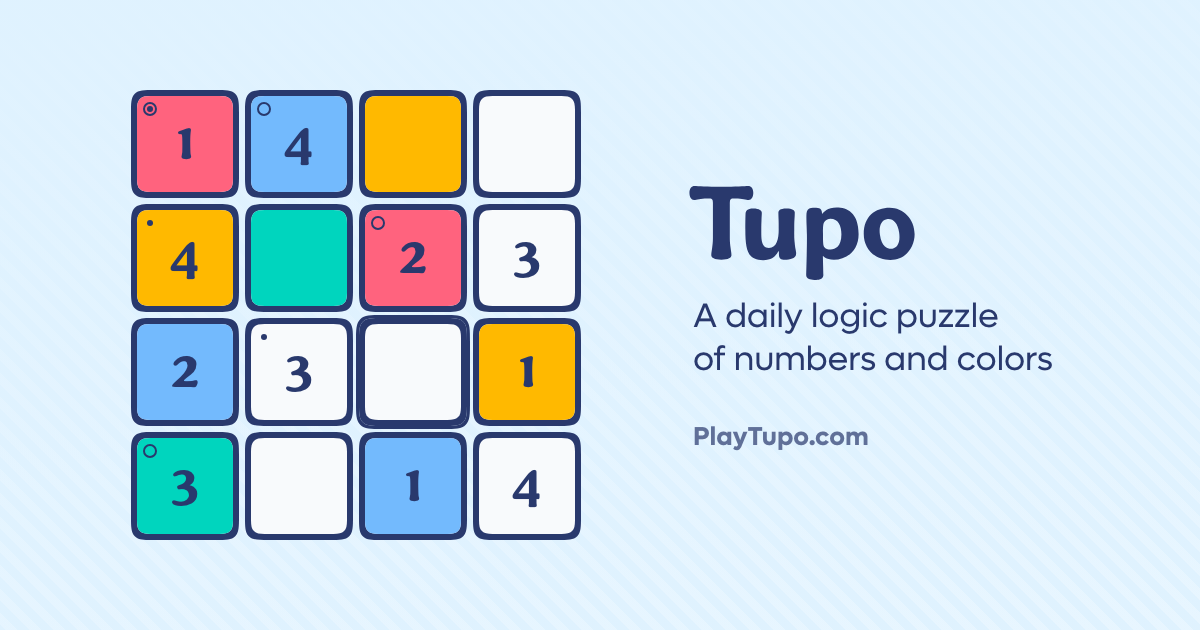
Tupo · A daily sudoku-style logic puzzle with a twist
A simple logic puzzle of numbers and colors. One new puzzle every day, starting easy and getting harder through the week.
A Severe Misalignment of AI in Mathematics
I am proud to be among the list of 25 initial signatories — all Fields Medallists — to the declaration below, which grew out of discussions between ourselves over the last week. We have…

</> htmx ~ Working With AI: A Concrete Example
In this essay, Carson Gross walks through a concrete bug fix in hyperscript to show where AI helped, where it fell short, and why keeping a knowledgeable human in the loop is what kept complexity in check.
What Functional Programmers Get Wrong About Systems - Ian Duncan
Type systems verify properties of programs. Production correctness is a property of systems. The gap between these is where the interesting failures live.
math.r — Brain Building Game
Mathr is a brain building game to improve your math calculation skills. Practice arithmetic and level up!
iddqd, or the hardest kind of unsafe Rust | Oxide Computer Company
How our Rust collections library defends against adversarial trait implementations.
Cological Words