

Let clean code guide you. Then let it go.
Coding After Coders: The End of Computer Programming as We Know It - …
archived 16 Mar 2026 15:14:04 UTC

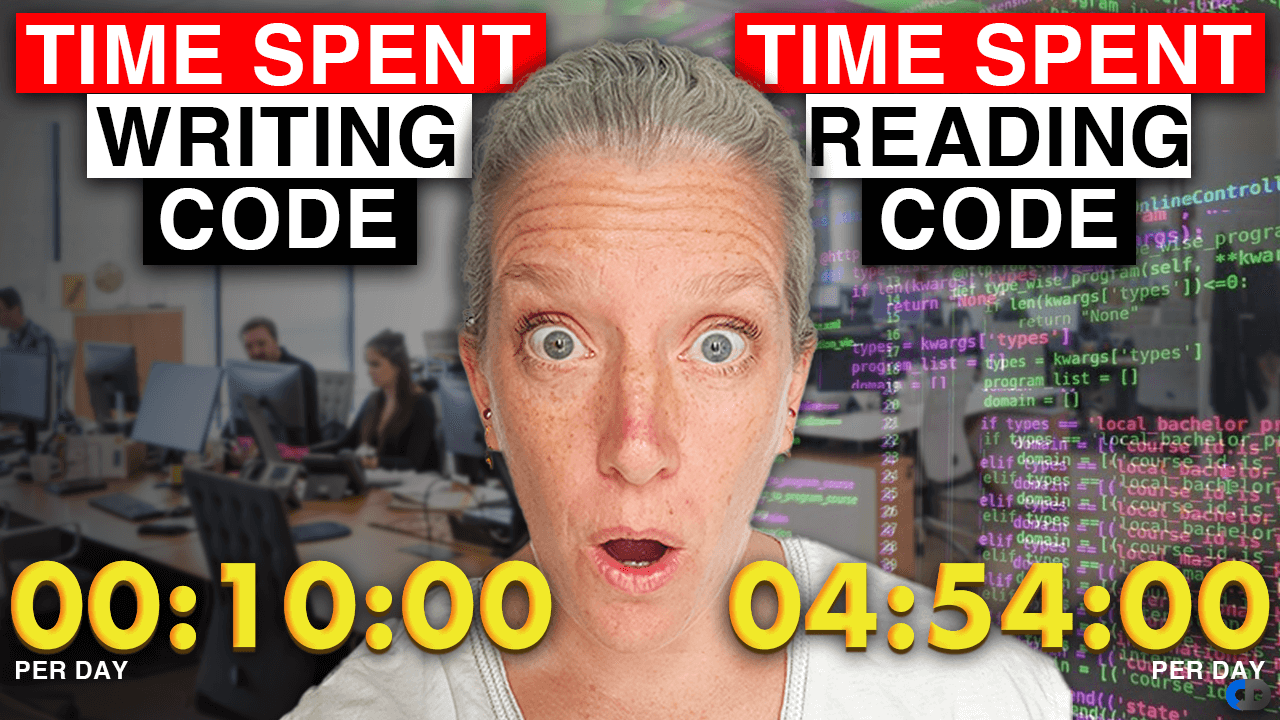
Reading Code Is Hard, and tips to improve - Trisha Gee
This week's video for Dave Farley's Continuous Delivery YouTube channel is me ranting about why reading code sucks, and offering some advice on how to improve. "Every programmer occasionally, when nobody’s home, turns off the lights, pours a glass of scotch, puts on some light German electronica, and opens up a file on their computer. ... Read more
Does Code Cleanliness Affect Coding Agents? A Controlled Minimal-Pair Study
As autonomous coding agents see rapid adoption, their evaluation has primarily focused on task completion rates holding the target codebase fixed. This leaves a critical question unanswered: does the structural and stylistic quality, or ``cleanliness'' of the underlying code affect an agent's ability to navigate and modify it? To isolate the effect of code cleanliness from agent capability, we introduce an evaluation protocol built around minimal pairs: repositories that match on architecture, dependencies, and external behaviour, but differ on static-analysis rule violations and cognitive complexity. The pairs are constructed in both directions, by agent pipelines that either degrade a clean repository or clean a messy one. We author 33 tasks across six such pairs, evaluated through hidden tests at the application's public surface. Across 660 trials with Claude Code, code cleanliness does not change the agent's pass rate. However, it substantially alters the agent's operational footprint: agents working on cleaner code use 7 to 8% fewer tokens and reduce file revisitations by 34%. Our findings suggest that traditional maintainability principles remain highly relevant in the era of AI-driven development, shaping the computational cost and navigational efficiency of coding agents. Code cleanliness joins model choice, harness, and prompting as a factor that materially affects agent behaviours.

Ten Lines Of Code That Changed My World – Pixelambacht
Front-end antics and typographic mischievousness
We mourn our craft
I didn’t ask for this and neither did you. I didn’t ask for a robot to consume every blog post and piece of code I ever wrote and parrot it back so that some hack could make money off o…



Don't couple your Go code to GitHub | Iain Cambridge
The technical musings of Iain Cambridge.
In defense of not reading the code | Ben Shoemaker
Last week, I wrote an article whose purpose was to discuss where I saw AI-assisted coding going. That's not what generated 200 comments worth of passionate...
Coding After Coders: The End of Computer Programming as We Know It
In the era of A.I. agents, many Silicon Valley programmers are now barely programming. Instead, what they’re doing is deeply, deeply weird.

How I've been using Claude Code
I've been using Claude Code a lot recently, and having a pretty good time of it. This is my report on that, and what I've found does and doesn't work well.
It’s time to drain the Programmatic Swamp - New Digital Age
"Large parts of the programmatic ecosystem are a scam, and I don't mean slightly inefficient or in need of a tidy-up," writes Daniel Gilbert for New Digital Age...

On Betraying Principles
Why Creative Commons must be about more than reducing friction on reuse This week, I had the experience of being told the work we are doing at Creative Commons right now is betraying the founding principles of the organization. This is not the first time and it won’t be the last.

The code is here: tangled.org/tyler.fun/chalky.town/tree/ma… I rushed through the sync bits a bit to get a thing working, but those two methods are in the branch I have to clean it up 😅
