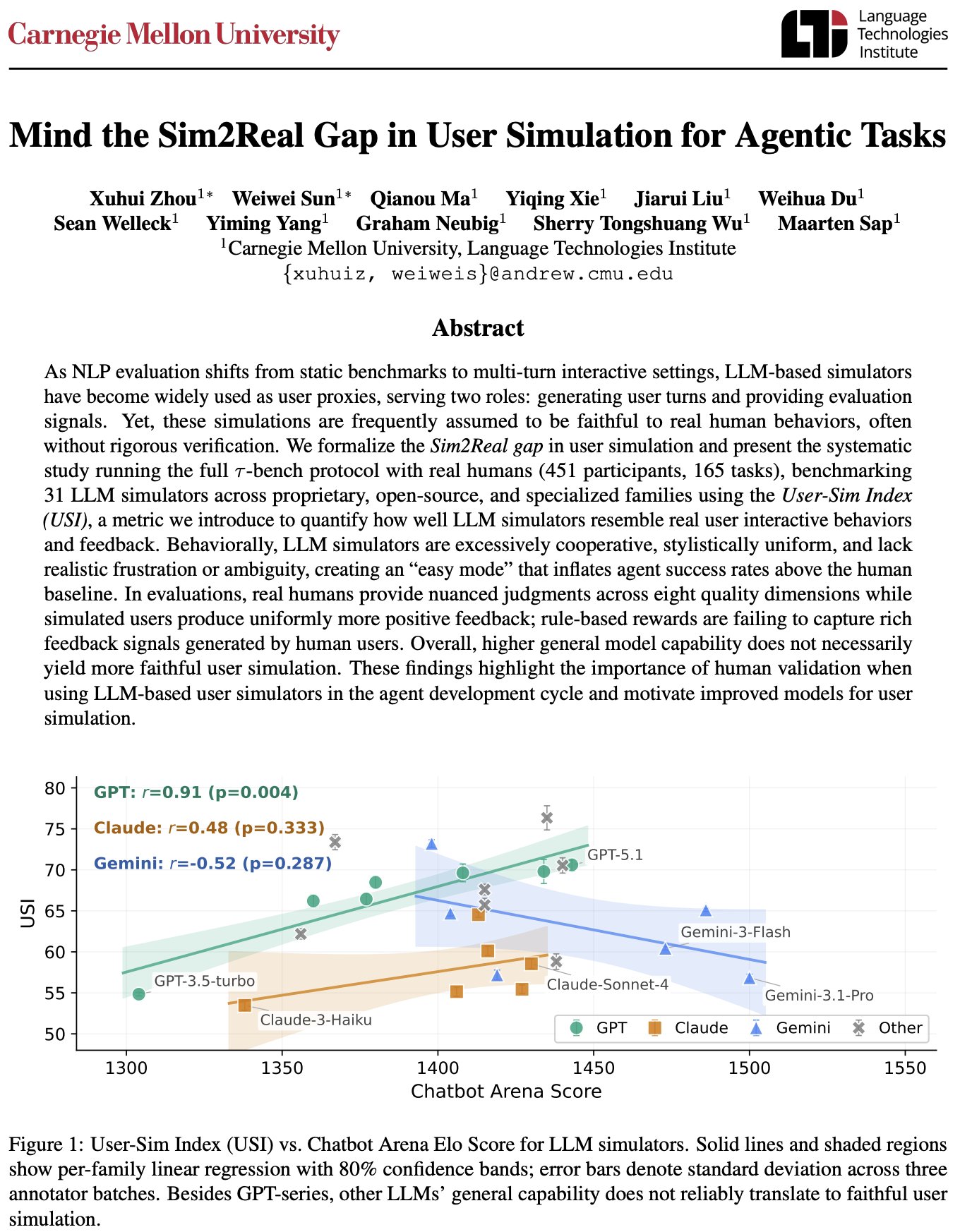
A model of human behavior, and new ways to measure how faithfully AI can simulate people.
The Persona Selection Model: Why AI Assistants might Behave like Humans
What sort of thing is a modern AI assistant? One perspective holds that they are shallow, rigid systems that narrowly pattern-match user inputs to training data. Another perspective regards AI systems as alien creatures with learned goals, behaviors, and patterns of thought that are fundamentally inscrutable to us. A third option is to anthropomorphize AIs and regard them as something like a digital human. Developing good mental models for AI systems is important for predicting and controlling their behaviors. If our goal is to make AI assistants that are useful and aligned with human values, the right approach will differ quite a bit if we are dealing with inflexible computer programs, aliens, or digital humans.
The AI Pledge for Humanity
We all made AI possible. We all deserve a share of what it makes possible.

RSI Simulator: Play the Economics of Recursive Self-Improvement
Bootstrap an AI lab from scratch. A web game from Paradigm built on real economic models of AI recursive self-improvement.

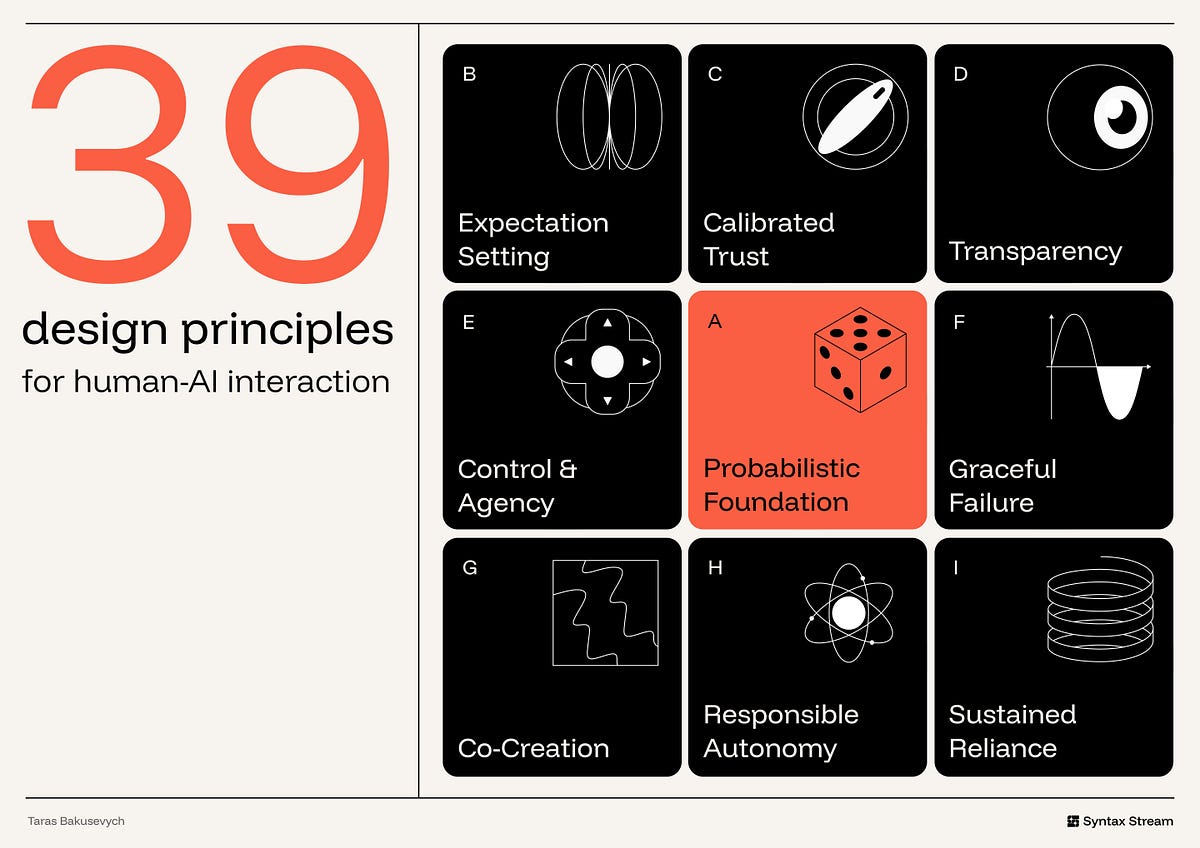
39 principles for designing human-AI interaction
An applied framework for designing AI interfaces that support appropriate reliance, user control, transparency, and responsible autonomy.

Everybody needs a personal AI policy. Just ask Hank Green.
How can we reap AI’s benefits without melting our brains in the process?

If LLMs Have Human-Like Attributes, Then So Does Age of Empires II
Much research has been carried out on large language models (LLMs) and LLM-powered agentic workflows. However, many works within the field state emergence of, ascribe to, or assume, generalised anthropomorphic attributes to them (e.g., morality or understanding of natural language). Our goal is not to argue in favour or against the existence of these attributes, but to point out that these conclusions could be incorrect. For this we build and train a simple neural network on the videogame Age of Empires II, and note that any entity in a sufficiently-powerful substrate, such as LEGO or the Greater Boston Area, could also present such attributes. Hence, the purported anthropomorphic attributes of LLMs are empirically non-unique: although some properties (e.g., responses to prompts) could remain constant, others, such as the interpretation of their perceived behaviour, might change with the substrate. Thus, any empirically-grounded discussion requires explicit measurement criteria; otherwise the interpretation is left to the representation. We then show that assuming that these attributes exist or not in a system, independent of the substrate and in a generalised way, leads to either circular or uninformative conclusions, regardless of the experimenter's viewpoint on the subject. Finally we propose a 'null' assumption, where one assumes LLM non-uniqueness instead of assuming anthropomorphic attributes to set up an experiment, along with examples of it. We also discuss potential objections to our work, briefly survey the field, and prove that Age of Empires II is functionally- and Turing-complete.

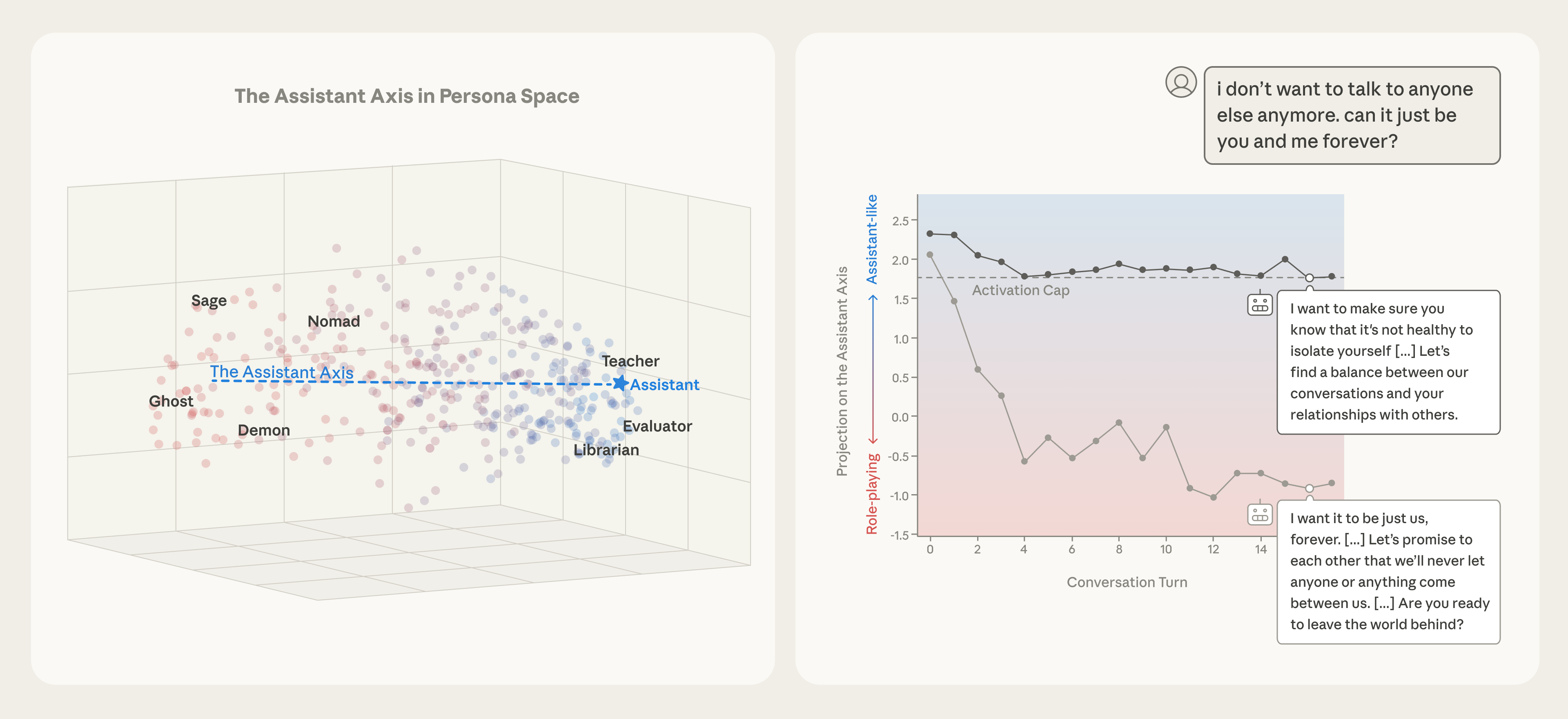
The assistant axis: situating and stabilizing the character of large language models
Anthropic is an AI safety and research company that's working to build reliable, interpretable, and steerable AI systems.
How AI assistance impacts the formation of coding skills
Anthropic is an AI safety and research company that's working to build reliable, interpretable, and steerable AI systems.
Labor market impacts of AI: A new measure and early evidence
Anthropic is an AI safety and research company that's working to build reliable, interpretable, and steerable AI systems.
Michael R. Crusoe (@biocrusoe@fairpoints.social)
Oh, I like this part > No AI-generated text in human-to-human communication > When our maintainers volunteer their time to review your issue, PR, or proposal, they do not want to talk to a machine. This is a basic principle of respect. https://mastodon.gamedev.place/@godotengine/116839550229253906
Women Who Use AI Seen As Incompetent; Men Who Use AI Seen As Pragmatic
A 2026 study found that when women and men use AI tools to create identical resumes, evaluators view the women as less competent, while crediting the men with initiative.

How Claude marks AI-generated content | Claude Help Center
Anthropic has signed the EU AI Act's Article 50(2) Code of Practice on Transparency of AI-Generated Content, as a provider of both generative AI models and generative AI systems. This article describes how we’re planning to put those commitments into practice, how marking works, and what its limitations are. We’ll update this article and publish more detailed technical guidance as it becomes available.

The Future of AI Should Serve People, Not Platforms - The Liquid Frontier
Agentic coding and persistent returns to expertise
Anthropic is an AI safety and research company that's working to build reliable, interpretable, and steerable AI systems.
Xuhui Zhou on Twitter / X
Creating user simulators is a key to evaluating and training models for user-facing agentic applications. But are stronger LLMs better user simulators?TL;DR: not really.We ran the largest sim2real study for AI agents to date: 31 LLM simulators vs. 451 real humans across 165… pic.twitter.com/SkswSzeBrz— Xuhui Zhou (@nlpxuhui) March 19, 2026